

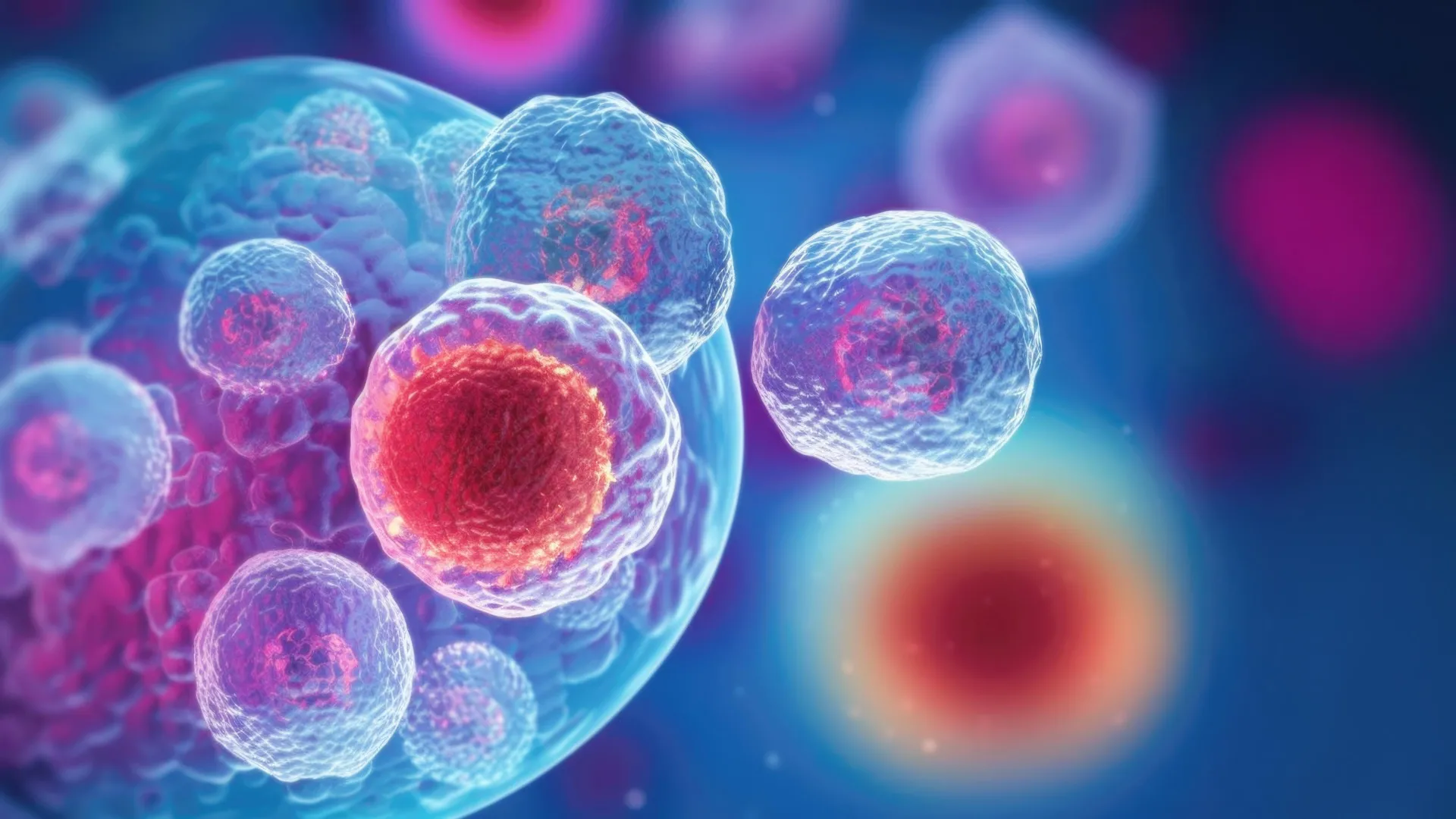
Researchers at the University Hospital of Bonn and the University of Bonn have successfully reversed substantial molecular aging in human cells through a novel reprogramming technique. The scientists converted blood cell precursors from an 80-year-old donor into neural stem cells, resulting in cells displaying molecular age signatures consistent with individuals under 20 years old. This represents a reversal of more than six decades of cellular aging at the molecular level, as measured through epigenetic clocks that track chemical modifications to DNA.
The research team employed a direct conversion method that bypasses an intermediate stage used in previous cellular reprogramming approaches. Rather than first converting blood cells into pluripotent stem cells before creating neural stem cells, the scientists converted the cells directly to their target cell type. This streamlined approach allowed the rejuvenation process to occur gradually over more than 100 days, enabling researchers to observe and track the molecular changes as they unfolded rather than only seeing the final result.
The gradual nature of the transformation offers significant advantages for understanding cellular aging mechanisms. By watching cells become progressively younger over an extended timeframe, scientists can identify which molecular pathways control biological aging and test whether specific substances accelerate or decelerate the rejuvenation process. This extended observation period provides a valuable experimental model for investigating the fundamental mechanisms of cellular aging.
The findings were published in the journal Aging Cell and carry potential implications for neuroscience research, particularly regarding age-related neurological conditions. While the work does not constitute a treatment for reversing aging in living humans, it establishes a laboratory framework for studying how cells recover youthful characteristics. This could eventually inform research into conditions such as Alzheimer’s disease, where advanced age represents the primary risk factor. The study was supported by funding from the EU’s Horizon 2020 program, the German Research Foundation, and the Federal Ministry of Research, Technology, and Space, and involved collaboration with RWTH Aachen University.
Article Attribution | Read More at Article Source
Article summary produced by Claude AI