

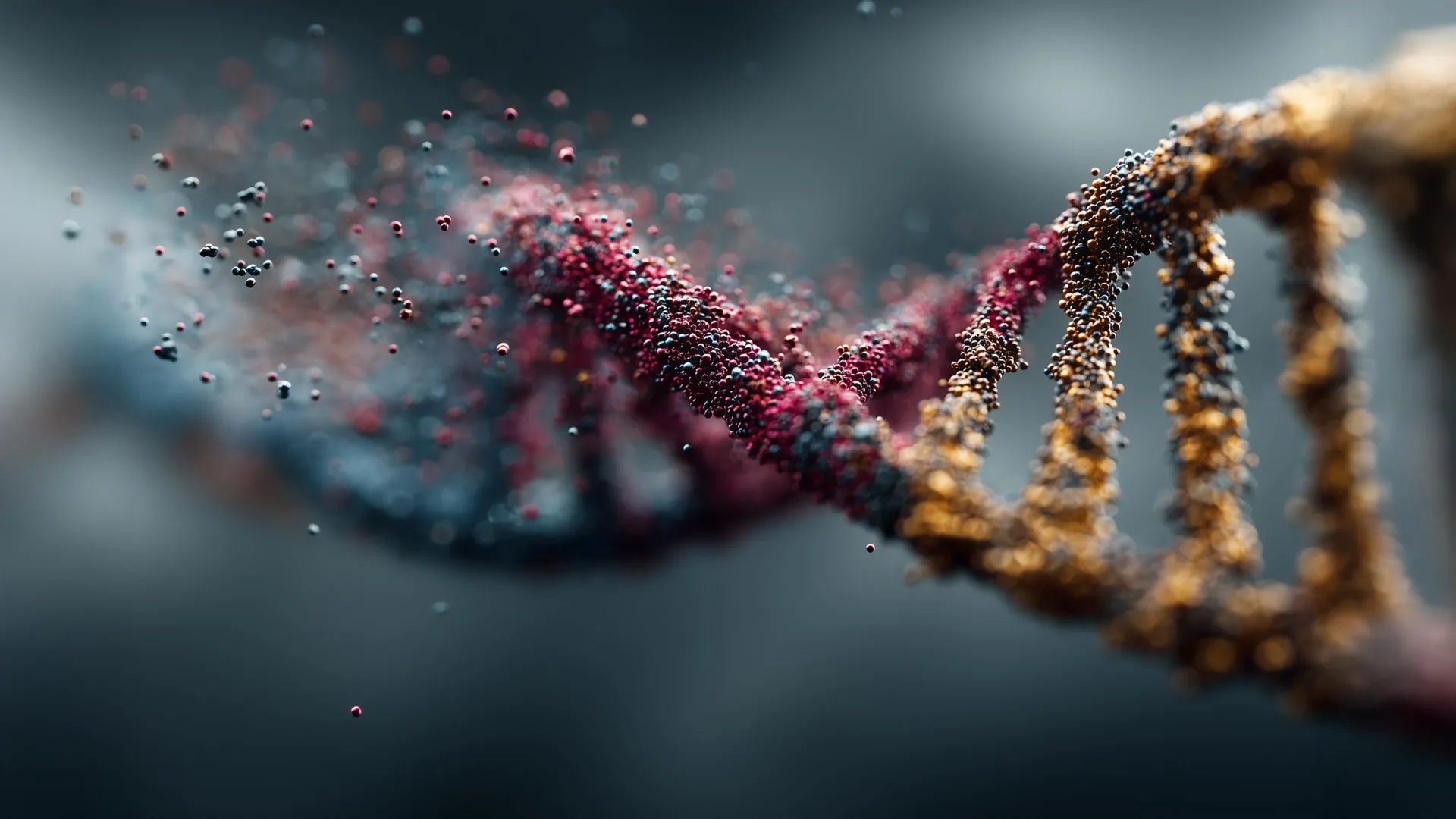
Researchers made an unexpected genetic discovery while conducting routine experiments on a microscopic organism collected from a freshwater pond in England. The organism, a previously unknown protist species designated Oligohymenophorea sp. PL0344, exhibited genetic instructions that deviated significantly from established patterns. The finding was published in PLOS Genetics in October 2023.
Dr. Jamie McGowan, working as a postdoctoral scientist at the Earlham Institute, led the research alongside colleagues at the Earlham Institute and the University of Oxford. The project was originally designed to test a DNA sequencing method capable of analyzing minimal quantities of genetic material. Rather than seeking evolutionary insights, the researchers aimed to develop improved tools for studying organisms that are challenging to cultivate and examine in laboratory settings. Upon analyzing the organism’s genome, they identified an unexpected genetic configuration that operated according to non-standard rules.
Protists represent one of Earth’s most diverse yet poorly understood organism groups. These organisms range from single-celled microscopic entities to large complex structures such as kelp and slime molds. Protists are broadly defined as eukaryotic organisms that are neither animals, plants, nor fungi. The organism in question belongs to a ciliate group, characterized by hair-like structures called cilia used for movement through aquatic environments. Some ciliates have evolved atypical approaches to interpreting genetic instructions, making them particularly relevant to genetic research.
The discovery centered on how genetic code signals function during protein synthesis. DNA contains instructions that cells translate into proteins through a process involving messenger RNA and ribosomes. Stop codons typically signal the termination of protein production at specific points. In the studied organism, two genetic signals that conventionally halt protein synthesis had been reassigned to different functions, each specifying distinct amino acids rather than performing their traditional stopping roles. This arrangement contradicted established evolutionary assumptions suggesting these signals would modify in tandem.
The breakthrough indicates greater flexibility within fundamental biological systems than previously documented. Subsequent research has identified additional genetic code variations in related microorganisms, suggesting that significant undiscovered variations may exist throughout the microscopic world.
Article Attribution | Read More at Article Source
Article summary produced by Claude AI