

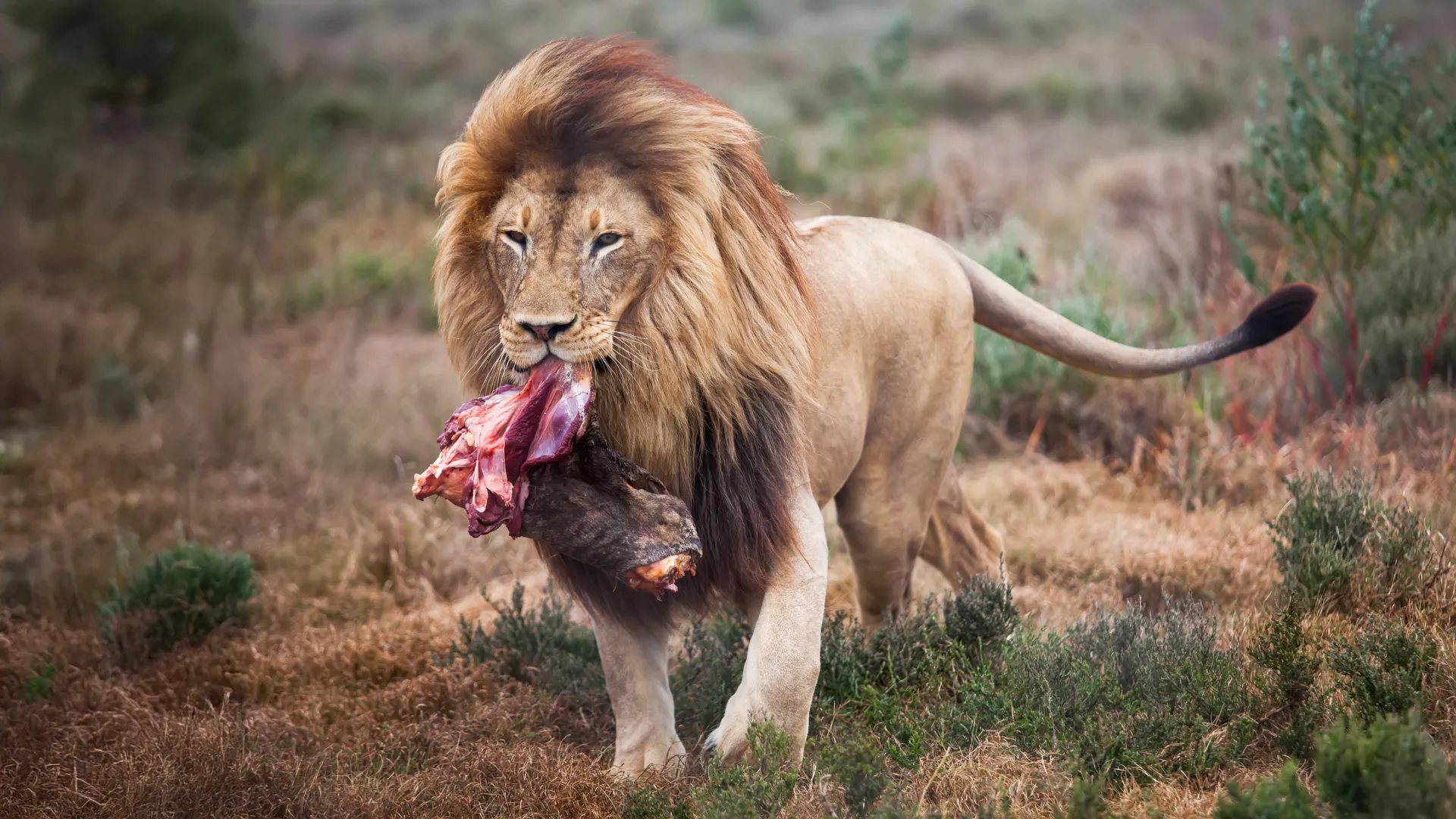
Research conducted by Adelaide University and Monarto Safari Park examined how feeding practices influence the behavior of African lions in captivity. Scientists observed three adult male lions over a three-month period after introducing whole animal carcasses provided every nine days as part of a structured feeding routine that incorporated periods of consumption followed by fasting.
The study, published in Applied Animal Behaviour Science, employed continuous video monitoring with eight infrared cameras to document behavioral changes. During days when carcasses were available, the lions spent approximately three times longer eating compared to their typical feeding duration. The animals engaged extensively in natural feeding behaviors such as tearing, pulling, and manipulating food over extended periods. Following intensive feeding sessions, the lions exhibited prolonged rest and digestion periods.
As the fasting intervals progressed, the lions gradually increased their activity levels, creating a cyclical pattern that closely mirrored documented feeding rhythms observed in wild lion populations. This feast-and-fast cycle provided behavioral conditions more representative of natural hunting and consumption patterns than conventional zoo feeding schedules.
Researchers also monitored pacing behavior, typically associated with anticipation in captive carnivores. Contrary to expectations, pacing did not consistently increase during longer fasting periods. Instead, notable increases coincided with predictable events such as keeper arrivals and habitat transitions, suggesting that pacing correlates more strongly with familiar routines and feeding expectations than with hunger duration.
The research team noted that providing whole carcasses altered more than nutritional intake, enabling lions to perform ecologically important feeding behaviors. The study found no increases in aggression or social disruption during the experimental feeding regimen. Researchers concluded that behavioral monitoring across entire feeding cycles rather than isolated feeding events is essential for evaluating zoo management effectiveness and animal welfare outcomes.
Article Attribution | Read More at Article Source
Article summary produced by Claude AI