

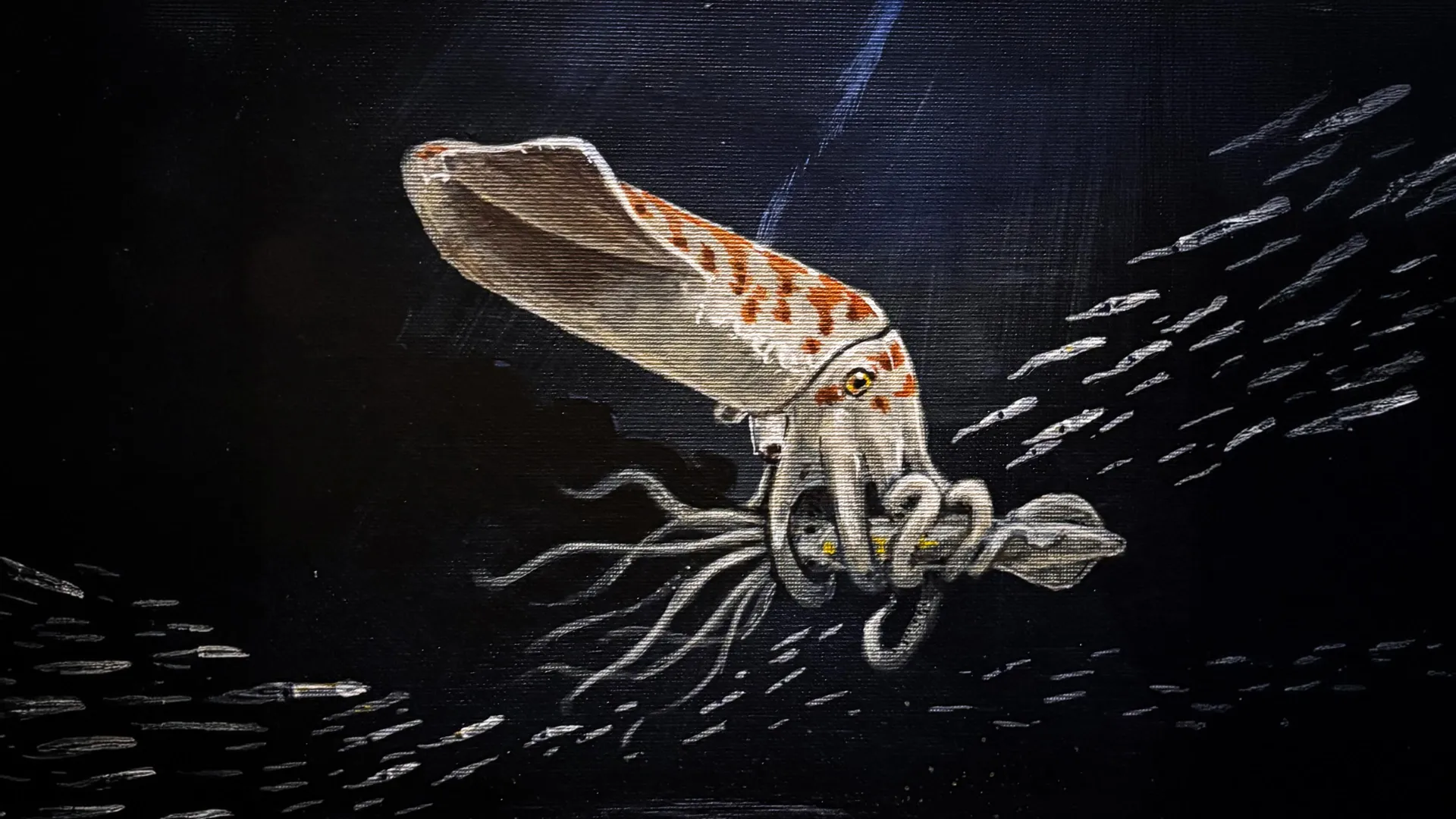
Researchers have formally described a new belemnite species from Wyoming called Wyoteuthis linsterorum, based on two fossil specimens that reveal an unusual morphology distinct from previously known members of this extinct cephalopod group. The fossils, discovered in the Sundance Formation, show an extraordinarily thick internal skeleton compared to other belemnites typically found in the region. While most belemnites from Wyoming measure between 5 and 10 centimeters in length with widths of only 1 to 2 centimeters, the rostrum of this new species reaches approximately 10 centimeters long and 6 centimeters wide, making it the thickest belemnite skeleton identified to date. Scientists estimate the complete living animal, including its arms, reached approximately 60 centimeters in total length.
The research team, comprised of international specialists from the United States, United Kingdom, and New Zealand, employed computed tomography scanning to examine the fossils’ internal structures without causing damage. The detailed analysis revealed an unexpected connection to an ancient belemnite family previously thought to have disappeared millions of years before this animal lived. Researchers suggest the creature’s unusual proportions may have provided advantages for hunting, potentially targeting smaller belemnite species. The discovery is particularly significant given that belemnites have been studied intensively for more than 200 years, making the identification of such a morphologically distinct species remarkable.
The first specimen was discovered in the late 1990s by Dr. Burkhard Pohl, founder of the Wyoming Dinosaur Center, but remained unstudied in museum collections for years. The second specimen was found by fossil collector Cliff Linster, who donated it to the Wyoming Dinosaur Center in 2019. The species name linsterorum honors Linster and his family for their paleontological contributions. Linster passed away in June before the research publication, though he was aware of the ongoing investigation and supported the formal scientific description of his discovery.
Article Attribution | Read More at Article Source
Article summary produced by Claude AI