

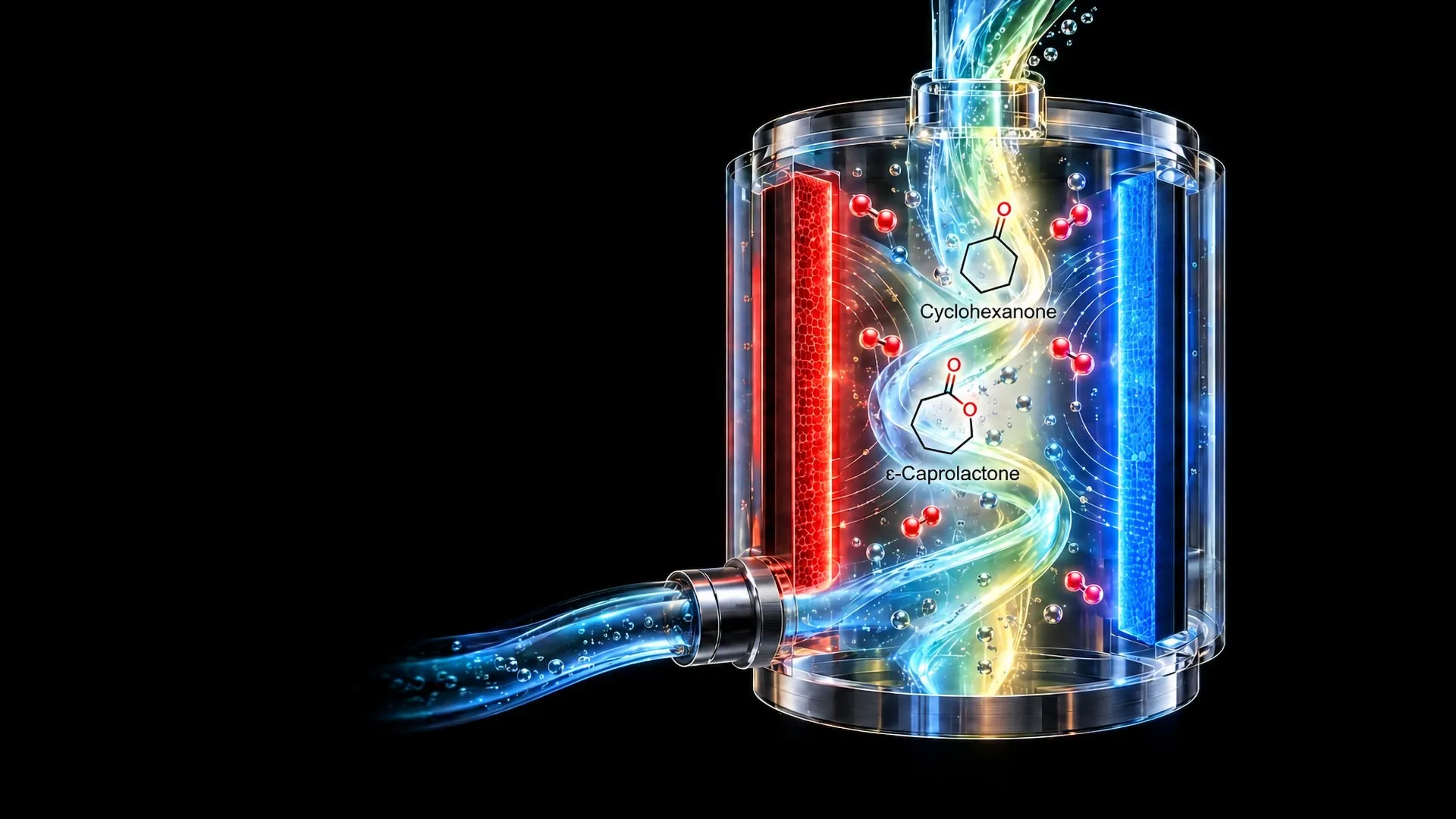
Scientists at Seoul National University have discovered that microscopic changes in acidity surrounding electrodes significantly influence the success or failure of electrochemical reactions. Led by Professor Jaeyune Ryu, the team focused on a phenomenon called “local pH,” which describes how acidic or alkaline conditions in the immediate vicinity of an electrode can differ dramatically from the overall solution. By redesigning reactor systems to control electrode spacing and liquid flow, researchers achieved substantial improvements in chemical synthesis, particularly for producing lactones and epoxides—compounds essential to plastics, medicines, adhesives, and electronic materials.
The research builds on organic electrosynthesis, a technique using electrical energy to drive chemical reactions without relying on hazardous oxidizing agents. Previous efforts focused on factors like voltage, electrode materials, and solution composition, but the Seoul team identified a critical oversight: the microscopic chemical environment at electrode surfaces where molecular transformations occur. During electrochemical reactions, hydrogen ions can be generated or consumed faster than they diffuse through liquid, creating localized pH extremes. In neutral solutions overall, conditions near the cathode could reach pH 11, while the anode region could drop to pH 2.5—variations that fundamentally alter reaction chemistry.
An analysis of over 600 published studies revealed that approximately 89% of organic electrosynthesis research involved reactions transferring both electrons and protons, suggesting the local pH phenomenon could affect numerous electrochemical processes across the field. These microscopic acidity variations influence reactive oxygen species availability, starting material behavior, and product stability. The team demonstrated their findings using Baeyer-Villiger oxidation, which converts ketones to lactones by adding oxygen atoms. By using electricity to activate oxygen gas rather than supplying external oxidizing chemicals, they increased desired product formation from approximately 16% to 97%—a transformative improvement that could enhance the safety, cleanliness, and efficiency of chemical manufacturing.
The findings, published in the Journal of the American Chemical Society, suggest that controlling local pH near electrodes represents a previously overlooked but critical parameter in electrochemical reaction design and optimization.
Article Attribution | Read More at Article Source
Article summary produced by Claude AI