

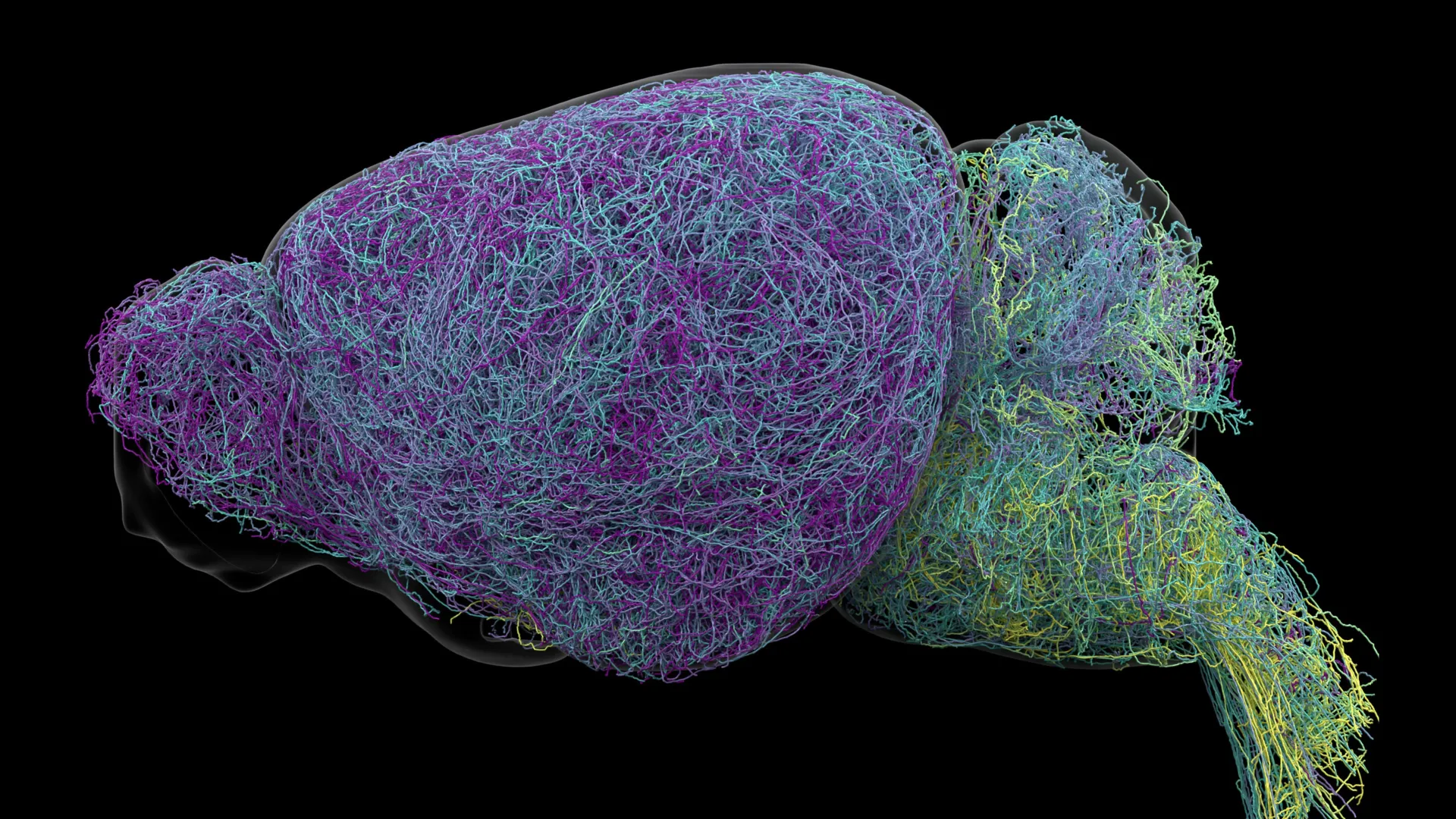
Researchers at the Allen Institute have identified a previously unrecognized organizational structure within the locus coeruleus, a small region in the brainstem that produces norepinephrine, a chemical messenger crucial to brain function. The findings, published in Nature, overturn the long-standing assumption that this region operates like a single broadcasting system. Instead, the research demonstrates that the locus coeruleus functions as a targeted communication network with distinct pathways delivering signals to specific brain locations.
The study revealed significant anatomical distinctions within the locus coeruleus that correspond to different functional roles. Neurons in the dorsal upper section primarily connect to the cerebral cortex and forebrain, while neurons in the ventral lower section send signals mainly to the brainstem and spinal cord. This spatial organization creates a more nuanced communication system than previously understood. During behavioral experiments, neurons in the dorsal region showed heightened activity when mice learned from unfavorable outcomes and adjusted their decision-making. Conversely, ventral neurons became active before mice either engaged with or ignored environmental opportunities, suggesting these cells regulate responsiveness to external stimuli.
The research employed comprehensive neurological mapping techniques, analyzing nearly 35,000 neurons through whole-brain imaging and examining genetic profiles of approximately 400,000 cells. Scientists also reconstructed the complete structures of several exceptionally complex nerve cells and discovered that locus coeruleus neurons possess unusually long axons. One neuron measured approximately 70.32 centimeters in total reconstructed length, among the longest single neurons ever measured in a mouse brain. Despite their extensive reach, these neurons maintain selective distribution patterns rather than broadcasting norepinephrine throughout the entire brain.
These discoveries carry significant implications for treating neurological and psychiatric conditions. Since norepinephrine regulates attention, mood, and learning, the chemical system is targeted by medications for depression, anxiety, and attention disorders. The deterioration of locus coeruleus neurons represents an early pathological marker in Alzheimer’s disease. Current norepinephrine-affecting medications often influence multiple brain circuits simultaneously, producing both therapeutic and unwanted effects. A clearer understanding of the locus coeruleus’s specialized pathways could enable development of more selective therapies targeting specific neural circuits associated with particular symptoms, potentially improving treatment efficacy while reducing side effects.
Article Attribution | Read More at Article Source
Article summary produced by Claude AI