

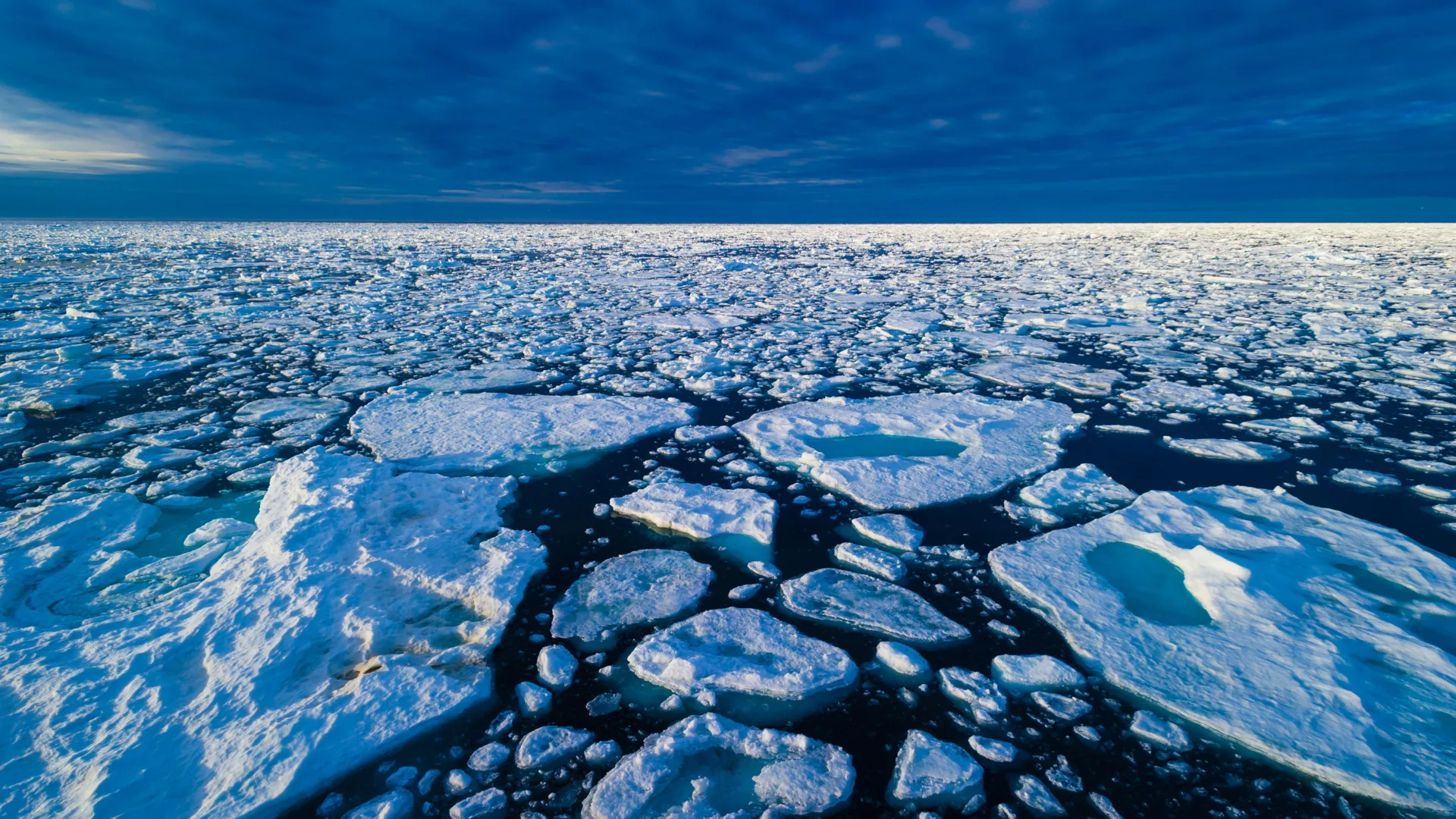
New research published in Nature Geoscience suggests that Arctic winter sea ice loss may be significantly greater than earlier scientific estimates indicated. Using evidence from paleoclimate records dating to approximately 6,000 years ago, when the Arctic experienced warmer conditions with reduced ice coverage due to orbital changes, researchers have developed more accurate projections for the coming decades.
Scientists from the University of Cambridge and Mexico’s Centro de Investigación en Matematicas assembled the largest database of a chemical biomarker called IP25, which is produced by algae living within sea ice. By examining sediment cores from the mid-Holocene period and comparing historical ice conditions with simulations from 27 climate models, the team identified a systematic bias in how models predicted winter sea ice. The models had collectively overestimated historical ice coverage, suggesting they may be doing the same for future projections.
Using a statistical approach called Bayesian weighting, researchers assigned greater importance to models that accurately matched ancient evidence while reducing the influence of less accurate simulations. When these refined weights were applied to future projections, the results indicated approximately one million square kilometers additional ice loss beyond previous estimates. The methodology also reduced uncertainty in certain projections by as much as 85 percent, providing researchers with substantially clearer forecasts for Arctic conditions in the coming decades.
Winter Arctic sea ice has implications extending far beyond polar regions. Changes in ice cover influence heat and moisture exchange between the ocean and atmosphere, affecting weather patterns across the Northern Hemisphere. In March 2025, winter sea ice reached its lowest recorded maximum extent since modern monitoring began, with the Arctic matching that record again in 2026. Research suggests that declining ice cover has been associated with colder winters and increased snowfall in the United Kingdom, northern Europe, and North America.
When researchers applied their improved model weighting to other climate variables, they found indications that current models may also underestimate future snowfall over southeastern Greenland and rainfall across the Mediterranean region. These potential changes could affect the stability of the Greenland ice sheet and influence flooding risks in southern Europe, suggesting that the broader consequences of Arctic warming may be more extensive than existing predictions indicate.
Article Attribution | Read More at Article Source
Article summary produced by Claude AI