

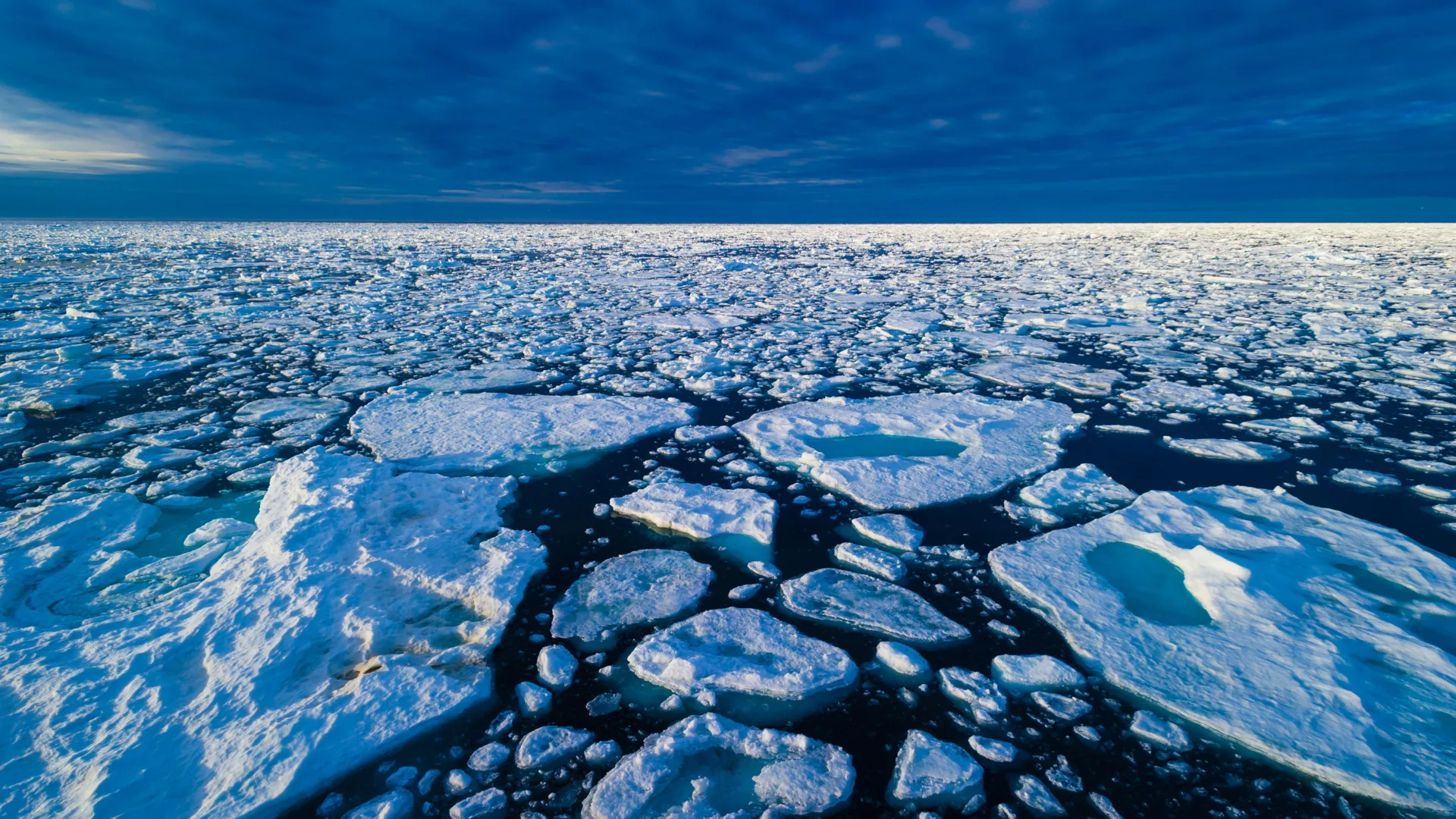
A new study published in Nature Geoscience indicates that Arctic winter sea ice loss may be substantially greater than existing climate projections suggest. Researchers from the University of Cambridge and Mexico’s Centro de Investigación en Matematicas assembled evidence showing the Arctic could lose approximately one million square kilometers more winter ice than earlier estimates. The findings carry potential implications for winter weather patterns across the United Kingdom and other European regions.
Winter sea ice plays a critical role in regulating global weather by controlling heat and moisture transfer from the ocean to the atmosphere. Observations documented that winter sea ice reached its lowest annual maximum extent in March 2025 since modern monitoring began, with the Arctic matching that record again in 2026. Despite the significance of winter ice conditions, climate models have historically shown greater disagreement when predicting winter ice coverage compared to summer ice decline.
To improve forecasting accuracy, researchers examined evidence preserved in Arctic Ocean sediments from approximately 6,000 years ago during the mid-Holocene period, when warmer conditions and reduced ice cover prevailed. The team analyzed a biomarker called IP25, produced by algae living within sea ice, and compared these ancient measurements against simulations from 27 climate models. Using a statistical weighting method called Bayesian analysis, the researchers assigned greater importance to models that more accurately matched historical evidence, then applied this improved weighting to future projections.
The comparison revealed that climate models collectively overestimated winter sea ice coverage in the ancient period. When the refined model weights were applied to future simulations, projections showed substantially lower ice coverage than previous estimates, with uncertainty ranges in some projections reduced by as much as 85%. The underlying physical mechanisms controlling sea ice melting remain consistent whether warming originates from natural orbital variations or human activities, according to the researchers.
The revised projections suggest wider consequences beyond Arctic ice loss itself. When researchers applied the improved model weighting to precipitation forecasts, they identified indications that current models may underestimate future snowfall in southeastern Greenland and rainfall across the Mediterranean region. These changes could affect Greenland ice sheet stability and flood risks in southern Europe, suggesting Arctic warming effects may prove more extensive than existing predictions indicate.
Article Attribution | Read More at Article Source
Article summary produced by Claude AI