

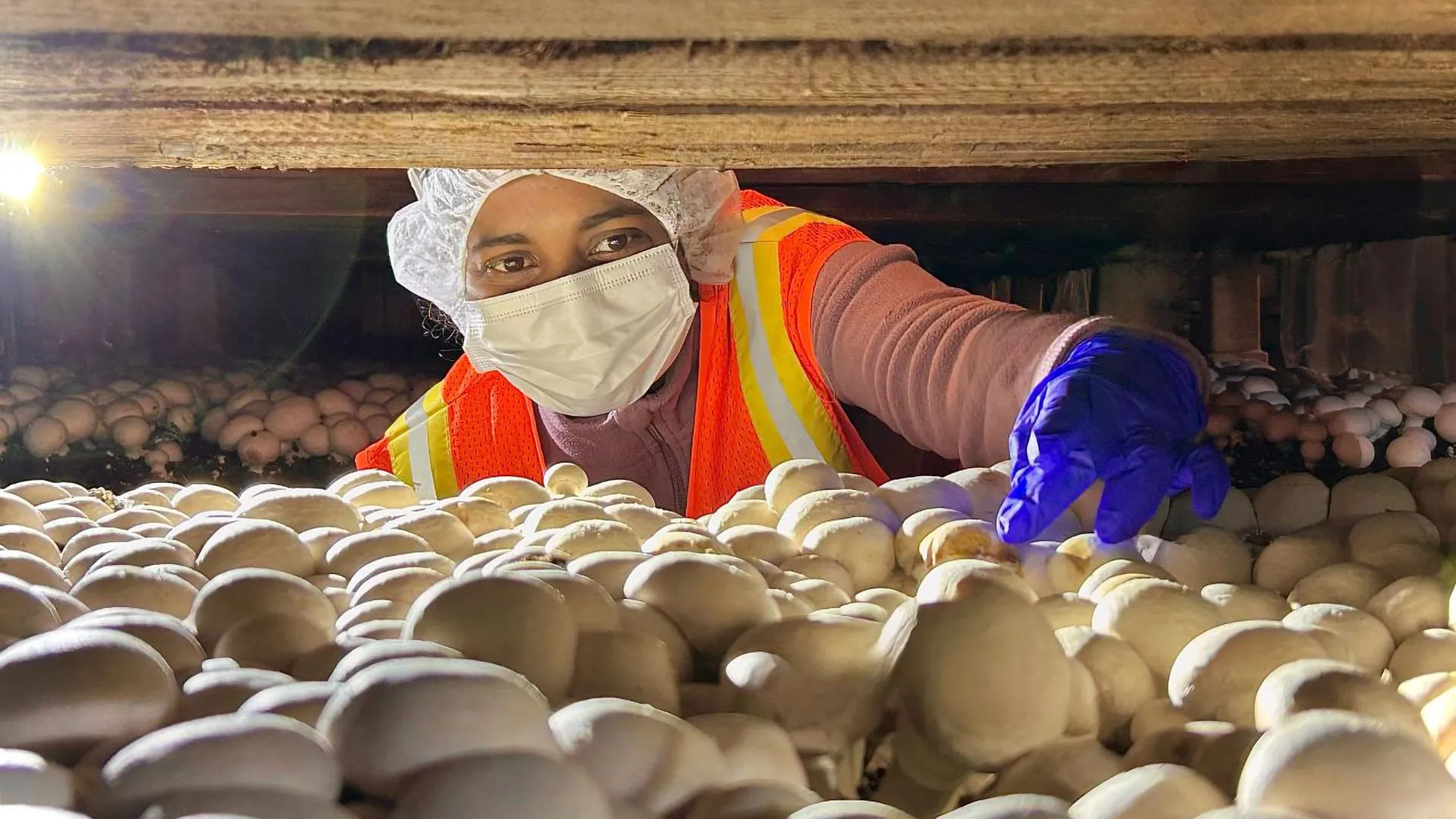
A disease affecting white button mushrooms for more than 100 years is significantly more complex than previously understood, according to research from the University of Florida. Bacterial blotch, which causes brown or yellow discoloration on mushroom surfaces, has long plagued commercial growers by reducing product appearance, crop yields, and shelf life. The condition can develop after mushrooms have already reached stores or consumers, making quality control particularly challenging for producers across the United States.
Researchers at the University of Florida Institute of Food and Agricultural Sciences investigated the underlying causes of bacterial blotch by collecting affected mushrooms from production facilities in the southern United States. Using DNA sequencing, chemical profiling, and laboratory testing, the team identified the genetic identities and characteristics of microorganisms present in damaged samples. The analysis revealed substantially more microbial diversity than anticipated, with over 17 different pathogenic bacterial species associated with the disease. While two well-established bacterial pathogens remained prominent, researchers also detected a previously unknown bacterial group contributing to the condition.
The discovery of this hidden complexity may clarify why bacterial blotch has persisted despite generations of management efforts. When multiple microorganisms cause a single disease, identifying pathogens, predicting outbreaks, and developing consistently effective treatments become substantially more difficult. Current treatment approaches designed to target individual pathogens may prove insufficient against this diverse array of disease-causing bacteria that thrive in the humid, controlled environments of commercial mushroom cultivation.
The research team is now pursuing follow-up studies to develop sustainable management strategies. Potential approaches include testing plant-based essential oils and beneficial microorganisms as alternatives to conventional chemical treatments. These biological products may suppress harmful bacteria or reduce conditions favorable to disease-causing organisms. Scientists aim to provide growers with practical, evidence-based solutions that control bacterial blotch while promoting environmental sustainability and reducing reliance on chemical interventions.
Article Attribution | Read More at Article Source
Article summary produced by Claude AI