

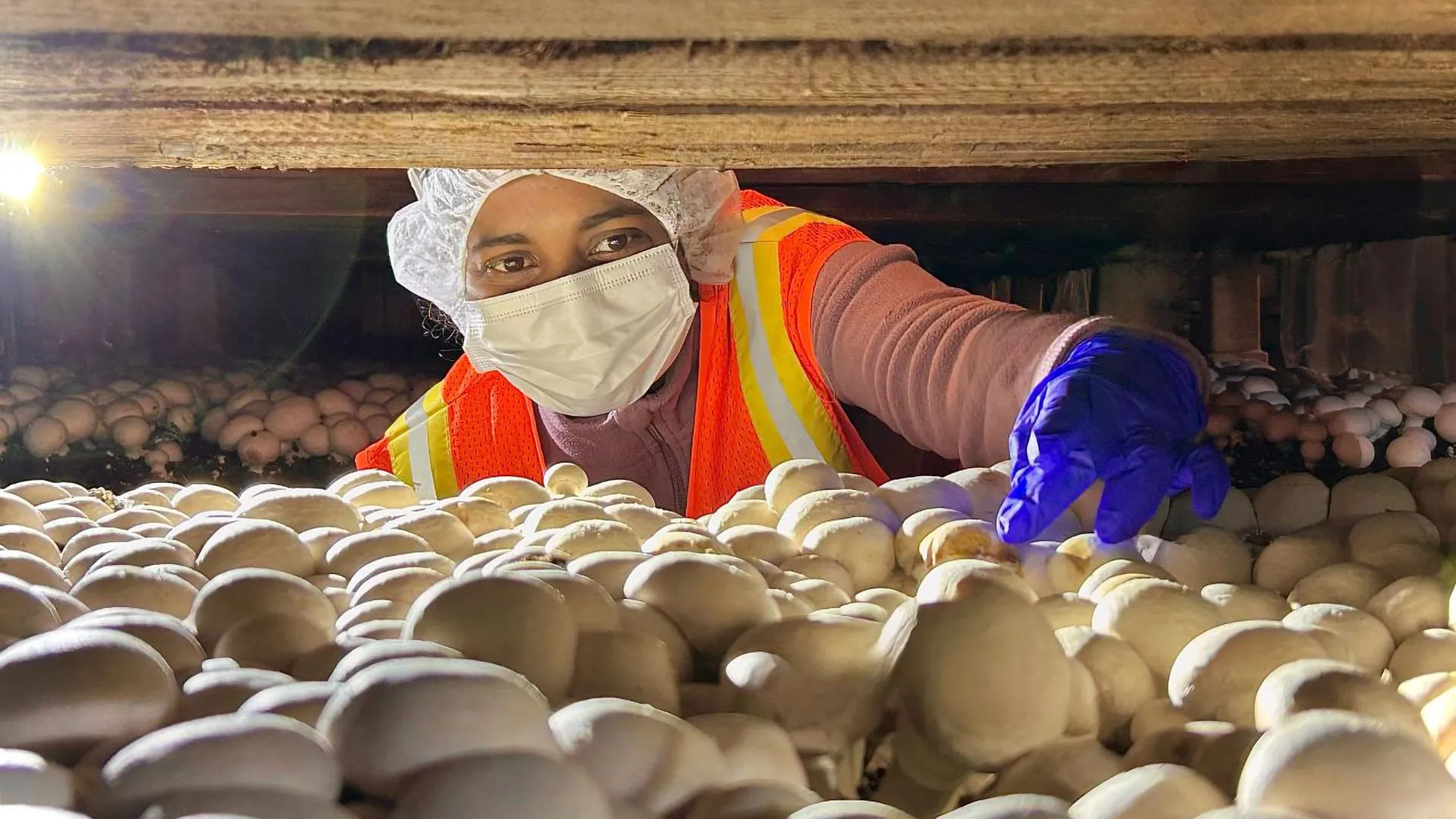
A disease affecting white button mushrooms for more than a century has proven far more complex than previously understood, according to research from the University of Florida. Bacterial blotch, which causes brown or yellow discoloration on mushroom surfaces, has long troubled commercial growers by damaging crop appearance, reducing yields, and shortening shelf life. The condition sometimes develops only after mushrooms reach retail shelves, compounding losses for producers.
Researchers at the University of Florida Institute of Food and Agricultural Sciences investigated samples collected from production facilities across the southern United States. Using DNA sequencing, chemical analysis, and laboratory testing, scientists identified the microorganisms present in affected mushrooms. The analysis revealed substantially more diversity among disease-causing bacteria than previously documented.
The study identified more than 17 different bacterial species associated with the disease. While two well-established pathogens remained prominent in samples, researchers detected a previously unrecognized group of bacteria contributing to bacterial blotch. This finding suggests that scientists had been overlooking important factors in understanding the disease, and that managing it through single-pathogen approaches may be insufficient given the involvement of multiple microbial species.
Building on these findings, researchers are pursuing more sustainable management approaches. The team is testing plant-based essential oils, beneficial microorganisms, and biological products as potential alternatives to conventional chemical treatments. These methods could offer growers additional tools for disease control while reducing reliance on chemical interventions. The research is part of a broader collaborative effort supported by a seven million dollar Department of Agriculture grant involving Penn State, the University of Delaware, and the University of Florida to develop advanced diagnostics and solutions for mushroom farming nationwide.
Article Attribution | Read More at Article Source
Article summary produced by Claude AI