

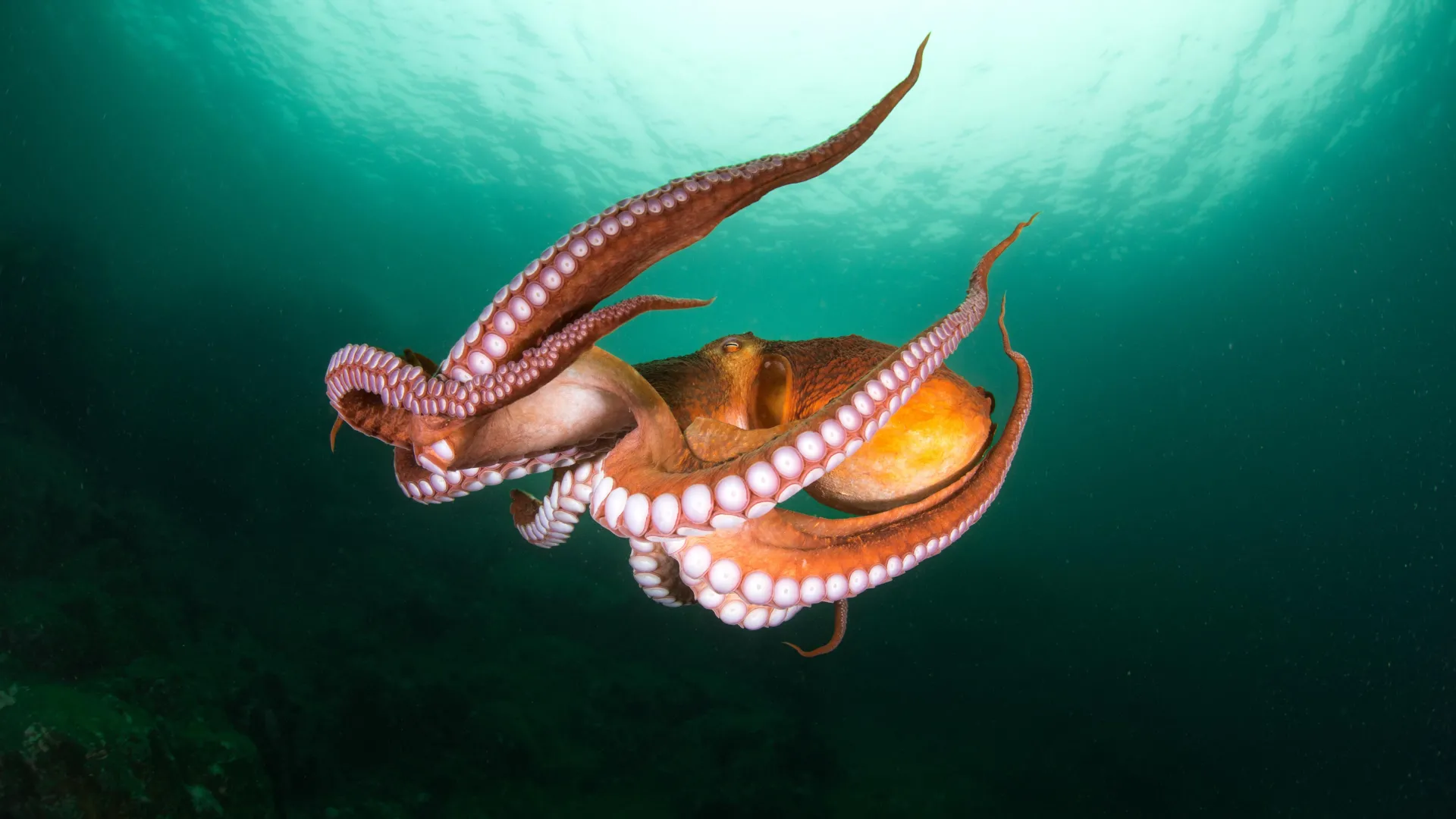
Researchers at the University of Vienna have identified a potential mechanism underlying the exceptional intelligence and neural complexity of cephalopods, including octopuses, squid, and cuttlefish. The study, published in Nature Communications, suggests that the three-dimensional organization of DNA played a more significant role in evolution than previously recognized.
The team reconstructed and compared the three-dimensional genome structure across multiple cephalopod species, examining how physical DNA arrangement relates to gene activity patterns. Rather than focusing on changes to genes themselves, the researchers found evidence that large-scale reorganization of DNA hundreds of millions of years ago brought previously distant genetic regions into close physical proximity. This reshuffling created new opportunities for genetic elements to interact and regulate one another, a process researchers term “regulatory entanglement.”
The researchers observed that genome reorganization affected different structural levels distinctly. Large chromatin domains, which organize DNA into broad sections within cells, remained relatively stable over evolutionary time. In contrast, smaller chromatin loops—structures formed when distant DNA sections come together in three dimensions—showed considerable variation between species, tissues, and developmental stages. Notably, many of these flexible connections appeared near genes associated with neural development and function.
The findings suggest that physical genome rearrangement can generate new patterns of gene activity without altering fundamental genetic instructions, potentially allowing evolution to produce complex biological features while preserving essential functions. While the study does not conclusively establish that DNA reorganization directly caused the evolution of cephalopod intelligence, it reveals a plausible mechanism through which ancient genetic rearrangements could have contributed to their development of sophisticated nervous systems.
The research highlights an underexplored dimension of evolutionary biology, indicating that the emergence of extraordinary biological traits may depend not only on which genes organisms inherit but also on how those genes are physically arranged and connected within cells.
Article Attribution | Read More at Article Source
Article summary produced by Claude AI