

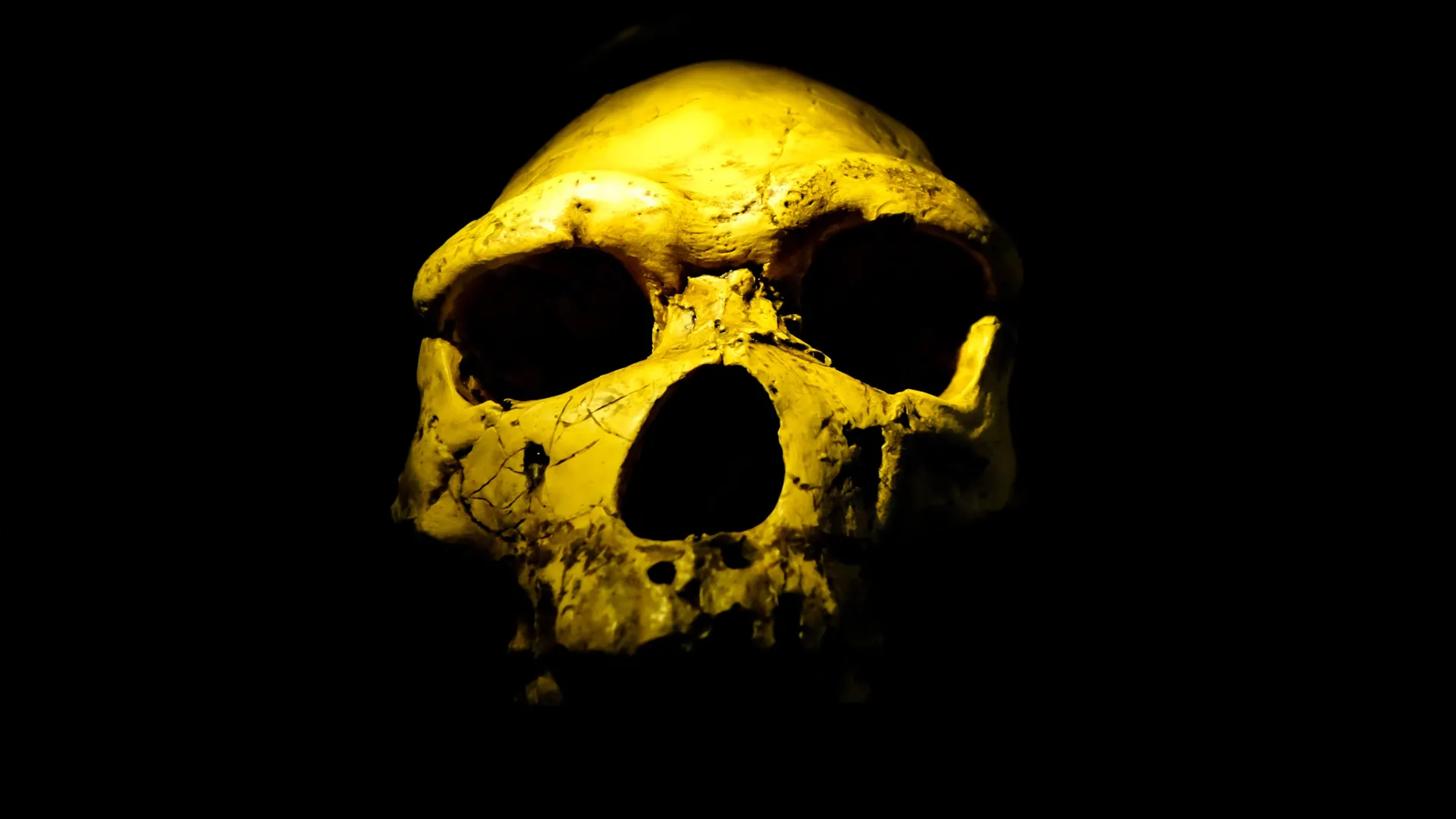
Researchers from La Trobe University have formally described 18 previously unpublished hominin fossils from Drimolen Main Quarry in South Africa’s Cradle of Humankind region. The collection includes remains attributed to Homo erectus and Paranthropus robustus, with findings published in Annals of Human Biology. The discoveries push back the timeline for Homo erectus presence in southern Africa to approximately 2.0 million years ago, predating other known adult specimens of the species by roughly 200,000 years.
Among the newly described fossils is an adult Homo erectus specimen designated DNH 127, which provides confirmation that this species first appeared in the region 2 million years ago. Previous evidence from the same site consisted of a juvenile fossil dating to the same period, leaving uncertainty about adult characteristics. The new adult specimen helps establish a clearer picture of the early Homo erectus population. Other known adult Homo erectus fossils, such as those from Dmanisi in Georgia, date to approximately 1.8 million years ago, making the South African finds notably older.
The fossil assemblage reveals divergent evolutionary strategies between Homo erectus and P. robustus during the period between 2.0 and 1.8 million years ago. Homo erectus developed larger brains and smaller molars, likely reflecting a dietary shift toward meat consumption, while P. robustus evolved increasingly robust teeth and powerful jaw muscles adapted for processing tough, fibrous foods. At Drimolen during this time, P. robustus outnumbered Homo erectus by more than tenfold, despite Homo erectus eventually becoming the successful lineage leading to modern humans.
The research also demonstrates evolutionary change within P. robustus populations separated by approximately 200,000 years. Fossils from Drimolen at 2.0 million years ago show smaller dental features compared to later P. robustus specimens from Swartkrans dated to 1.8 million years ago, indicating gradual increases in tooth size and associated musculature. These findings support formal designation of the Drimolen population as a distinct subspecies, P. robustus ukusa. The large number of fossils from a single site provides rare opportunity to observe incremental evolutionary modifications in hominin lineages.
Article Attribution | Read More at Article Source
Article summary produced by Claude AI