

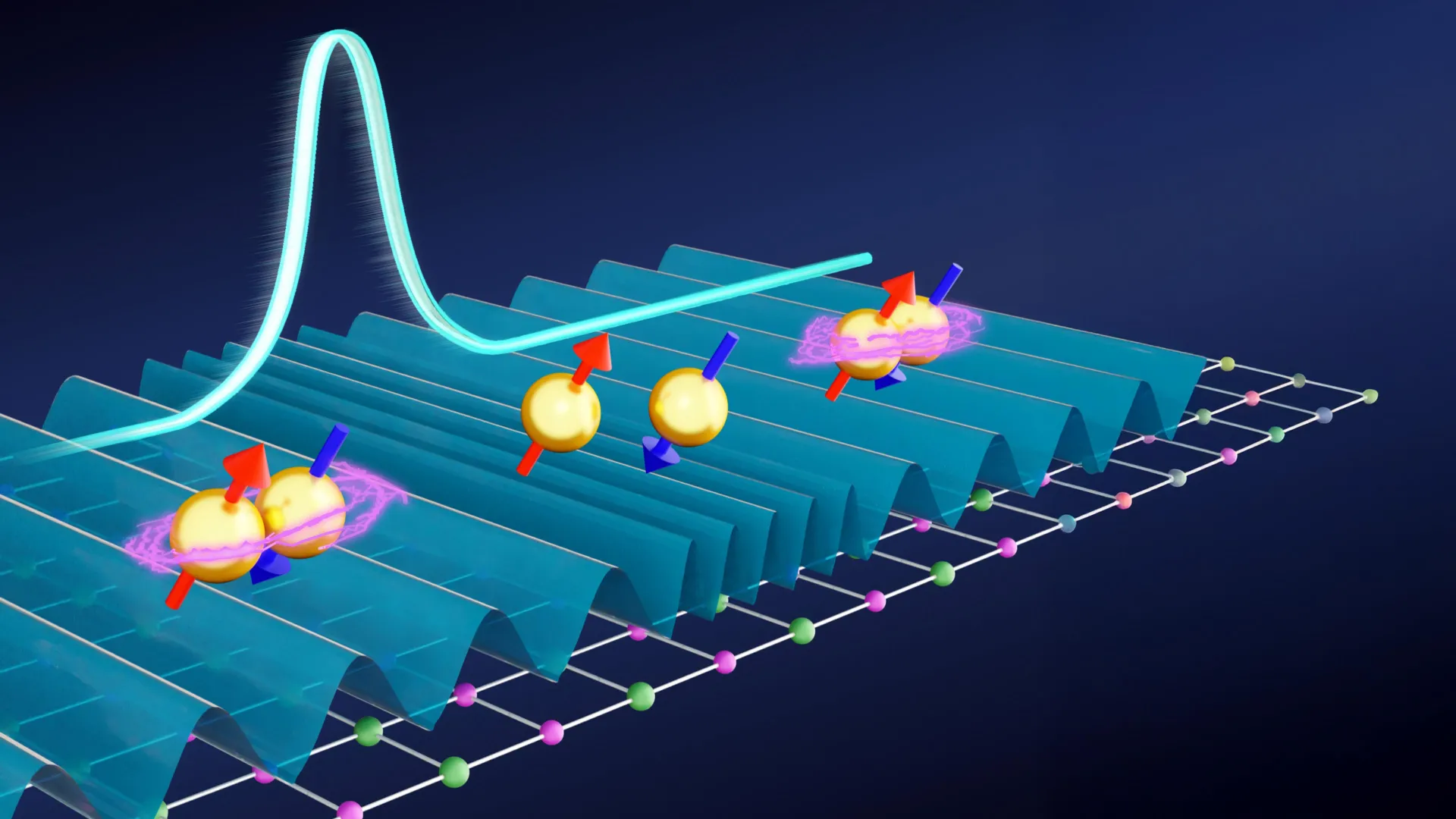
Researchers have demonstrated a technique to measure superconductors at current levels far exceeding their conventionally observed limits by employing exceptionally brief electrical pulses. Superconductors normally cease functioning when electrical current becomes too strong, with performance typically constrained by the movement of microscopic vortices rather than the true physical limit of the superconducting state itself.
The team developed an approach using ultrafast electrical pulses lasting only a few picoseconds to circumvent this constraint. Because vortices move only tens of nanometers during such brief time periods, despite traveling at speeds of tens of kilometers per second, the researchers were able to drive current through superconducting samples before vortex motion could generate significant heat or resistance. This method allowed measurement of the depairing current, a fundamental theoretical limit at which the quantum pairs responsible for superconductivity begin to destabilize.
The experimental setup employed a specialized platform using photoconductive switches activated by laser pulses to generate the required electrical bursts. The system was tested on two distinct superconducting materials: NbN and YBCO, chosen because they represent fundamentally different types of superconductivity with different internal structures. NbN exhibited a sharp transition to normal conductivity once current exceeded a threshold substantially higher than its conventional critical current, while YBCO showed progressive weakening of its superconducting state rather than an abrupt failure.
These contrasting responses reflected the different microscopic structures of the two materials, suggesting that picosecond transport measurements can reveal gap symmetry characteristics not visible through standard measurements. The findings indicate that ultrafast electrical pulses can expose superconducting phenomena normally masked by slower processes, potentially opening new avenues for investigating quantum materials and developing superconductor applications in optoelectronics and magnetic devices.
Article Attribution | Read More at Article Source
Article summary produced by Claude AI