

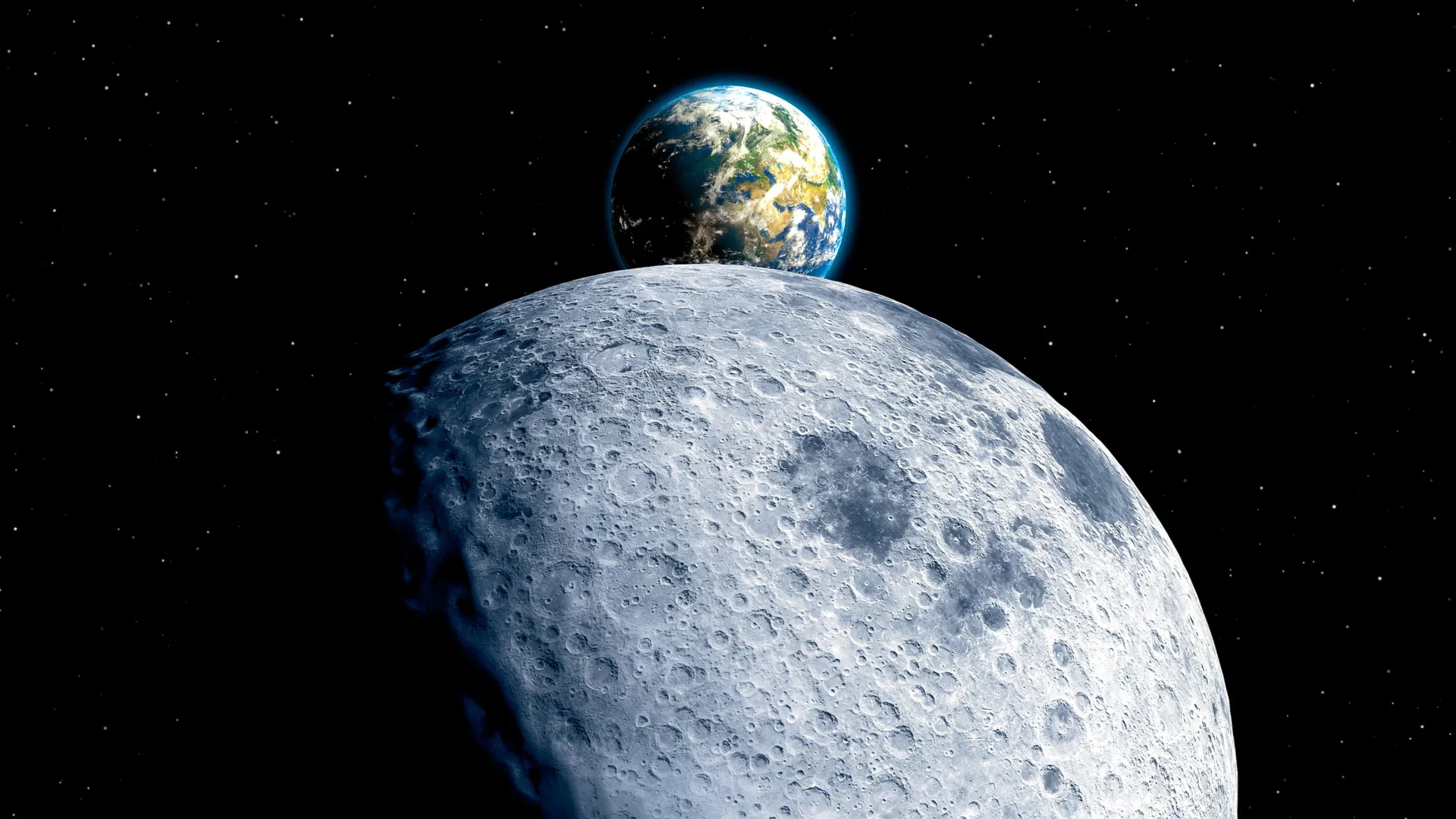
A research team led by Professor Hejiu Hui of Nanjing University has presented new findings addressing why the Moon’s near and far sides appear so chemically distinct. The researchers examined samples collected by China’s Chang’e-6 mission alongside material gathered during the Apollo and Chang’e-5 missions, analyzing three types of lunar rock: anorthosites, Mg-suite rocks, and mare basalts. Their investigation focused on understanding the origin of the Moon’s striking contrasts, which have puzzled scientists for decades.
The Moon’s near side features extensive dark volcanic plains and elevated concentrations of potassium, rare earth elements, and phosphorus, while the far side is characterized by heavily cratered ancient highlands with a thicker crust and fewer volcanic plains. Previous theories to explain these differences have included variations in primordial magma ocean circulation, large-scale impacts, tidal heating, and uneven crustal development, though none achieved universal scientific acceptance. A key outstanding question involved whether these visible surface and crustal differences extended into the Moon’s deeper mantle.
The Chang’e-6 samples revealed a significant finding: the mantle materials beneath both hemispheres show similar chemical compositions. Basalts from Chang’e-6 demonstrated chemical signatures comparable to low-titanium basalts brought back by Apollo missions, suggesting that the mineral layers accumulated from the Moon’s original magma ocean do not differ substantially between the two sides. Analysis of Mg-suite rocks reinforced this conclusion, as samples from both hemispheres displayed similar magnesium ratios.
However, the lunar crust tells a contrasting story. Anorthosite samples from Chang’e-6 contained more magnesium-rich material than Apollo counterparts, and Mg-suite rocks from the far side showed notably lower concentrations of rare earth elements. The researchers proposed that after the Moon became tidally locked to Earth, gravitational forces generated uneven heating, creating temperature differences in the lunar interior. This triggered large-scale horizontal circulation of molten material, transporting magnesium-rich crustal material toward the far side while directing enriched late-stage materials toward the near side, ultimately producing the Moon’s characteristically different hemispheres while maintaining mantle uniformity.
Article Attribution | Read More at Article Source
Article summary produced by Claude AI