

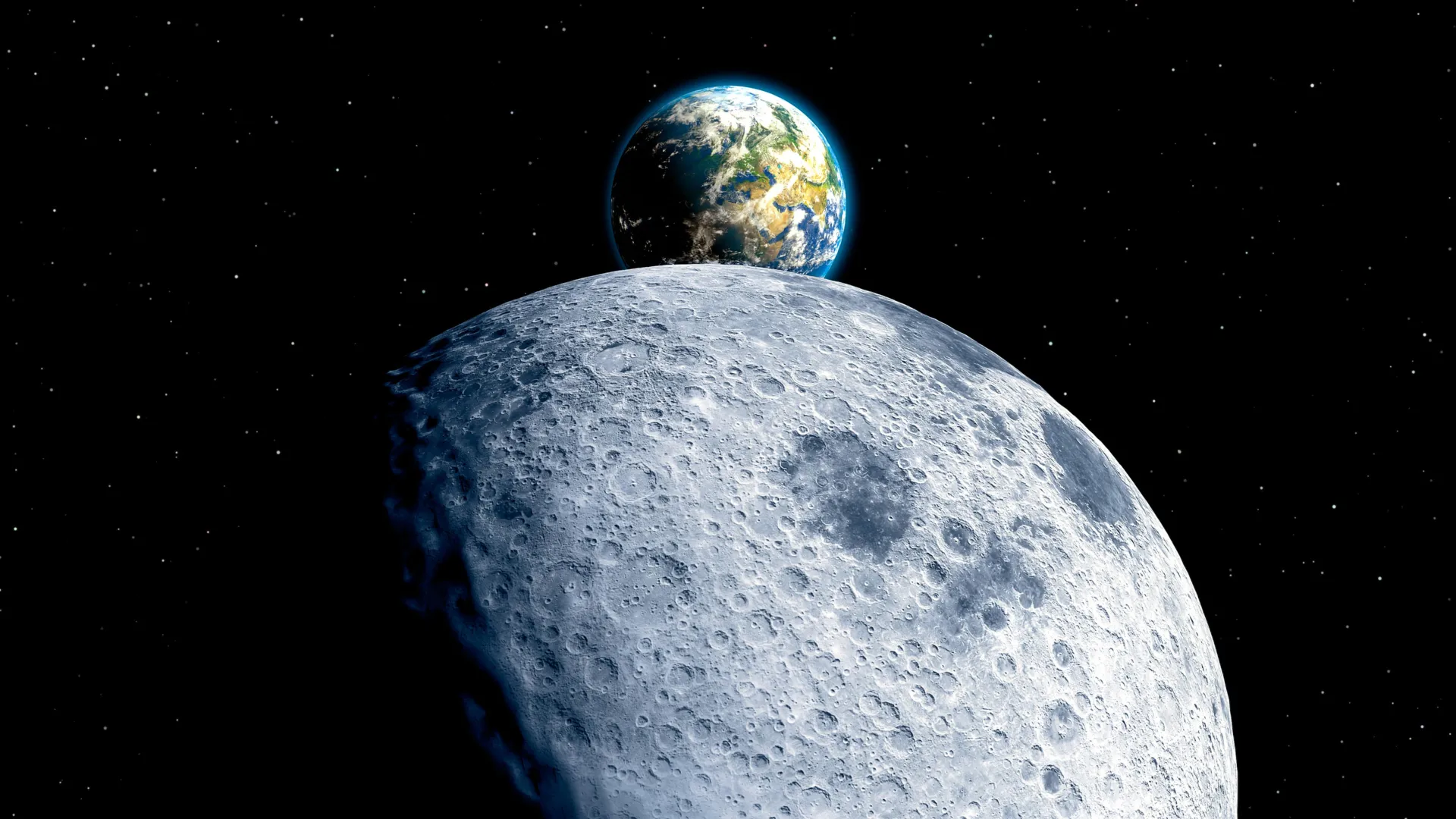
A research team led by Professor Hejiu Hui of Nanjing University has analyzed lunar samples collected by China’s Chang’e-6 mission to investigate why the Moon’s near and far sides display such contrasting geological characteristics. The near side features dark volcanic plains with high concentrations of certain chemical elements, while the far side is dominated by ancient highlands with a thicker crust and fewer volcanic features. This dichotomy has puzzled scientists for decades, with multiple competing theories proposed to explain its origins.
The analysis of Chang’e-6 samples compared with rocks previously collected during the Apollo and Chang’e-5 missions revealed a significant finding: the Moon’s mantle material shows similar chemical composition across both hemispheres. Basalt and Mg-suite rock samples from the far side displayed chemical signatures comparable to those from the near side, suggesting that the minerals accumulated during the Moon’s early magma ocean crystallization process did not differ substantially between the two sides.
However, the lunar crust tells a markedly different story. Samples from Chang’e-6 showed that the far side’s crust contains higher concentrations of magnesium-rich material compared to Apollo samples from the near side. Additionally, far-side samples contained notably lower concentrations of certain rare earth elements, indicating that the crust developed with significant compositional differences between the hemispheres.
Based on these findings, the research team proposed a model explaining the Moon’s two distinct faces. They suggest that after the Moon became tidally locked to Earth in its early history, gravitational tidal forces generated uneven heating across the lunar interior. This temperature difference triggered large-scale horizontal circulation of magma within the Moon’s molten regions. Hot material from the near side flowed toward the far side, transporting magnesium-rich crustal material and accumulating it on the far hemisphere, while late-stage chemical-rich materials concentrated preferentially on the near side. This heat-driven circulation mechanism, operating over billions of years, may account for how the Moon developed a chemically uniform mantle alongside dramatically different crustal compositions.
Article Attribution | Read More at Article Source
Article summary produced by Claude AI