

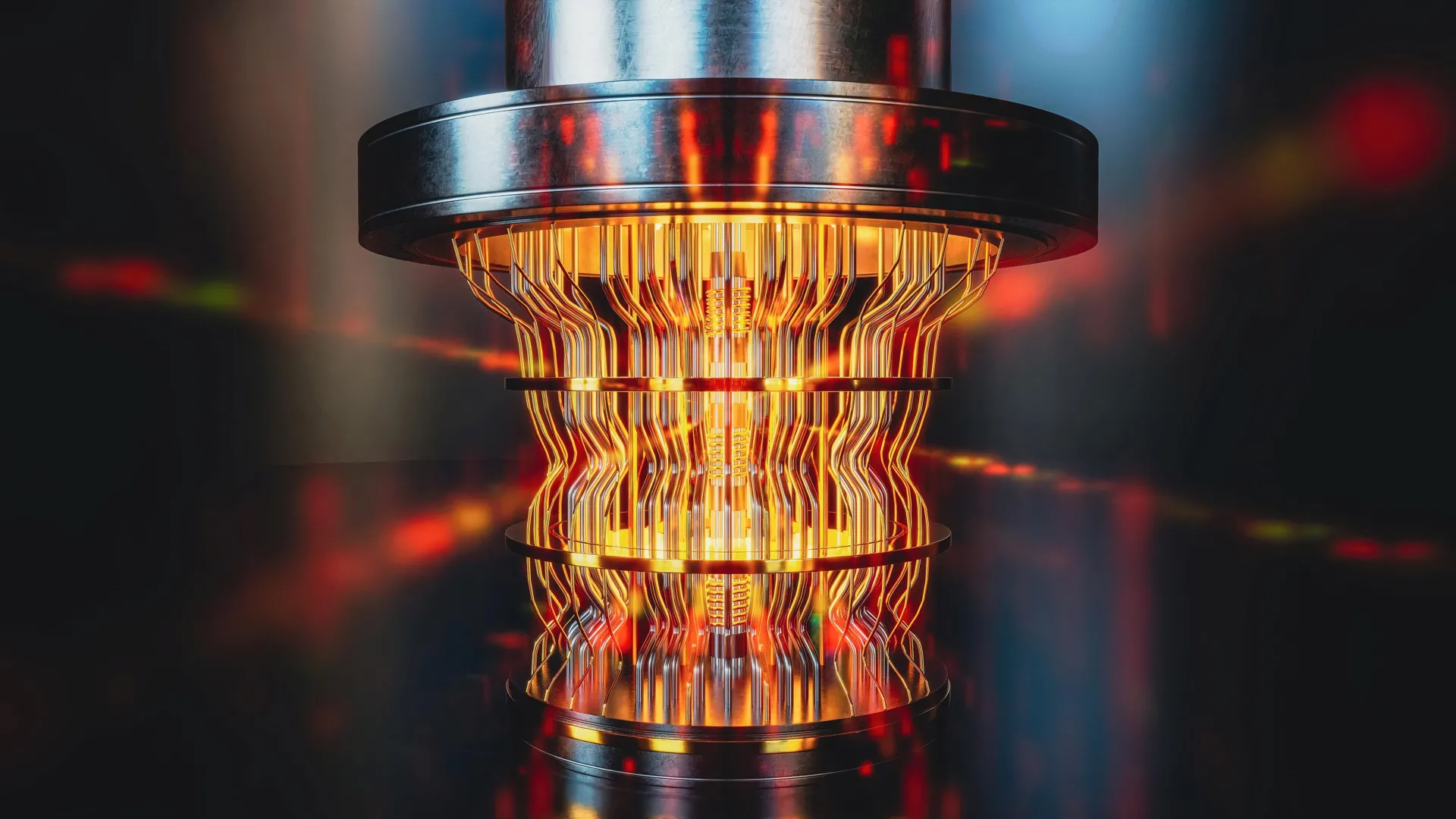
Scientists at the RIKEN Center for Emergent Matter Science and collaborators have made significant progress addressing a longstanding challenge in quantum computing. A study published in Nature Physics showed that silicon spin qubits—which are particularly promising because they can be manufactured using existing semiconductor production methods—can be controlled with high precision even when multiple qubits operate simultaneously.
The primary obstacle researchers had faced was that coordinated operation of several qubits together typically resulted in reduced accuracy. The team identified a major source of this problem: the AC Stark shift, a phenomenon where microwave control signals alter a qubit’s energy levels and introduce unintended phase shifts. These phase shifts accumulate when multiple qubits are controlled at once, degrading the quality of quantum operations. To address this issue, researchers developed a calibration technique that compensates for these unwanted shifts by using pairwise calibrations between qubits rather than requiring separate calibration for every possible combination—an approach that becomes increasingly practical as the number of qubits grows.
Experimental results demonstrated exceptional performance levels. Individual qubits achieved single-qubit gate fidelity exceeding 99.99%, with some approaching 99.999%. When three qubits operated simultaneously, fidelity remained above 99.99%. Even with all five qubits in the experimental array operating together, accuracy stayed around 99.9%—approaching the threshold required for practical fault-tolerant quantum computing. While the calibration method substantially reduced errors, some accuracy loss remains due to drive-induced decoherence caused by the higher microwave power necessary for simultaneous multi-qubit operation.
These findings have important implications for quantum processor development. Using shared microwave control lines rather than providing each qubit with independent controls offers a more practical approach to expanding quantum systems while maintaining precision. Combined with silicon’s compatibility with established semiconductor manufacturing processes, this advance could support the development of larger quantum processors. The ultimate goal is to create fault-tolerant quantum computers capable of performing complex, reliable calculations despite inherent quantum system errors—a milestone that depends critically on precisely controlling large numbers of qubits simultaneously.
Article Attribution | Read More at Article Source
Article summary produced by Claude AI