

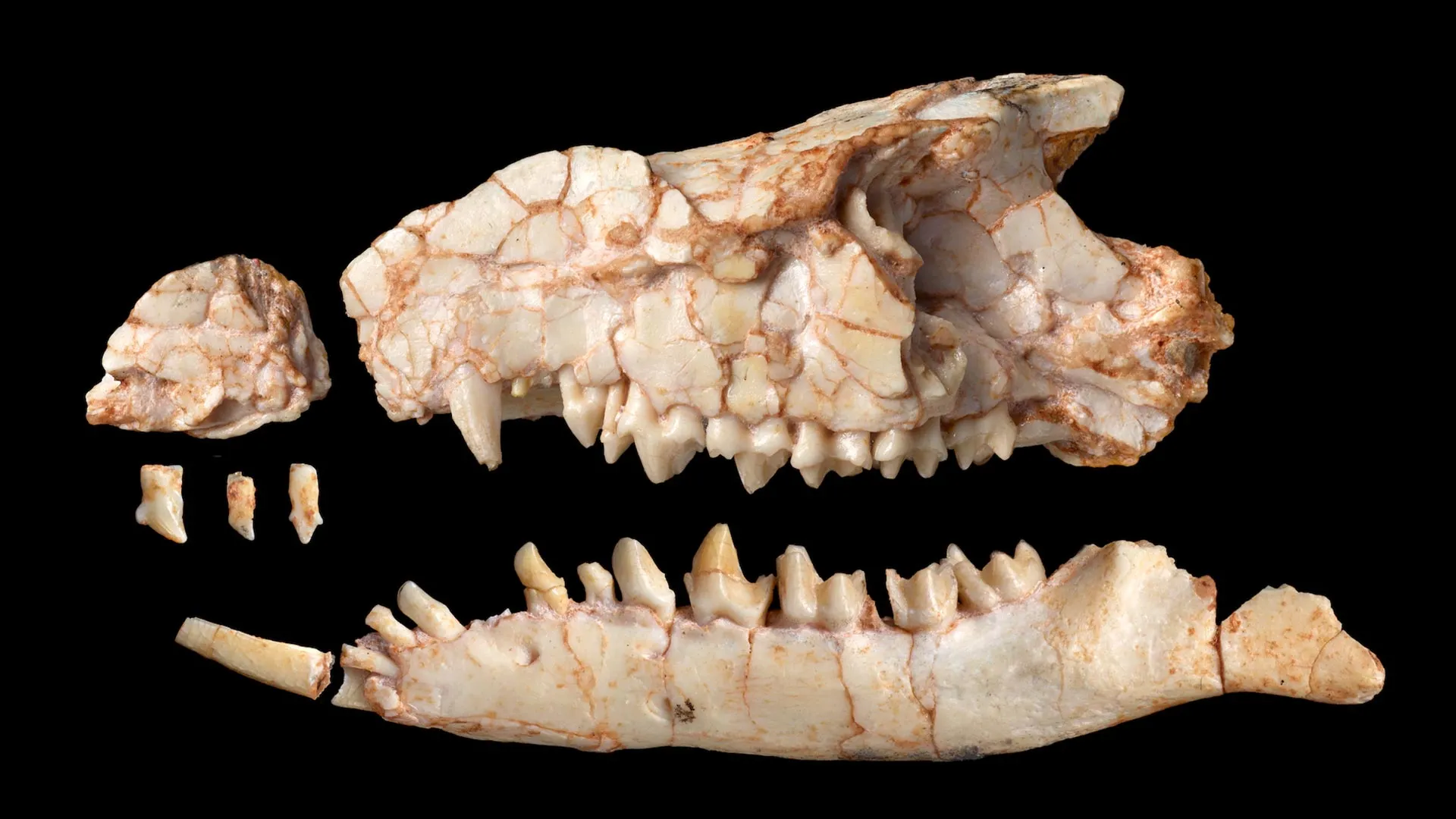
Researchers have identified a new mammal species from a remarkably preserved fossil found in Mongolia’s Gobi Desert, fundamentally altering scientific understanding of an extinct group called zhelestids. The specimen, named Tamirkhan balcarceli, was discovered during a museum-sponsored expedition and represents the most complete zhelestid fossil recovered to date.
For nearly 40 years, paleontologists primarily studied zhelestids through isolated teeth and fragmentary remains, leading to competing theories about their evolutionary origins. The specialized plant-eating teeth found in these animals prompted some scientists to hypothesize that zhelestids were either an unknown group of hoofed mammals or placental mammals that lived during the Cretaceous period. However, the new fossil evidence contradicts these long-held interpretations.
The nearly complete skeleton of Tamirkhan reveals features that place zhelestids within the zalambdalestoid group, small shrew-like insectivorous mammals, rather than among placental mammals as previously theorized. Key anatomical characteristics including long continuously-growing incisors, distinctive skull structures, and notably elongated hind limbs with specialized ankles indicate this alternative evolutionary relationship. The rounded teeth that had misled researchers appear to be an example of convergent evolution, where unrelated animals independently develop similar features in response to comparable environmental pressures.
The discovery underscores the limitations of relying on isolated tooth remains for understanding extinct species. While teeth provide valuable paleontological data, the research demonstrates that a complete skeletal framework is essential for accurate evolutionary classification. The findings also contribute to broader understanding of Cretaceous mammalian diversity and anatomy, suggesting these animals may have been less anatomically varied than tooth morphology alone would indicate.
The Gobi Desert continues to serve as a critical source for well-preserved mammal fossils from the age of dinosaurs, with ongoing expeditions since 1990 yielding exceptional specimens that reshape understanding of mammalian evolutionary history.
Article Attribution | Read More at Article Source
Article summary produced by Claude AI