

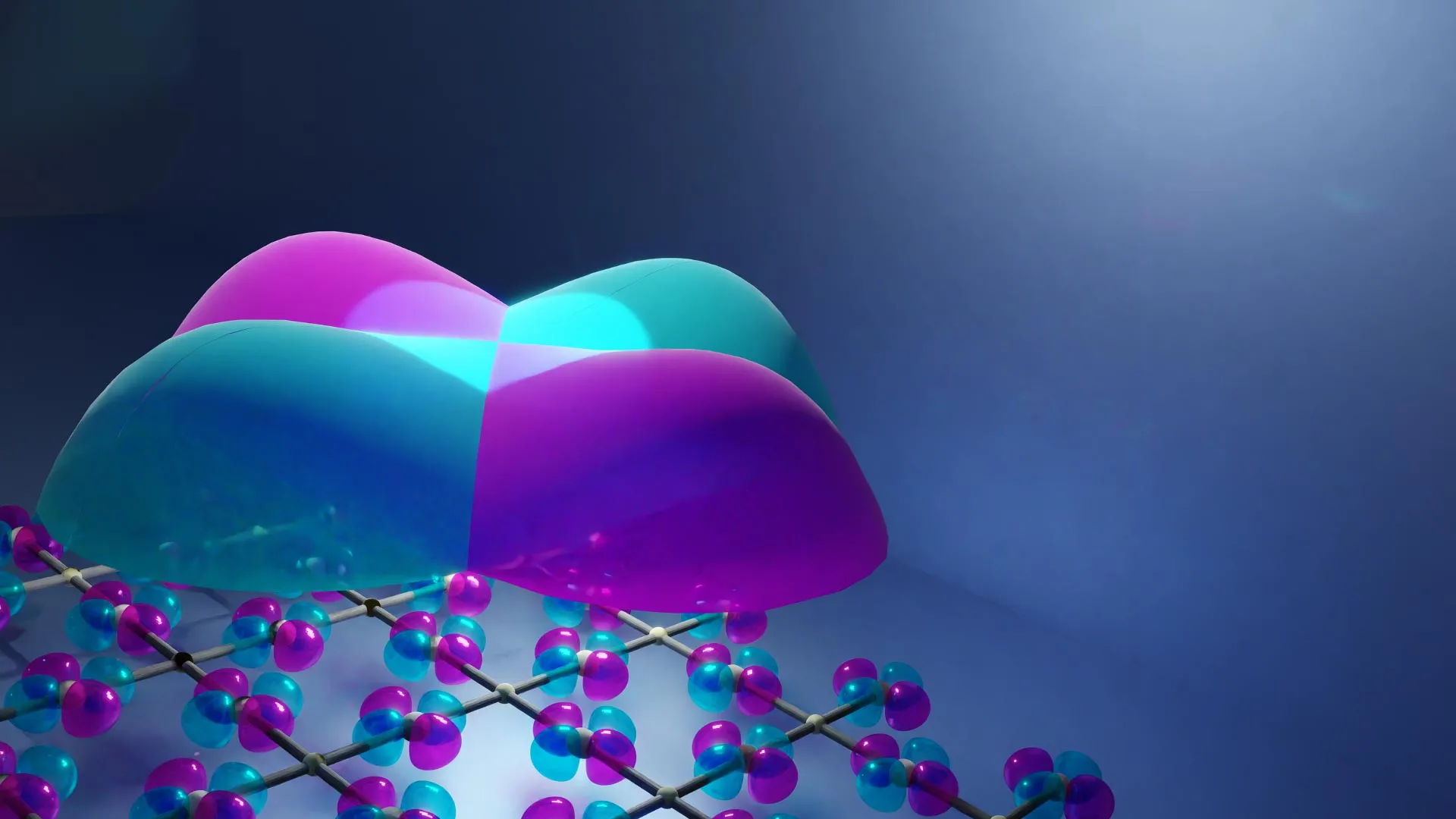
Three physicists have been awarded the 2026 Europhysics Prize for discovering altermagnetism, a previously unrecognized form of magnetic order that expands fundamental understanding of how magnetic materials behave. The recipients are Professor Jairo Sinova of Johannes Gutenberg University Mainz, Dr. Libor Šmejkal, and Professor Tomas Jungwirth of the Institute of Physics of the Czech Academy of Sciences in Prague. Their work established altermagnetism as a distinct magnetic classification alongside the two forms—ferromagnetism and antiferromagnetism—that physicists had recognized for over a century.
The theoretical framework for altermagnetism emerged from collaborative research between Sinova’s group at Mainz University and Jungwirth’s team in Prague. Šmejkal played a central role in developing the theoretical foundations while conducting doctoral and postdoctoral research at Mainz between 2016 and 2024. By applying advanced mathematical approaches to symmetry and spintronics—the study of electron spin in electronic devices—the researchers identified a previously overlooked pattern of magnetic behavior that had remained hidden despite the maturity of the field.
Altermagnetism combines properties of both ferromagnets and antiferromagnets in an unexpected way. Like antiferromagnets, altermagnets have magnetic moments that cancel out, producing no net magnetization. However, their electrons can display characteristics previously associated only with ferromagnets, allowing them to support strongly spin-polarized electrical currents while exhibiting rapid magnetic dynamics. These unusual properties could enable new spintronic devices with enhanced speed and capabilities for information technologies.
The theoretical predictions attracted experimental validation from research teams worldwide. Measurements using angle-resolved photoemission spectroscopy and electrical transport analysis confirmed altermagnetic behavior in multiple materials. The discovery has grown into one of the most active research areas in condensed matter physics, with hundreds of scientific papers published and substantial international attention at physics conferences across Europe, North America, and Asia.
Beyond potential electronics applications, altermagnetism has revealed connections to topological phenomena, unconventional superconductivity, and quantum materials with strong electron interactions. The award ceremony took place in September 2026 at the European Physical Society Condensed Matter Division conference in Graz, Austria.
Article Attribution | Read More at Article Source
Article summary produced by Claude AI