

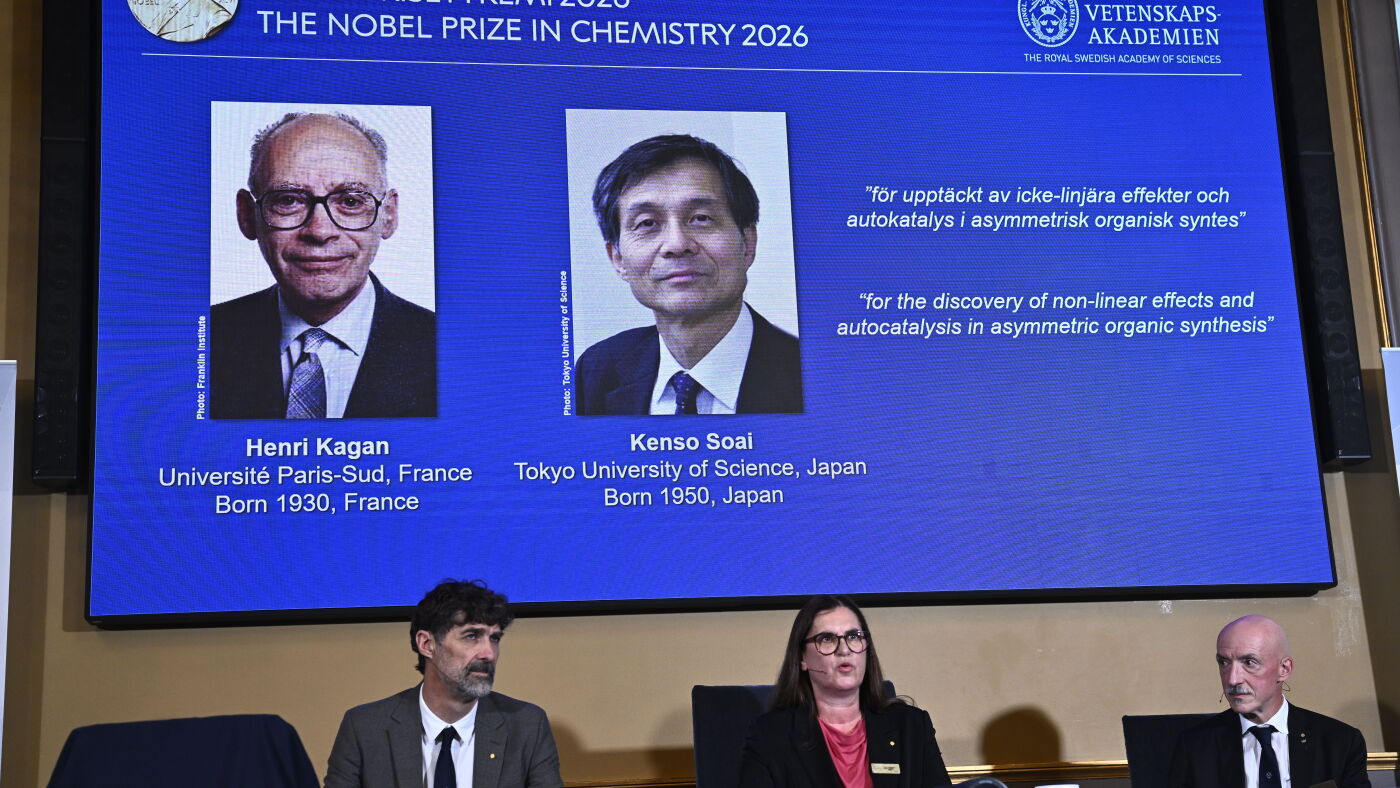
Henri B. Kagan of France and Kenso Soai of Japan were awarded the 2026 Nobel Prize in Chemistry for their work on mirror-image molecules, a discovery that has fundamentally shaped modern pharmaceutical development. Many molecules exist in versions that appear similar but are not identical, comparable to right and left hands. The two scientists developed methods to control chemical reactions so that only the desired mirror image form is produced, addressing a critical challenge in drug design and chemical manufacturing.
The distinction between molecular mirror images can have significant practical consequences. For instance, the chemical compound carvone exists in two forms: one smells of mint while the other carries the scent of caraway. When developing medications, scientists must carefully select which version of a molecule to use, as the wrong form could worsen rather than treat a condition. Beginning in the 1980s, Kagan’s research suggested that reactions could be engineered to favor one molecular form over another. Soai later refined this approach, creating what is now called the Soai reaction—the first chemical process capable of efficiently producing only one of a molecule’s mirror images.
The Nobel committee described the achievement as a feat previously accomplished only by life itself. Kagan, affiliated with Université Paris-Sud in France, is 95 years old, while Soai, 76, is connected to Tokyo University of Science. French President Emmanuel Macron and other institutions congratulated Kagan on the recognition. Soai learned of his award while shopping at a neighborhood supermarket and expressed his excitement about the honor.
The applications of this chemistry extend beyond pharmaceuticals. The work provides tools for developing improved catalysts and understanding how chemical reactions function. The research also deepens scientific understanding of how life constructs its own chemistry, since DNA naturally twists in one direction and human proteins predominantly use left-handed building blocks. Chemists and researchers continue to explore applications in fragrance development and environmental science, including potential uses for capturing greenhouse gases and extracting moisture from arid environments. The prize includes 12 million Swedish kronor in monetary award.
Article Attribution | Read More at Article Source
Article summary produced by Claude AI