

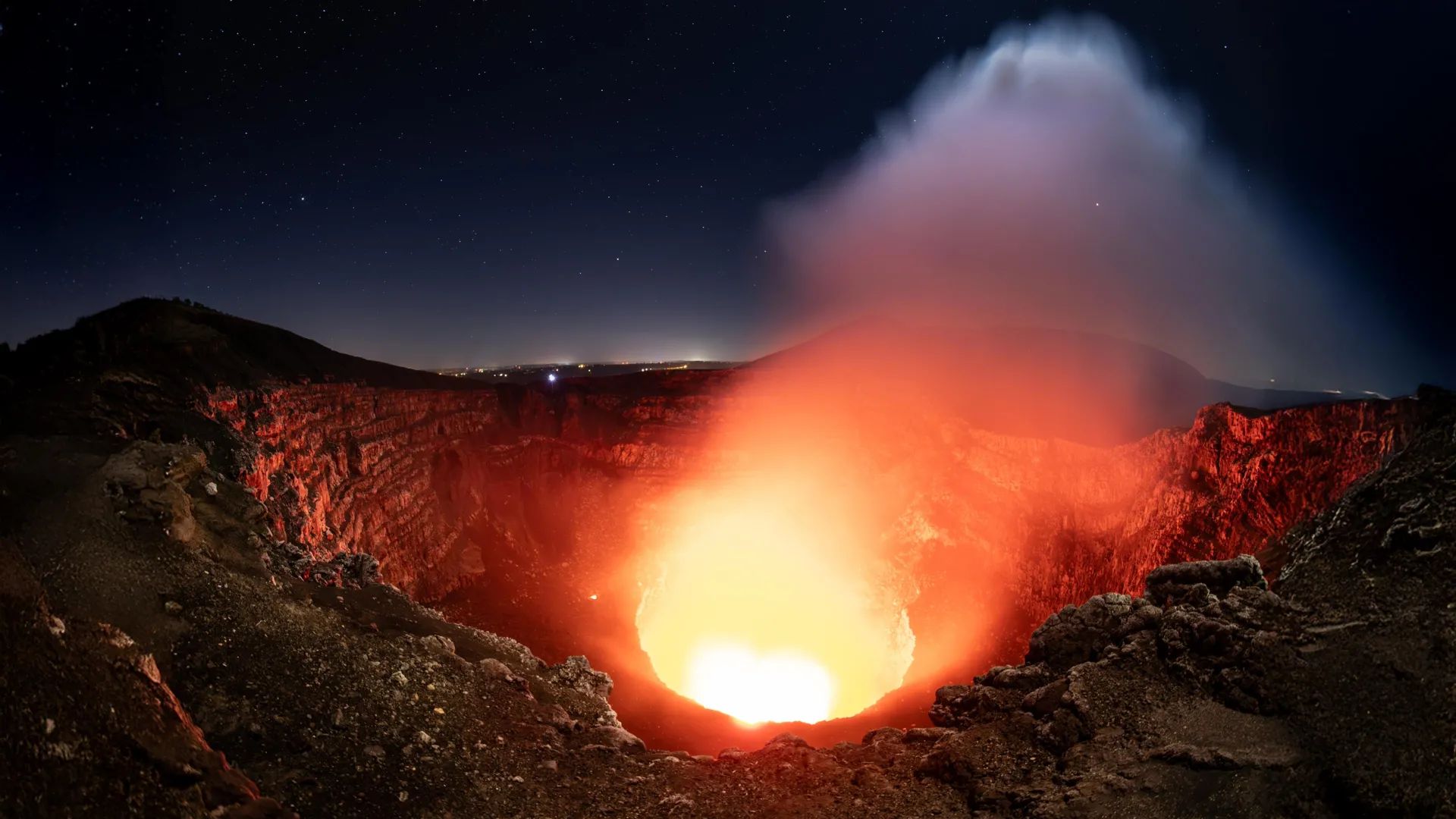
Researchers at Penn State University have identified evidence of two separate magma sources operating beneath Masaya volcano in Nicaragua, according to findings published in Geophysical Research Letters. The discovery emerged from analysis of six years of satellite data tracking ground movements around the volcano, which is located near Managua and home to approximately 2 million residents within a 13-mile radius. The volcano is also a significant tourist destination and national park, making understanding its underground activity particularly important for public safety.
Using interferometric synthetic aperture radar technology from the Sentinel-1 satellite, researchers tracked subtle changes in the volcano’s surface elevation between 2018 and 2024. The technique proved especially valuable for studying Masaya due to frequent cloud cover in the region, as radar signals can penetrate clouds where conventional imaging cannot. Lead researcher Lizzie Johnson noted that the observations help clarify how magma circulates beneath the volcano and may enhance future monitoring and eruption forecasting capabilities.
The satellite measurements revealed distinct patterns in ground movement across different areas of the volcano. Initially, the ground within the caldera subsided before transitioning to uplift, potentially indicating fresh magma entering a deep reservoir. Meanwhile, the area surrounding the active Santiago crater and lava lake continued sinking throughout the entire study period, suggesting a separate, shallower magma reservoir behaving independently. These opposing movements indicate a more complex underground plumbing system than previously documented.
Researcher Young Cheol Kim emphasized that continuous monitoring allows scientists to distinguish normal volcanic activity from changes that might signal heightened hazards or possible eruption. Although Masaya last produced a major lava flow in 1772, it remains geologically active and regularly releases sulfur dioxide gas, which can reach dangerous concentrations. Scientists stressed that their current observations do not indicate immediate danger but highlighted the importance of ongoing surveillance given the large population living near the volcano.
Article Attribution | Read More at Article Source
Article summary produced by Claude AI