

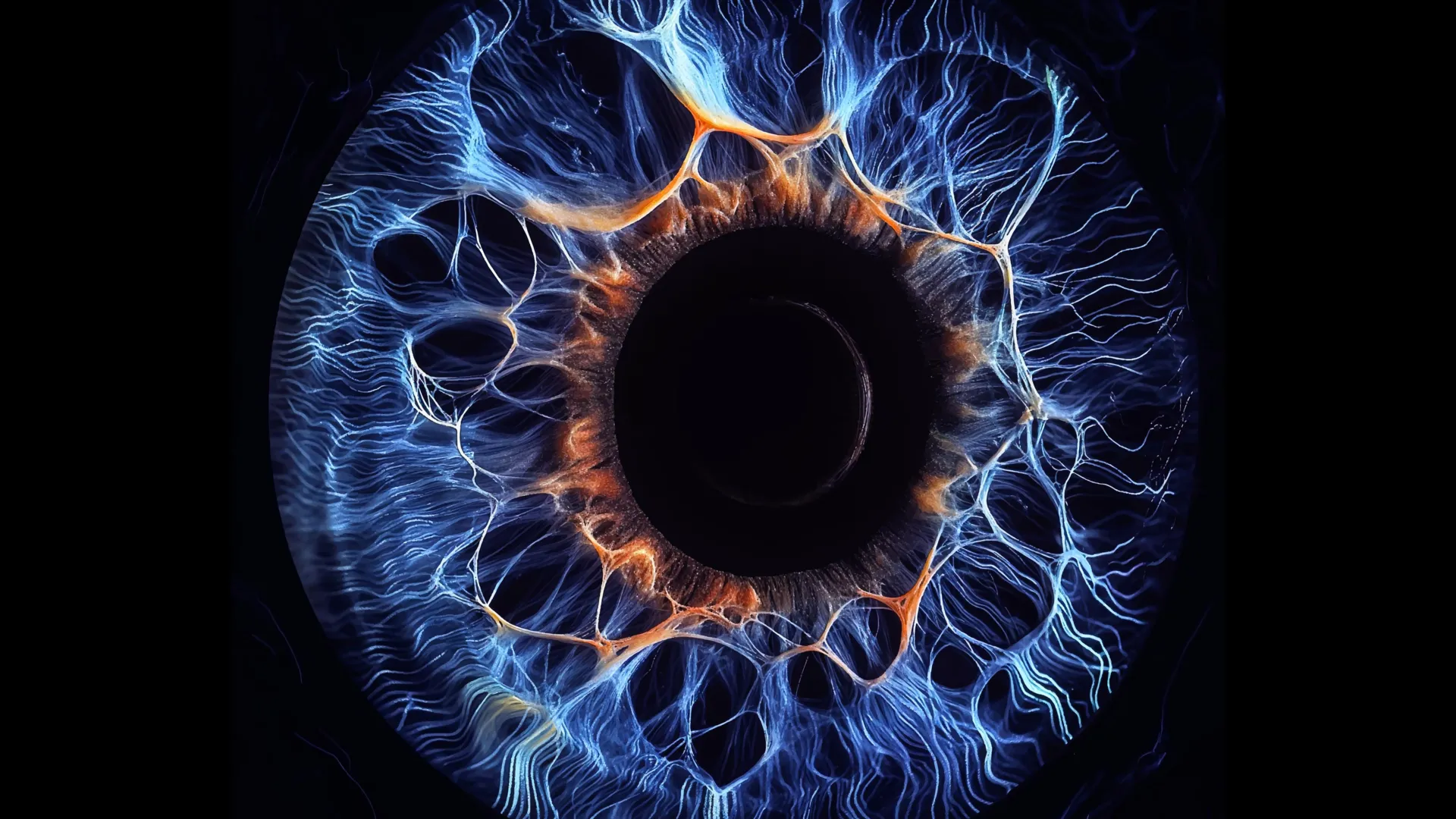
A team of scientists from the University of British Columbia and the University of Toronto has identified a previously unrecognized drainage pathway at the back of the eye. The system, termed the posterior ocular lymphatic outflow or POLO pathway, appears to allow fluid and waste to exit the eye and enter the body’s lymphatic system. This discovery represents a significant finding because the retina and surrounding tissues at the back of the eye are affected by major vision-loss conditions, yet researchers have historically struggled to explain how this sensitive region eliminates unwanted substances.
The retina is one of the body’s most metabolically active tissues, constantly generating byproducts that require removal. When fluid and waste accumulate in the back of the eye, they can contribute to serious conditions including glaucoma and age-related macular degeneration, which affects approximately 2.5 million Canadians. The newly identified POLO pathway suggests the eye possesses a natural mechanism for moving unwanted material away from this vulnerable region, potentially offering scientists a new target for developing therapies to protect vision.
The finding challenges scientific understanding that has persisted for more than a century. Researchers previously believed the eye lacked the lymphatic drainage systems present in nearly every other organ. Although scientists began revising this assumption in 2009 when lymphatic-related drainage was identified in the front of the eye through what was termed the uveolymphatic pathway, the back of the eye remained largely unexplored until this investigation.
To trace the drainage route, researchers used advanced imaging techniques in mice, including magnetic resonance imaging, near-infrared fluorescence imaging, and microscopic examination. They introduced fluorescent tracer molecules into the space at the rear of the eye and observed their movement through lymphatic vessels in the choroid, a blood vessel-rich layer beneath the retina. Within minutes, tracers reached nearby lymph nodes, demonstrating a direct connection between the eye’s newly identified drainage route and the body’s broader lymphatic system.
While the discovery provides new insights into how the eye may clear fluid and waste, substantial questions remain unanswered. The experiments were conducted in mice, and additional research is necessary to establish whether and how the POLO pathway functions similarly in humans.
Article Attribution | Read More at Article Source
Article summary produced by Claude AI