

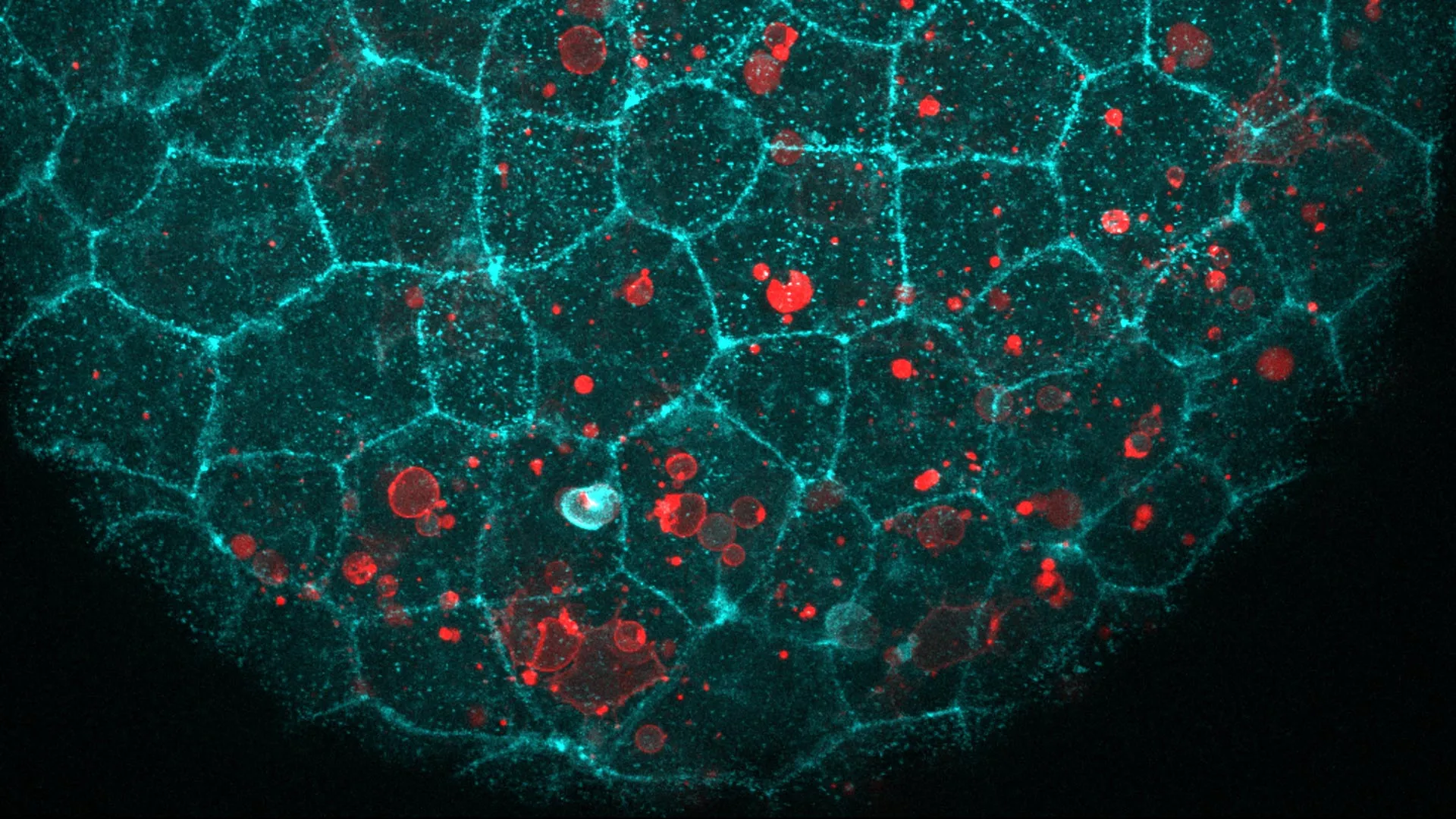
Scientists have identified a previously unknown function of E-cadherin, a protein complex responsible for maintaining structural connections between epithelial cells. In addition to its established role in holding cells and tissues together, the protein system now appears to facilitate the removal of dead cells from tissues, according to research published in Nature Communications.
The research team, led by Verena Ruprecht, conducted experiments using living zebrafish and mouse embryos to examine how epithelial tissues interact with dying cells. The investigation revealed that the same molecular machinery cells use for adhesion also participates in engulfing cellular debris. When researchers presented epithelial tissue with dying cells lacking E-cadherin, the tissue removed them as effectively as normal cells. Additionally, when researchers introduced synthetic particles displaying signals found on dying cells, the epithelial cells engulfed those as well, suggesting the recognition process depends on chemical signals rather than physical contact with the E-cadherin protein itself.
The physical mechanics of this cleanup process present an interesting challenge. Epithelial cells form tightly sealed barriers that must remain intact during and after debris removal. Live imaging demonstrated that epithelial cells accomplish this by segregating their activities: the lower surface stretches and bends around dead material while the upper surface, typically exposed to the external environment, maintains its structural integrity and barrier function.
The team identified specific components within the E-cadherin complex that enable this process. One protein functioned similarly to a rope, transmitting force from the cell’s internal skeleton across the surface during engulfment. Another component acted as a brake on the cell’s contractile machinery; unexpectedly, removing this brake did not enhance cleanup but instead made cells too rigid to function properly. When researchers blocked E-cadherin in early mouse embryos, dead cells remained uncleared, suggesting this mechanism is conserved across vertebrates.
While the research demonstrates the process in embryonic tissues, significant questions remain about whether the same E-cadherin-dependent mechanism operates in adult vertebrate tissues or humans. The efficient removal of dead cells may be critical to health, as cellular debris accumulation contributes to chronic inflammatory responses. The researchers suggest their findings could eventually inform treatments for conditions where the cellular cleanup process fails.
Article Attribution | Read More at Article Source
Article summary produced by Claude AI