

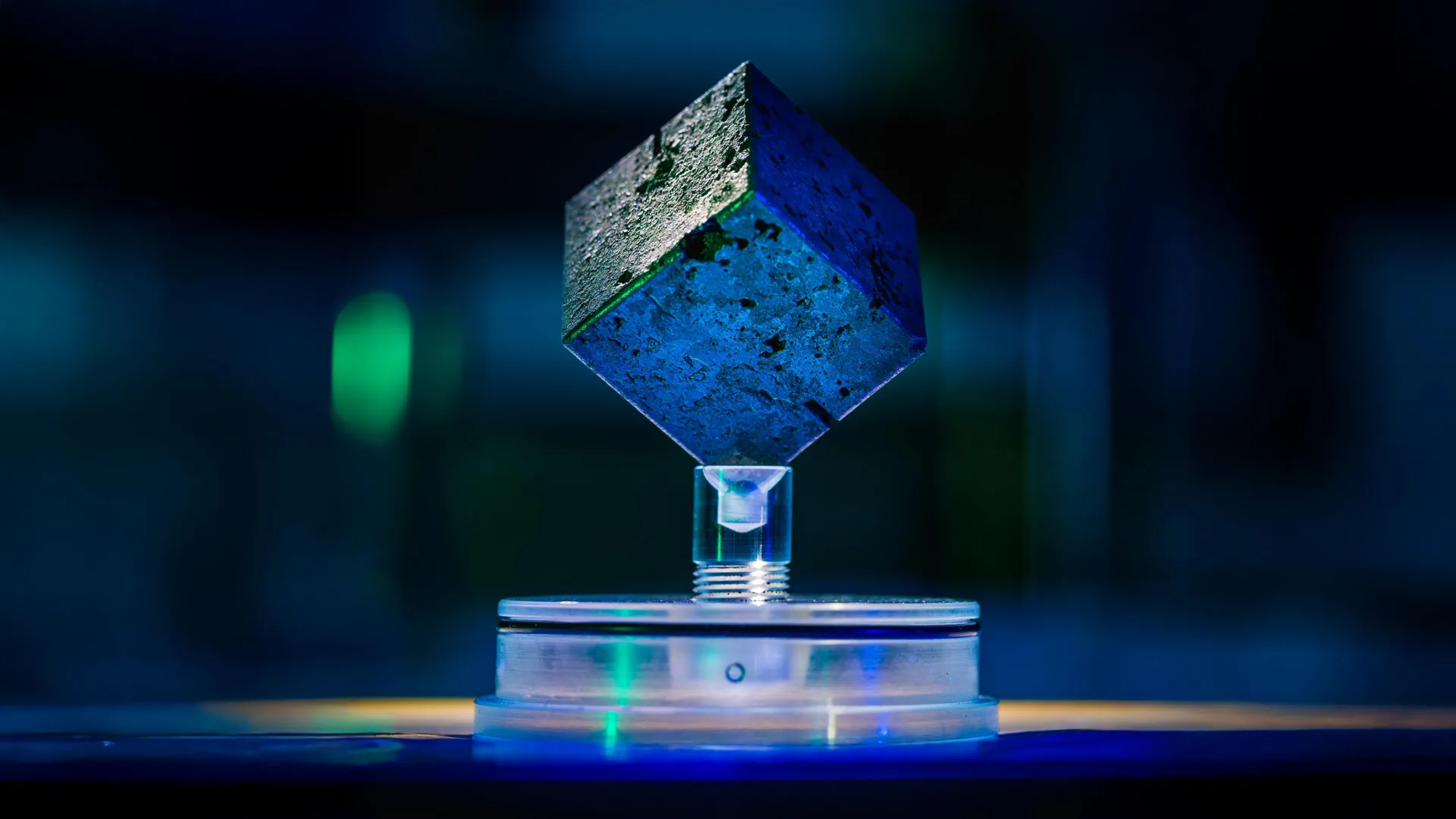
Researchers examining preserved uranium cubes and historical records have concluded that Nazi Germany’s final experimental nuclear reactor during World War II was far less advanced than previously believed by its lead physicist, Werner Heisenberg.
The B8 pile, constructed in 1945, was designed to achieve nuclear fission using cubes of natural uranium suspended in heavy water. This specialized substance served as a neutron moderator, slowing down particles released during fission to sustain a chain reaction. Heisenberg had claimed the reactor was close to reaching criticality, the point at which a nuclear chain reaction becomes self-sustaining, and needed only modest increases in uranium and heavy water supplies.
A study led by Timothy Koeth and colleagues, based on analysis of two surviving uranium cubes and archival documents, determined the reactor would have required approximately twice as much uranium and more than twice as much heavy water to function. Germany faced particular difficulty obtaining sufficient heavy water, which it sourced from the Norsk Hydro plant in Norway. Allied bombing and sabotage operations severely damaged production capabilities there. The researchers found that no alternative existed: German scientists could not have substituted graphite, which Americans successfully used as a neutron moderator, because available graphite in German-controlled areas contained boron impurities that would have prevented criticality.
When American forces discovered the B8 reactor in 1945, it had never achieved criticality. The new research indicates Germany lacked the resources necessary to overcome fundamental material shortages, meaning the nation remained far from developing a functioning reactor capable of producing plutonium for nuclear weapons. The findings resolve longstanding historical debate about how close Nazi Germany came to nuclear capability during the war.
Article Attribution | Read More at Article Source
Article summary produced by Claude AI