

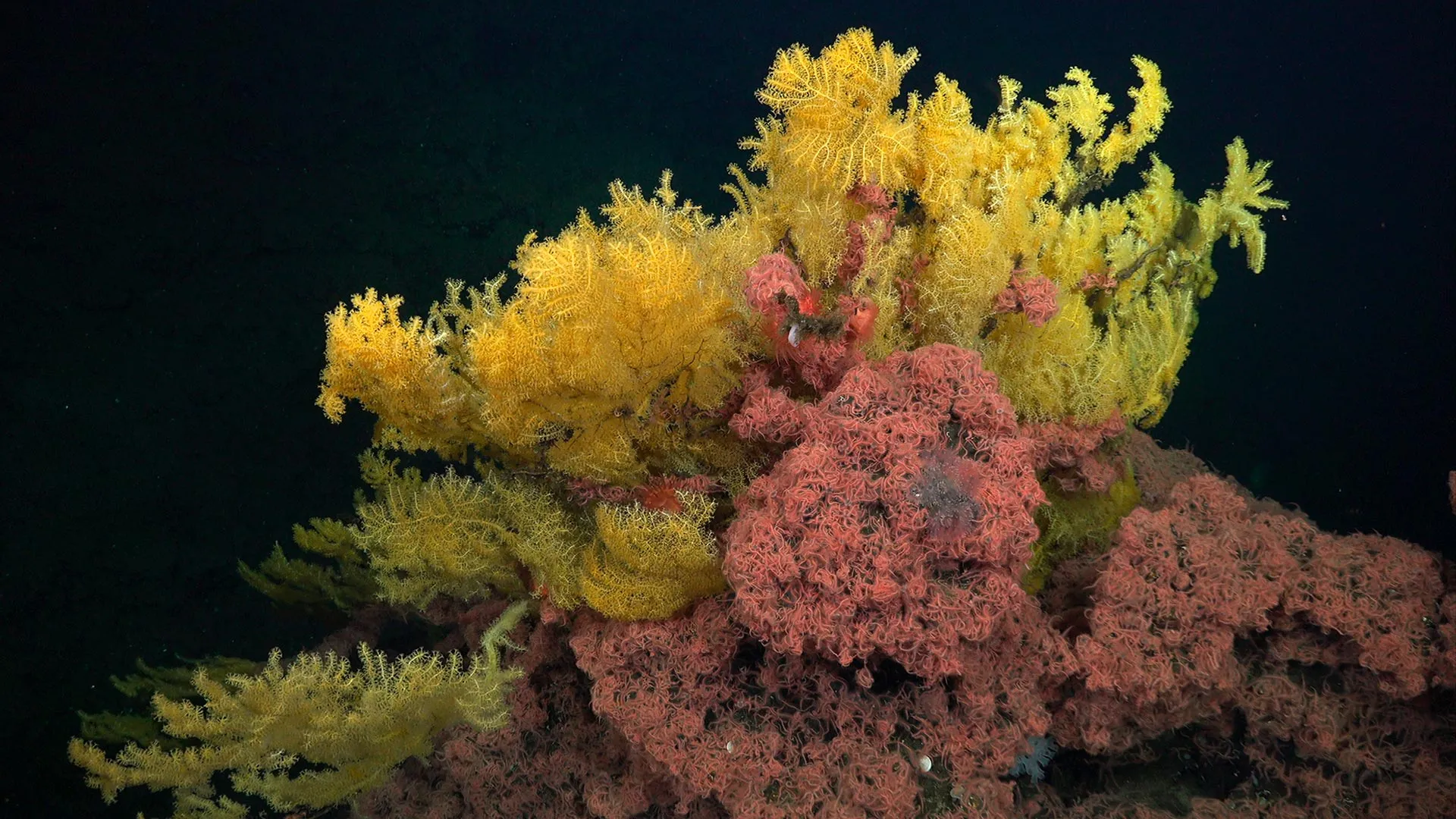
Researchers conducting underwater surveys near Costa Rica’s seamounts have identified a coral species with such distinctive genetic and physical characteristics that it necessitated the establishment of a new taxonomic family. The bright yellow coral, which grows in a branching, tree-like structure, was found at depths between 360 and 529 meters in the Pacific Ocean. Specimens were collected during expeditions in 2019 and 2023 using remotely operated vehicles aboard research vessels operated by the Schmidt Ocean Institute.
The coral’s scientific classification presented unexpected challenges for the research team. Initial genetic sequencing using three commonly employed genes for coral identification produced conflicting results, with each gene suggesting the species belonged to a different family. To resolve this inconsistency, researchers employed phylogenomics, an advanced technique that analyzes hundreds of genes simultaneously. This comprehensive genetic analysis revealed that the species represents a distinct evolutionary lineage most closely related to the family Eunicellidae but genetically and anatomically sufficiently different to warrant creation of the new family Laurinqueidae and genus Laurinque.
The species name reflects its habitat and appearance. The genus name derives from “Laurinquë,” meaning “golden tree” in Quenya, the constructed Elvish language from J.R.R. Tolkien’s literary works, selected because of the coral’s vivid yellow coloration and tree-like morphology. The species designation, elenya, translates to “stellar” or “of the stars” in the same language, referencing the dense populations of brittle stars surrounding the coral colonies on the seafloor.
The discovery adds to the catalog of previously unknown species found on Costa Rica’s seamounts and underscores how much remains unexplored in deep ocean environments. Coral gardens of this type are classified as vulnerable marine ecosystems due to their complex three-dimensional structures, which provide habitat for numerous deep-sea organisms and function as important centers of biodiversity. The research was led by Dr. Odalisca Breedy of the Universidad de Costa Rica and supported by the Schmidt Ocean Institute and a National Geographic Society research grant.
Article Attribution | Read More at Article Source
Article summary produced by Claude AI