

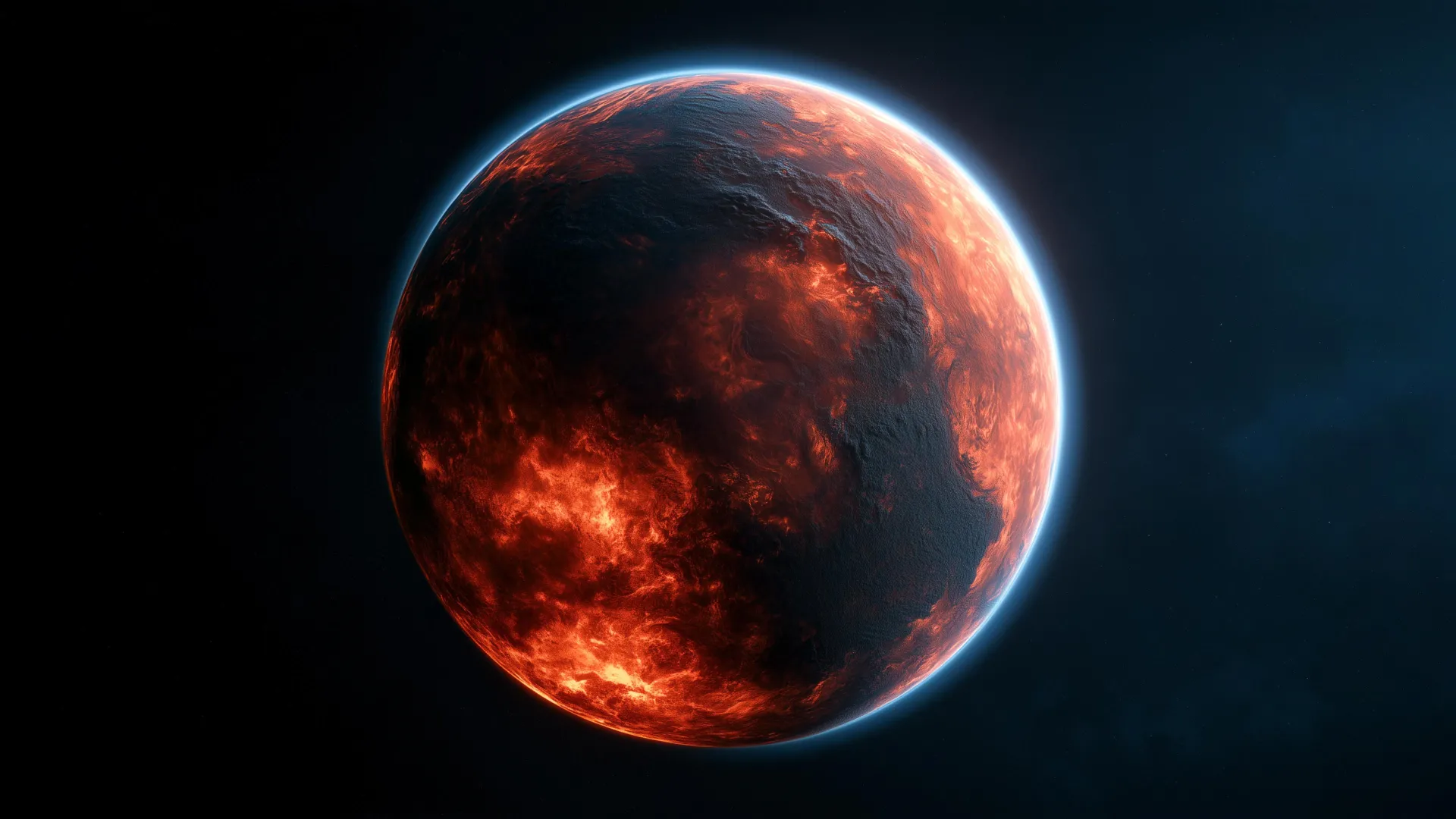
Researchers have identified evidence of an atmosphere surrounding HD 3167 b, a rocky super-Earth classified as a lava world and located 154 light-years away in the constellation Pisces. The discovery, reported in The Astrophysical Journal Letters, represents a significant finding given that among the more than 6,300 cataloged exoplanets, most are not rocky and few known rocky planets show signs of possessing atmospheres.
The planet orbits its host star in just one Earth day and experiences intense heat from stellar radiation. Scientists had expected that rocky planets in such close proximity to their stars would struggle to retain atmospheres due to bombardment from stellar wind and high-energy photons. However, the research indicates that many lava worlds appear to maintain atmospheric layers despite these harsh conditions. According to co-author Edwin Kite of the University of Chicago, studying these inhospitable worlds provides valuable insights into atmospheric processes relevant to other rocky planets.
To detect the atmosphere, researchers employed the James Webb Space Telescope’s ability to measure light in the mid-infrared wavelength range. The team used a secondary eclipse observation method, measuring the light emitted by the planet as it passed behind its star. HD 3167 b’s day-side temperature proved noticeably cooler than theoretical predictions, suggesting an atmosphere is present. Atmospheric layers redistribute heat from the sunlit side to the night side and potentially contain clouds that reflect incoming starlight, consistent with observations from Venus.
The study forms part of a broader program examining ten ultra-hot lava worlds to determine whether a critical temperature threshold exists for atmospheric retention. HD 3167 b represents the coldest lava world found thus far with atmospheric evidence, making it particularly valuable for understanding the temperature transition between atmosphered and non-atmosphered planets. The composition of its atmosphere remains uncertain, though researchers speculate it may contain vaporized rock or heavier gases such as carbon dioxide or water.
The research holds implications for understanding early Earth history. Scientists believe the young Earth may have resembled these extreme lava worlds during its formation, when planetary collisions created a magma ocean with entirely liquid surfaces. This exoplanet observation provides a potential window into conditions during Earth’s first few million years of existence.
Article Attribution | Read More at Article Source
Article summary produced by Claude AI