

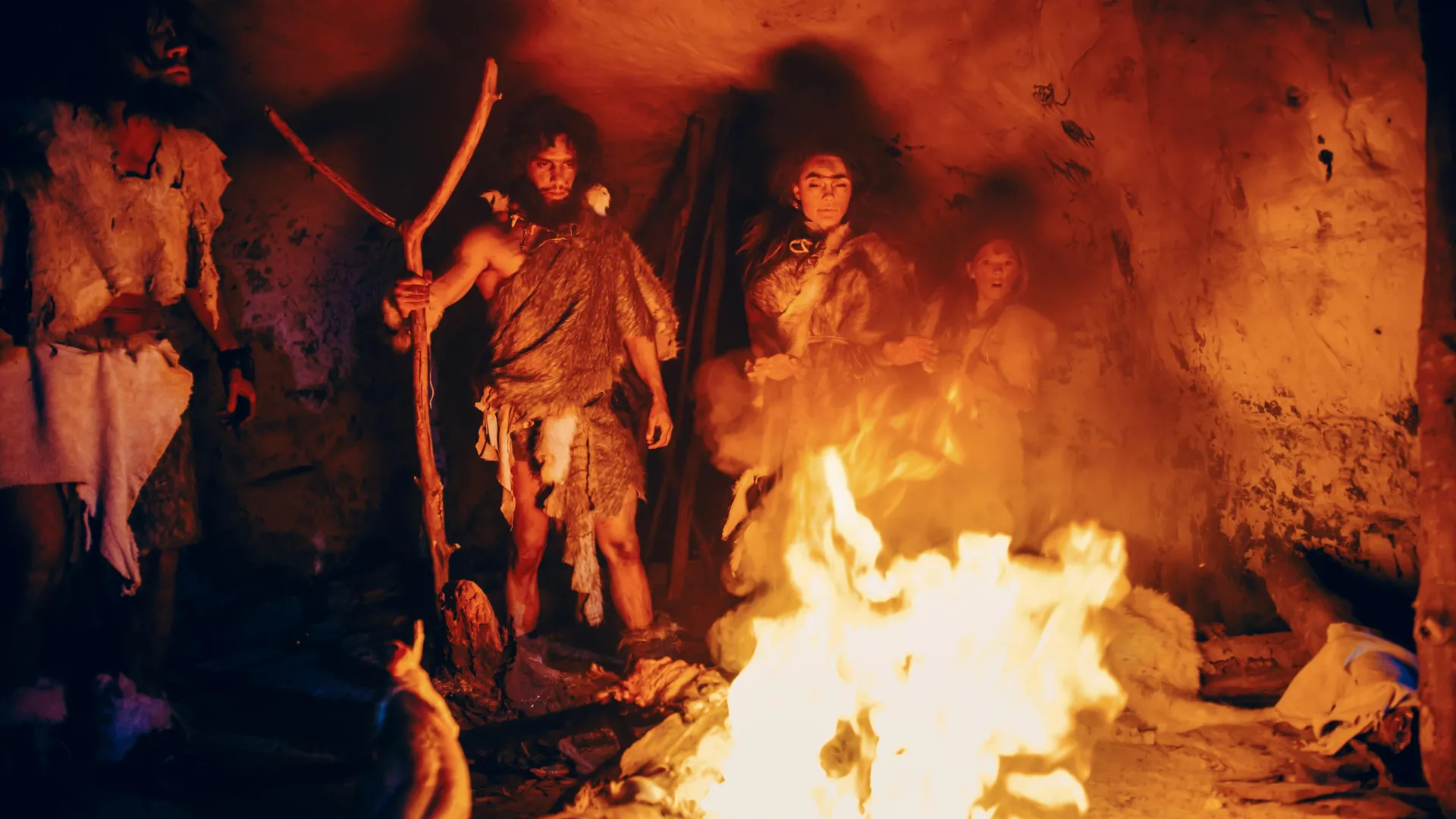
An international research team led by the University of Vienna has identified genetic evidence demonstrating that populations living across Ice Age Europe maintained stronger connections than scientists previously understood. The findings, published in Science Advances, challenge the long-held assumption that eastern and western European groups remained largely isolated from one another. The research analyzed ancient DNA recovered from rare human remains and genetic material preserved in cave sediments, providing new insights into how prehistoric populations interacted and exchanged genes across thousands of years.
The study focuses on people associated with the Gravettian culture, one of Europe’s major Paleolithic cultures that flourished roughly 34,000 to 25,000 years ago. While archaeological discoveries had suggested these populations maintained distant connections, previous genetic analyses indicated relatively distinct ancestry groups in eastern and western regions. Through analysis of new genetic data combined with previously collected DNA, researchers uncovered evidence of more substantial interconnection than expected. A particularly significant discovery involved remains of a woman from approximately 30,000 years ago found at Isturitz Cave in southwestern France. Her genome-wide genetic dataset, the oldest yet obtained from southwestern Europe, revealed a surprising blend of ancestries: primarily western European genetic background combined with ancestry linked to central and eastern European populations. Genetic modeling suggested this mixing occurred between approximately 32,500 to 31,500 years ago, indicating genetic connections extended across large portions of Europe much earlier than previously established.
Simultaneously, evidence suggests certain populations maintained continuous genetic presence in particular regions for extended periods. Analysis of remains from Chufín Cave in northern Spain indicated that western European ancestry persisted in southwestern Europe over thousands of years, supporting the theory that the Iberian Peninsula served as an important refuge during the Last Glacial Maximum, when ice sheets reached their greatest extent.
Researchers also employed an innovative technique to recover human DNA directly from cave sediments without identifiable remains. At El Mirón Cave in Cantabria, Spain, the team extracted human nuclear DNA from a sediment layer dating to approximately 22,000 years ago, obtaining sufficient genetic information to determine ancestry despite the absence of bones or teeth. Additional findings from southern Italy, involving genetic analysis of Ostuni1b, a male fetus, provided evidence that mating patterns within ancient communities may have limited inbreeding while permitting participation in broader genetic exchange networks.
The research demonstrates that long-term regional genetic continuity and widespread population connections were not mutually exclusive features of Ice Age European societies. Scientists are now advancing these findings through analysis of ancient sedimentary DNA combined with proteomic techniques to investigate early modern human expansion across Europe and interactions with carnivores in regions where organic remains are scarce.
Article Attribution | Read More at Article Source
Article summary produced by Claude AI