

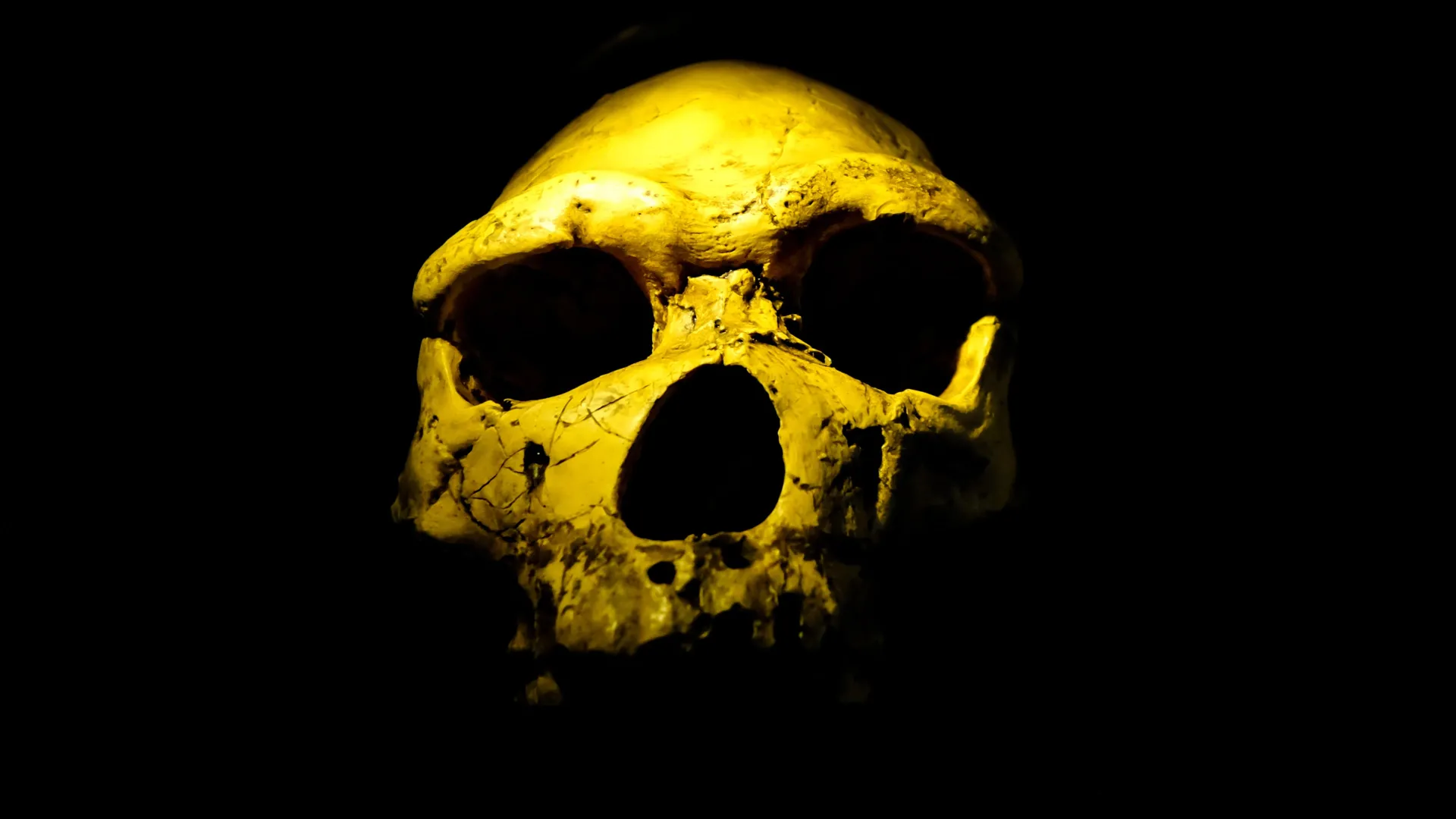
Researchers analyzing protein sequences from six Homo erectus teeth discovered at three Chinese archaeological sites dating approximately 400,000 years ago have identified genetic evidence of interbreeding between H. erectus and Denisovans in East Asia. The study, published in Nature by Qiaomei Fu from the Chinese Academy of Sciences and colleagues, extracted ancient proteins from tooth enamel—a tissue that preserves molecular information far longer than DNA in extremely old specimens.
The analysis revealed amino acid variants in the H. erectus specimens that connect them to Denisovan populations. One particular genetic variant identified in the ancient teeth also appears in modern populations across Southeast Asia and Oceania at varying frequencies, suggesting a transmission pathway from H. erectus to Denisovans and subsequently to contemporary humans. The genetic pattern indicates this variant entered modern human populations through Denisovan ancestry, with frequencies reaching 21 percent in the Philippines and approximately 1 percent in India.
The findings challenge longstanding evolutionary models that depicted human lineages as distinct, separate branches with minimal interaction. The research demonstrates instead that interbreeding between archaic human populations was routine rather than exceptional. Modern humans outside Africa carry approximately 2 percent Neanderthal DNA, while populations in Papua New Guinea and Australia carry additional Denisovan ancestry ranging from 2 to 5 percent. Genetic signatures from unidentified archaic lineages also appear in West African populations, indicating multiple instances of gene flow across different regions and timeframes.
The implications extend to other extinct human species that have not yet yielded molecular evidence. H. erectus populations persisted in Indonesia until possibly 100,000 years ago, while Homo floresiensis inhabited Flores and Homo luzonensis occupied the Philippines. The proteomic methodology demonstrated in this research may enable future investigation of whether these lineages also contributed genetic material to modern human populations. The traditional evolutionary model comparing human development to a tree with distinct branches has given way to conceptualizations resembling a braided river, with multiple lineages running partly together and apart while continuously exchanging genetic material.
Article Attribution | Read More at Article Source
Article summary produced by Claude AI