

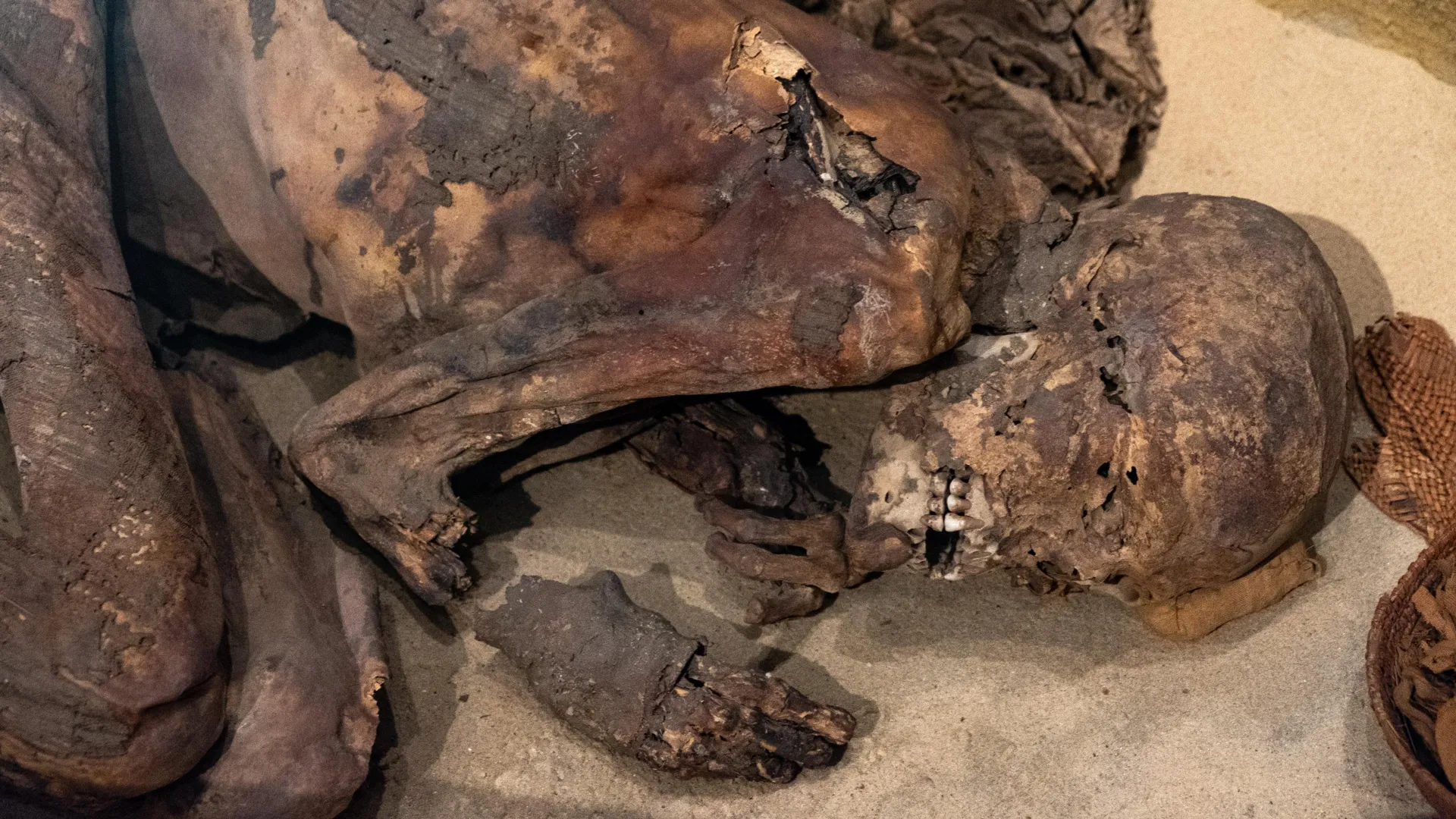
New forensic research examining ancient human remains from Egypt’s First Dynasty burial sites has uncovered physical evidence suggesting that members of royal households may have been deliberately killed following their rulers’ deaths. The findings come from analysis of 46 preserved skulls held at Cambridge University’s Duckworth Collection, originally excavated from tombs at Abydos by archaeologist Flinders Petrie in the 1920s. Dr. Roselyn Campbell of Purdue University led the investigation, which identified signs of head trauma in 18 skulls—approximately 39% of those studied.
Petrie had long suspected that the unusually large number of people buried near royal tombs were victims of human sacrifice, a practice known as retainer sacrifice where individuals close to a ruler are killed to continue serving them in the afterlife. However, he was unable to identify definitive evidence of fatal injuries using the forensic methods available at that time. Modern examination revealed that what Petrie had interpreted as natural damage to the skulls were actually perimortem injuries—fractures that occurred around the time of death. The injuries primarily consisted of linear fractures and, in some cases, sharp-force trauma such as chopping wounds, patterns suggesting deliberate blows rather than accidental harm.
The precise method of execution remains unclear. The linear fracture patterns differ from the depressed skull fractures typically caused by maces depicted in ancient Egyptian artwork used against enemies. The research team considered whether the injuries could result from accidental falls, but noted that such trauma would likely have caused damage elsewhere in the skeleton that should have been documented in Petrie’s original records. Researchers acknowledge they cannot definitively determine how the remaining individuals died, as some may have succumbed to natural causes or methods leaving no skeletal marks, such as asphyxiation.
The findings provide significant support for a theory that has long intrigued Egyptologists but remained unproven. Campbell’s work, detailed in Frontiers in Environmental Archaeology, suggests that retainer sacrifice may have been part of the burial traditions of Egypt’s earliest unified state around 5,000 years ago. The research is based on a limited sample, as most of the original skeletal remains were reburied decades ago, restricting the evidence available for contemporary forensic analysis.
Article Attribution | Read More at Article Source
Article summary produced by Claude AI