

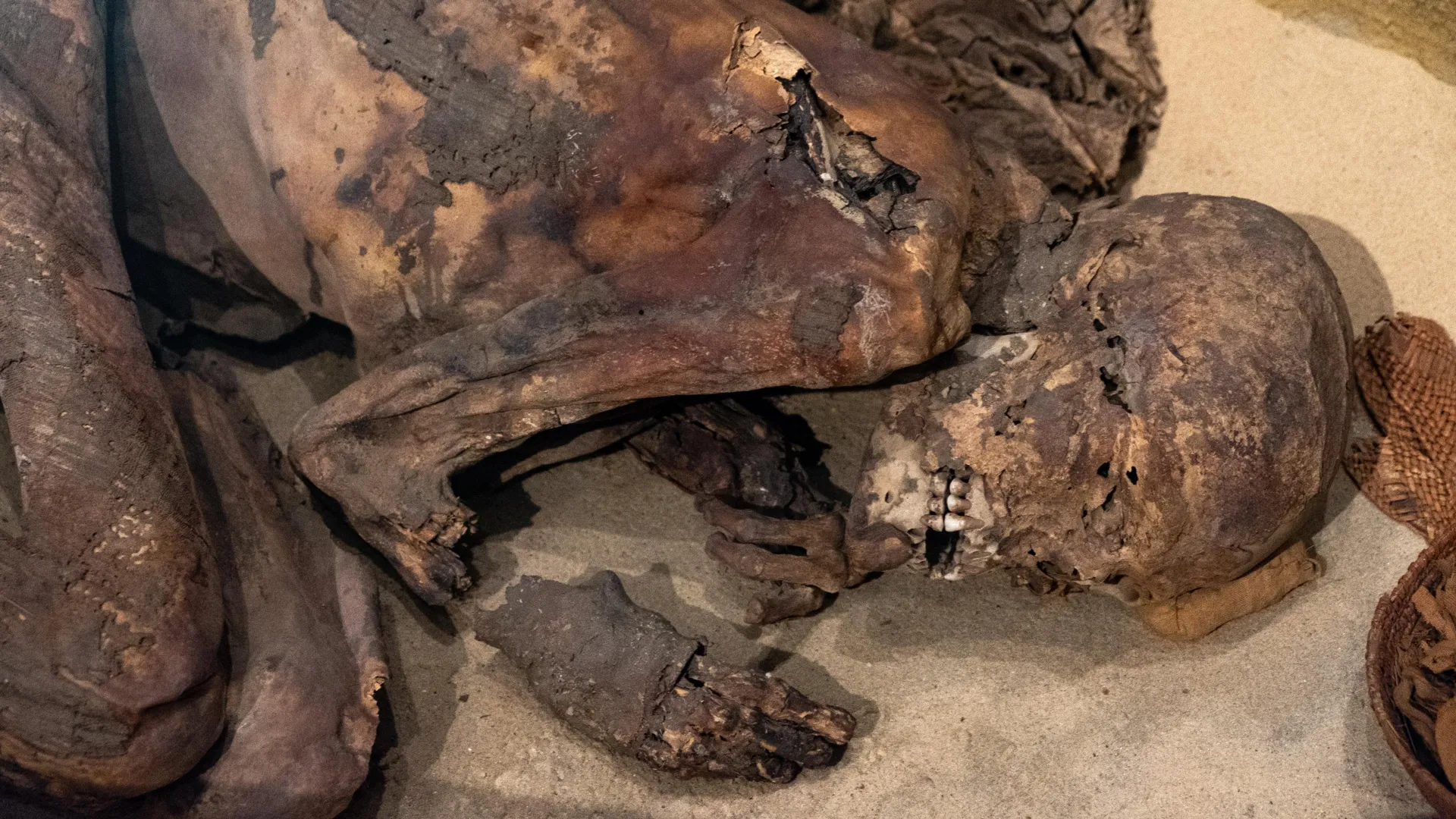
Researchers examining ancient burial sites at Abydos, Egypt have uncovered new forensic evidence suggesting that members of royal households may have been killed when early Egyptian pharaohs died, potentially to serve their rulers in the afterlife. The discovery provides support for a theory proposed by archaeologist Flinders Petrie over a century ago but previously unproven. Petrie observed during excavations in the 1920s that unusually large numbers of people had been buried surrounding First Dynasty tombs from approximately 5,000 years ago, leading him to suspect retainer sacrifice, but he lacked clear physical evidence of fatal injuries.
Dr. Roselyn Campbell of Purdue University located 46 skulls from Petrie’s original excavation, preserved in the Duckworth Collection at Cambridge University, and subjected them to modern forensic analysis. The examination revealed cranial trauma in 18 of the 46 skulls, representing approximately 39 percent of the individuals studied. Petrie had interpreted these fractures as natural damage, but contemporary forensic techniques identified them as perimortem injuries—those occurring around the time of death. The injuries predominantly consisted of linear fractures and some sharp-force trauma, patterns suggesting deliberate blows rather than accidental harm.
Retainer sacrifice, as described by researchers, involves killing individuals close to a ruler at the time of that ruler’s death, often based on beliefs that the sacrificed would continue serving in an afterlife. The subsidiary burials at Abydos were simple chambers arranged in rows, many containing basic grave goods such as ceramic vessels, copper tools, or small ivory figurines. Some graves bore markers indicating the deceased held lower or mid-level official positions or worked as artisans.
The precise method of killing remains unclear. While ancient Egyptian artwork depicts rulers striking with maces, the fracture patterns observed do not match typical mace injuries. Linear fractures are more consistent with impacts from broad, flat objects or severe falls, though researchers note that falls severe enough to fracture skulls would typically leave additional skeletal damage. Most remains from these burials were reburied decades ago, limiting the physical evidence available for examination. The findings have been published in Frontiers in Environmental Archaeology.
Article Attribution | Read More at Article Source
Article summary produced by Claude AI