

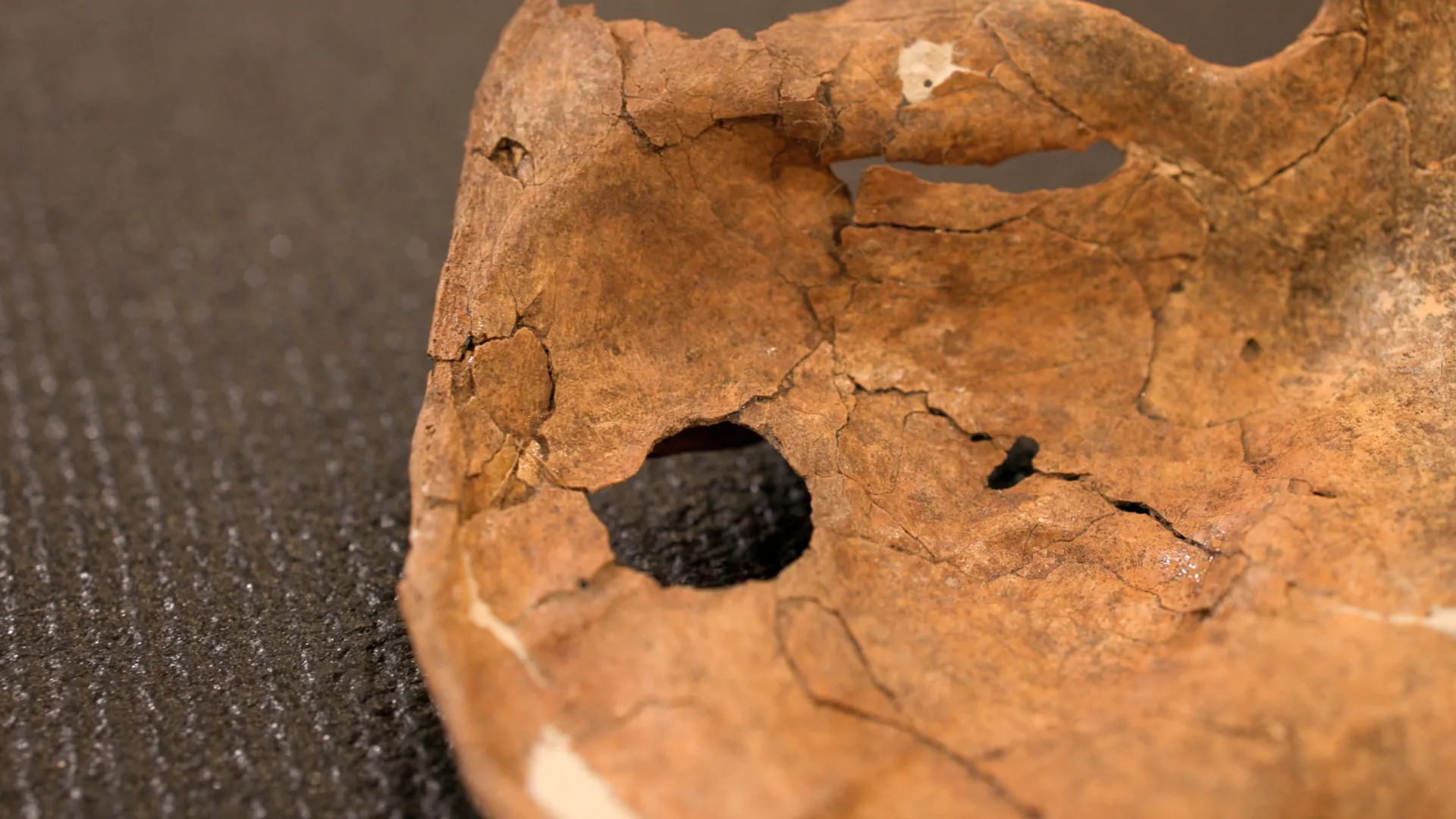
Archaeologists working in a cave in Iraqi Kurdistan have identified what may represent the earliest known case of fatal violence involving a wooden spear. The evidence comes from a Neanderthal skeleton, designated Shanidar A, whose shoulder blade contains a small circular opening measuring 15 millimeters across. Researchers from the University of Cambridge, who led the excavation, determined that the hole was created by a sharpened wooden weapon that penetrated the individual’s chest from the front, passed through vital organs including a lung and major blood vessels, and exited through the back of the shoulder blade. The precise rounded shape of the opening, along with beveled edges characteristic of exit wounds, strongly suggests the wound was caused by a wooden spear rather than stone or flint-tipped weapons, which typically leave angular or flatter impressions.
The physical characteristics of the injury indicate the blow may have been deliberately aimed at the heart and would have caused rapid death. Analysis of bone fragments displaced during the impact revealed that the weapon entered from above and traveled downward through the body. The shoulder blade itself is an exceptionally fragile bone, making its nearly complete preservation after approximately 75,000 years particularly remarkable. The remains were recovered from beneath more than seven and a half meters of rock and sediment, with researchers able to extract the scapula intact in a single piece.
Historical context suggests that wooden spear technology was well-developed by the time of Shanidar A’s death. Archaeological evidence from sites like Schöningen in Germany and Clacton-on-Sea in the United Kingdom demonstrates that hominins produced sophisticated wooden weapons dating back hundreds of thousands of years. However, wood typically decays over time, making direct evidence of such weapons rare. Researchers note that comparable wooden spears from the period could easily have inflicted the observed wound.
While the evidence points toward a fatal spear wound, researchers acknowledge uncertainty about whether the injury resulted from deliberate violence or a hunting accident. The position and force required to create the wound bear characteristics consistent with an intentional kill shot, yet accidents involving wooden spears were plausible when hunting large, dangerous animals at close range. The researchers consider violence between Neanderthals the most straightforward explanation, though they cannot definitively exclude other possibilities. The findings were published in Scientific Reports and represent unusually direct evidence of interpersonal violence in the prehistoric record.
Article Attribution | Read More at Article Source
Article summary produced by Claude AI