

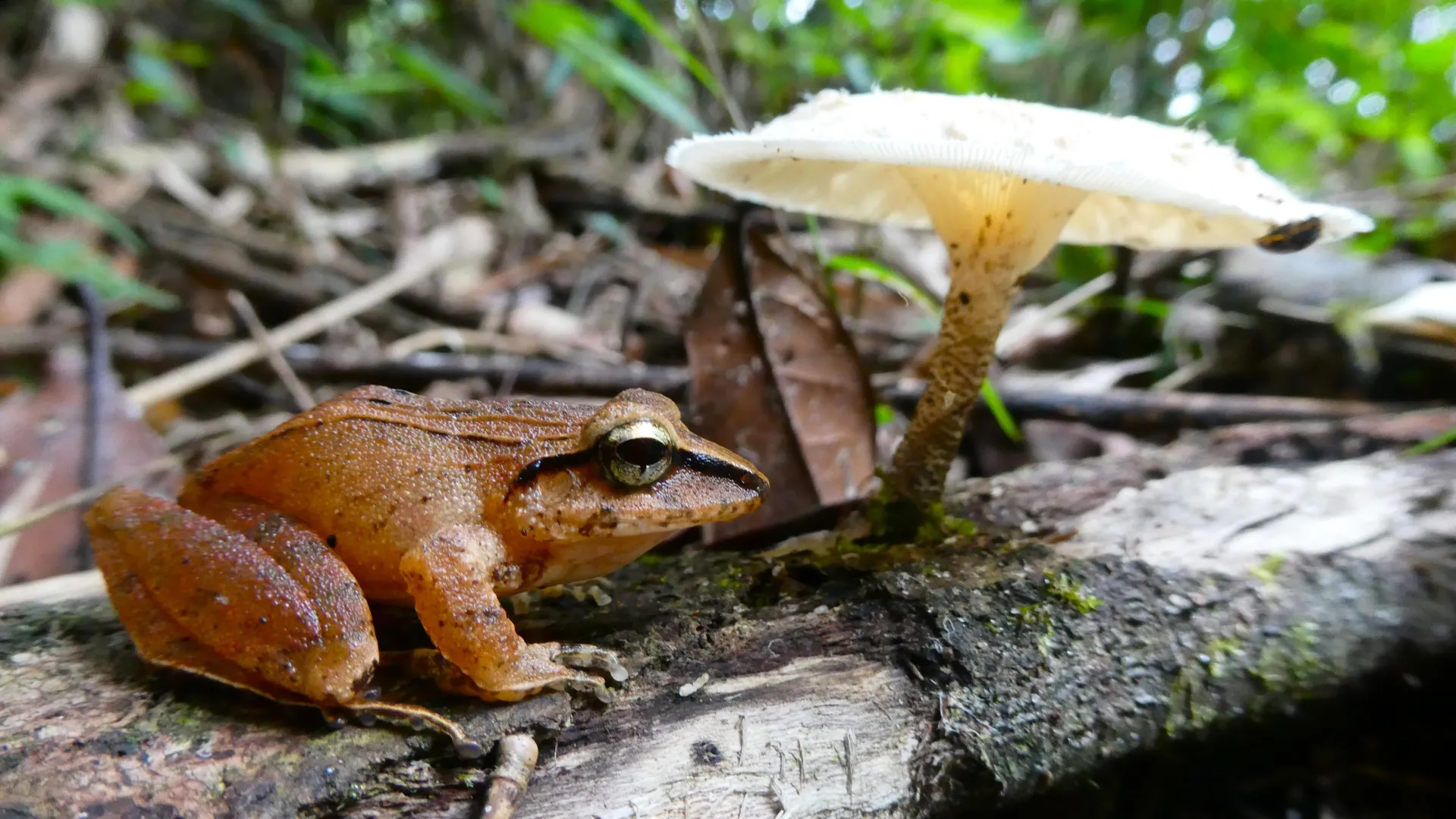
Researchers at the Smithsonian’s National Zoo and Conservation Biology Institute and Pennsylvania State University have determined that chytridiomycosis, a disease caused by the fungus Batrachochytrium dendrobatidis, likely triggered unexplained amphibian population collapses in Brazil’s Atlantic Forest region. The findings, published in Molecular Ecology, address a longstanding scientific puzzle regarding why frog populations experienced severe declines beginning in the 1970s, with particularly severe losses documented at the Boracéia Biological Station between 1979 and 1982.
The research team employed an innovative investigative approach by analyzing preserved specimens from museum collections. The Smithsonian’s National Museum of Natural History houses amphibians collected during multiple expeditions to Boracéia, including samples gathered before and after the dramatic population declines. By testing more than 370 preserved animals representing 17 species, researchers tracked the presence of chytrid infection across different time periods. Specimens collected before 1979 showed no evidence of fungal infection, while over half of those collected during the 1980s tested positive, suggesting rapid pathogen arrival and spread coinciding with population collapses.
The investigation revealed a counterintuitive pattern: species experiencing the most severe declines showed minimal detectable infection in preserved specimens, while relatively stable populations frequently carried the fungus. Researchers attribute this to differential species susceptibility. Some frog species appear naturally capable of tolerating chytrid infection and surviving despite fungal presence, whereas more vulnerable species may have succumbed so rapidly that infected individuals were rarely collected before death. This differential response explains how the pathogen could drive extinction-level declines in certain species while others persisted.
Modern field surveys conducted between 2022 and 2024 provide cautiously optimistic signs. Researchers located 12 of the 17 historical species during recent visits to Boracéia, suggesting partial population recovery in the decades since the initial outbreak. Five species remain undetected, with their current status uncertain. The research demonstrates the scientific value of historical museum collections and suggests that reconstructing past disease outbreaks could help scientists better anticipate and respond to emerging threats to wildlife populations.
Article Attribution | Read More at Article Source
Article summary produced by Claude AI