

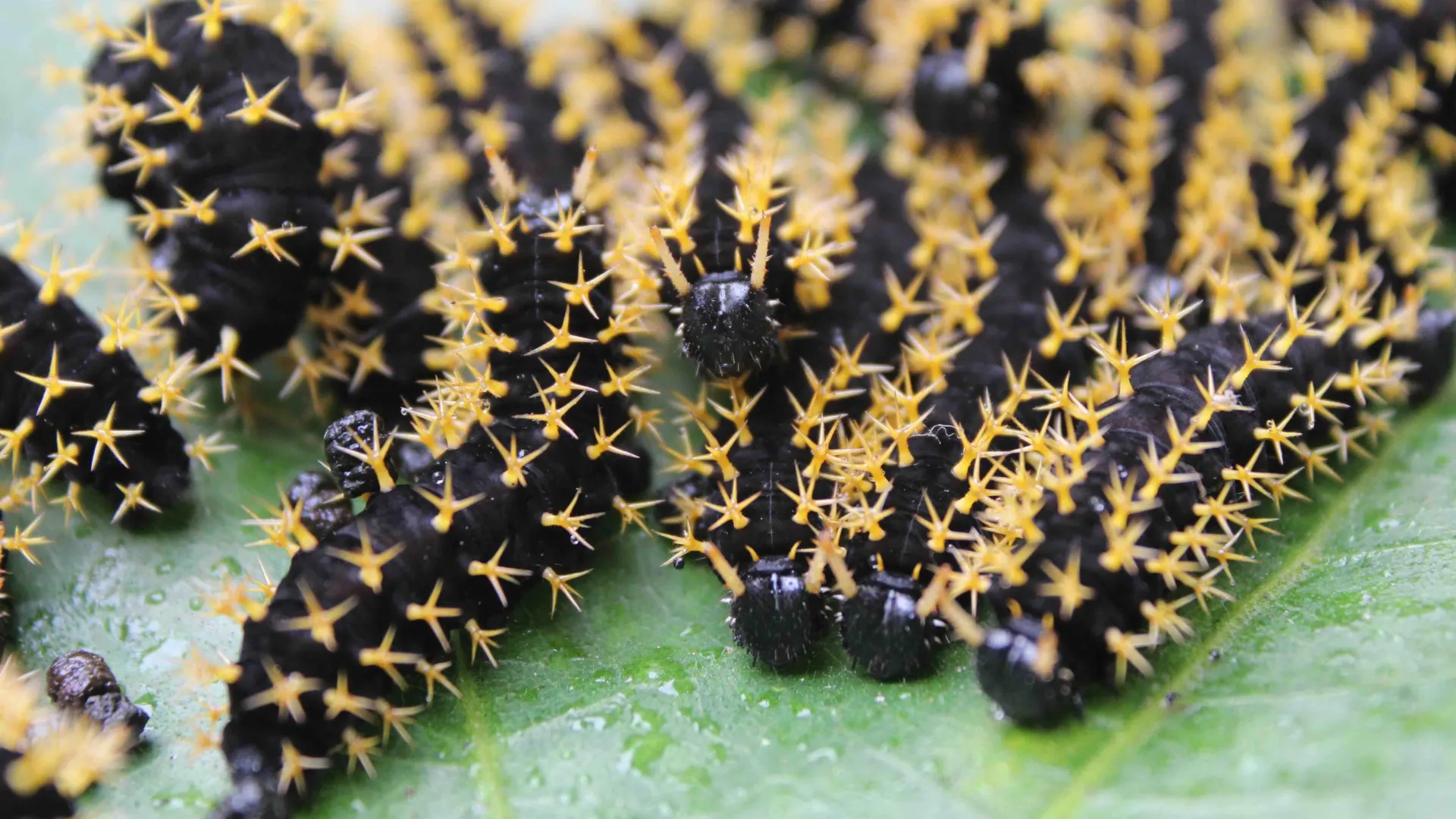
Researchers at the Florida Museum of Natural History have described a previously unknown butterfly species that inhabits Central and South America’s tropical rainforests. The newly identified species, designated Colobura cryptica, was formally documented in the journal Zootaxa by a team led by doctoral student Anisha Sapkota. This discovery marks the third recognized member of the Colobura genus, which scientists had believed contained only a single widespread species for more than two centuries.
The three species present a significant evolutionary puzzle because they are nearly indistinguishable in appearance and occupy overlapping geographic ranges. The butterflies can be found in the same locations simultaneously, yet genetic analysis reveals no evidence of interbreeding between them. Sapkota’s team identified the new species by combining DNA analysis with examination of subtle differences in wing patterns and ultraviolet light reflection properties that were previously undetectable to researchers. Adult butterflies within the genus display minimal variation, with distinguishing features limited to slight differences in gray stripes on the underside of front wings.
The genus Colobura butterflies are among the most recognizable insects in neotropical regions and share a close ecological relationship with Cecropia trees, whose leaves serve as food for Colobura caterpillars. Both groups are distributed across vast territories spanning the Andes Mountains, the Brazilian Amazon, the Atlantic Rainforest, Central America, and Caribbean islands. This contrasts sharply with the Cecropia genus, which comprises 61 species with many occupying relatively small geographic areas.
The historical challenge in identifying distinct species within Colobura dates back more than a century. Dutch entomologist Jan Sepp proposed in 1852 that caterpillars exhibiting different cream-colored markings represented separate species, but this interpretation was rejected for approximately 150 years. A second species, Colobura annulata, was formally recognized in 2001 after researchers revisited Sepp’s observations. The discovery of the third species resulted from observations of caterpillars in Venezuela that lacked the cream-colored markings characteristic of both previously identified species, prompting renewed scientific investigation into the genus’s diversity and evolutionary history.
Article Attribution | Read More at Article Source
Article summary produced by Claude AI