

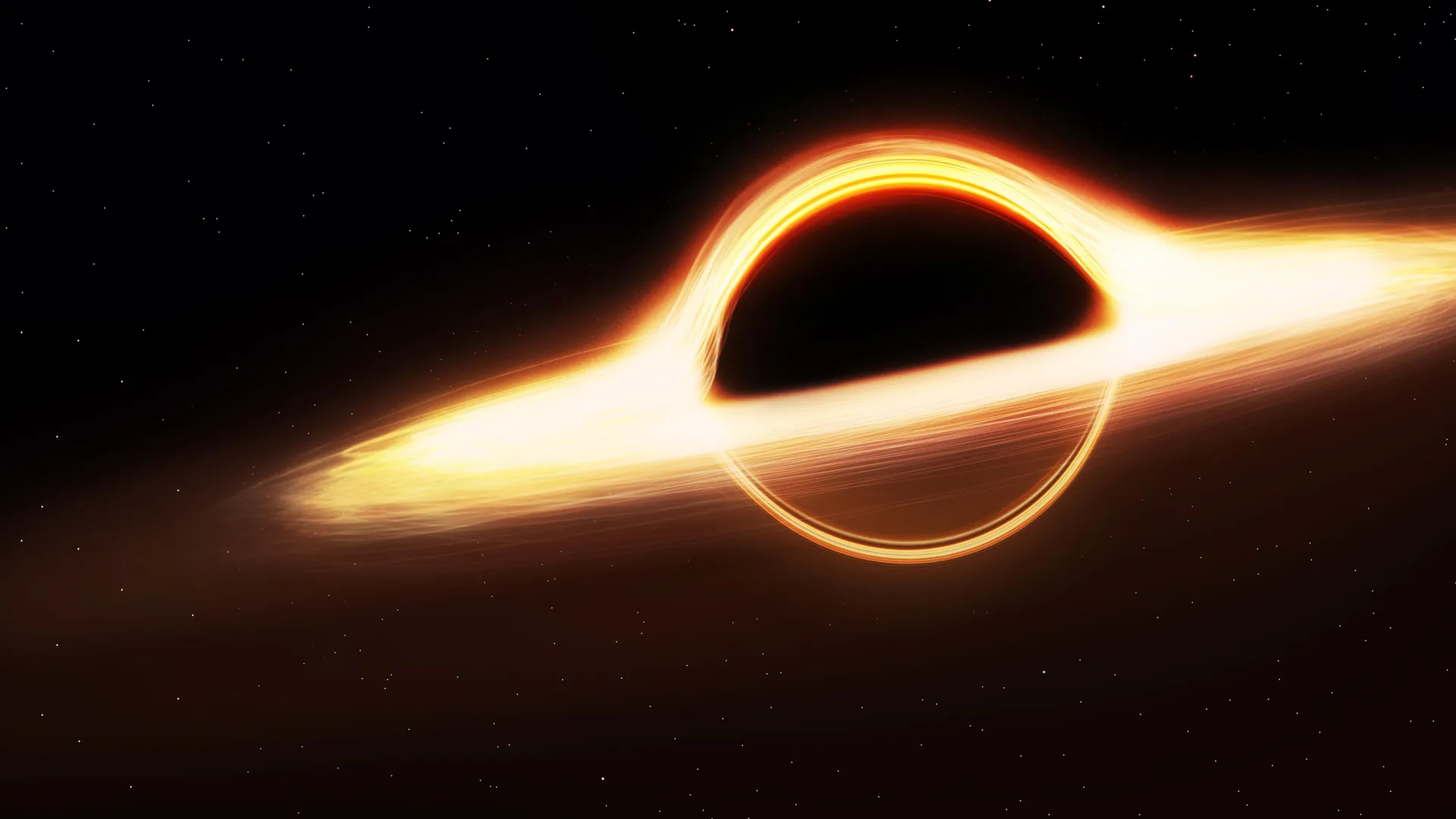
A research team led by Caltech has identified potential evidence that a distinct population of black holes may have originated from massive stars that collapsed directly into black holes without producing supernova explosions. Using data from the LIGO, Virgo, and KAGRA gravitational wave detector network, which has recorded over 300 black hole collisions during the past decade, the researchers analyzed patterns in the masses and properties of merging black holes to test whether this formation mechanism could explain some of the universe’s black hole population.
The study examined data from 257 black hole mergers and discovered several striking patterns. Black holes weighing approximately 10 times the mass of the Sun appeared in about three-quarters of the sample, an exceptionally high concentration. Additionally, the researchers identified a noticeable gap in the mass distribution, with very few black holes detected in the 12 to 16 solar mass range. The rotation rates of black holes near 10 solar masses also clustered within a narrower range than those of the broader black hole population. Together, these findings suggest that black holes in this mass range may belong to a distinct population with a shared formation history.
The theory of failed supernovae, where massive stars collapse directly into compact objects without exploding, has long been proposed by researchers but has never been directly confirmed through conventional astronomical observations. Such events would produce little visible evidence, making them difficult to detect through traditional methods. By studying gravitational waves generated when black holes merge, scientists can investigate the origins of objects whose formation may have produced minimal or no detectable explosion.
According to the research team, the patterns observed in gravitational wave data are consistent with theoretical predictions about how black holes formed through failed supernovae should be distributed. However, the findings do not definitively prove this formation mechanism occurred. The study was led by Katerina Chatziioannou, a Caltech physics professor, and included contributions from Isaac Legred and Jacob Golomb. The research received funding from the National Science Foundation, the U.S. Department of Energy, and the Simons Foundation.
Article Attribution | Read More at Article Source
Article summary produced by Claude AI