

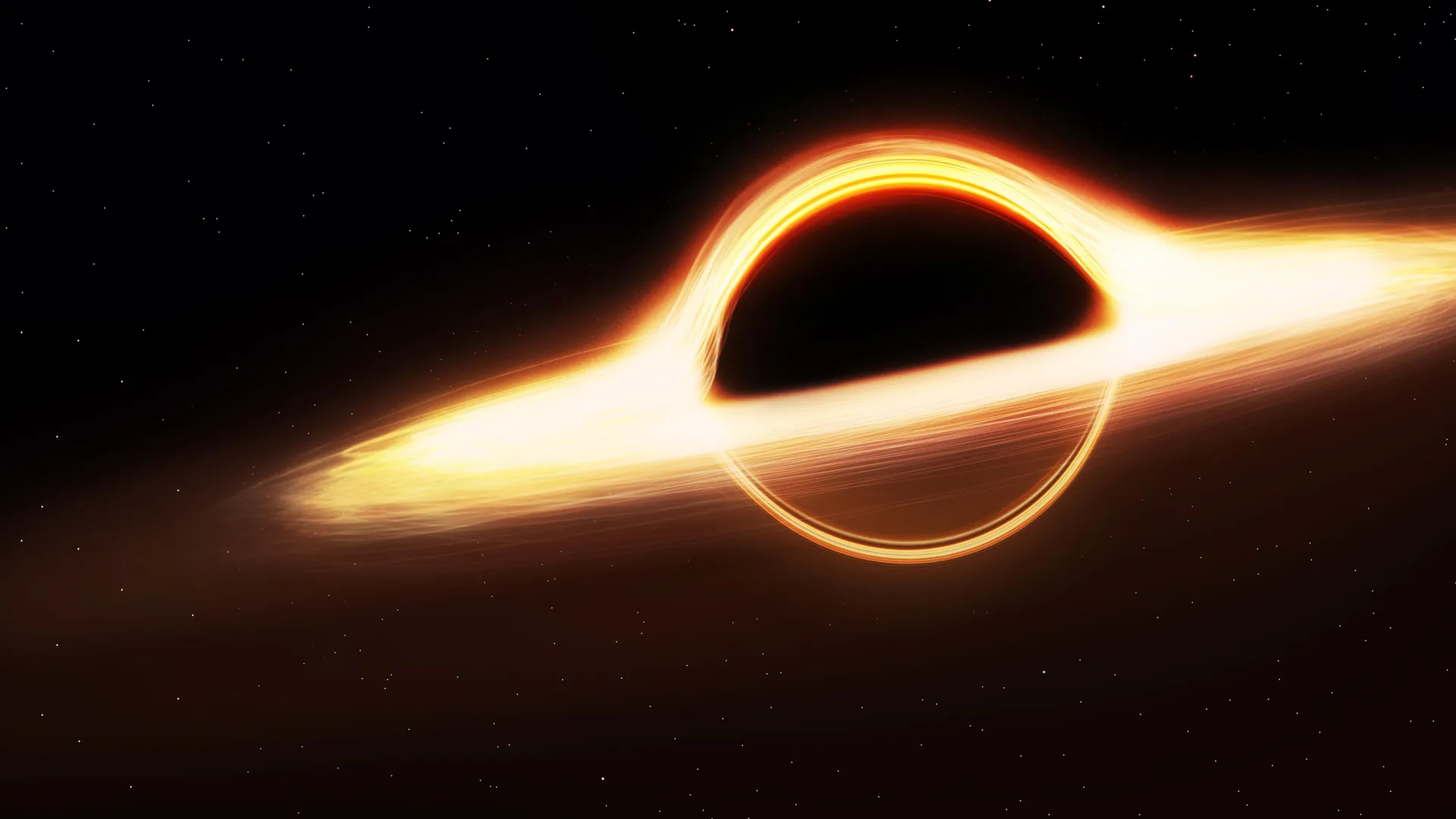
Researchers at Caltech have published findings suggesting that a significant population of black holes may originate from massive stars undergoing direct collapse rather than explosive supernova events. The study, led by Katerina Chatziioannou and published in Physical Review D, analyzed gravitational wave observations collected over the past decade by the international detector network comprising LIGO, Virgo, and KAGRA.
The investigation focused on 257 black hole merger events detected by the observatory network. Analysis of these collisions revealed a distinctive pattern in black hole mass distribution. Approximately three-quarters of the sample consisted of black holes weighing around 10 times the mass of the Sun, representing an unusually high concentration. Conversely, a notable gap appeared in the distribution between 12 and 16 solar masses, with black holes in this range being substantially rarer than would be expected in a smooth distribution.
Researchers also examined the rotation rates of these objects, finding that black holes near 10 solar masses exhibited spin characteristics concentrated within a narrower range compared to the broader black hole population. The combination of the clustered mass concentration, the mass distribution gap, and the similarity in spin rates suggests these objects may constitute a distinct population sharing a common formation history.
The study proposes that failed supernovae—events where massive stars collapse into black holes without producing visible explosive emissions—may explain this pattern. While astronomers have theorized about such direct-collapse scenarios for decades, confirming individual cases remains challenging because failed supernovae produce little visible evidence. By studying gravitational waves from black hole mergers, scientists can investigate the formation mechanisms of objects that may have left minimal observable traces. The research received support from the National Science Foundation, the U.S. Department of Energy, and the Simons Foundation.
Article Attribution | Read More at Article Source
Article summary produced by Claude AI