

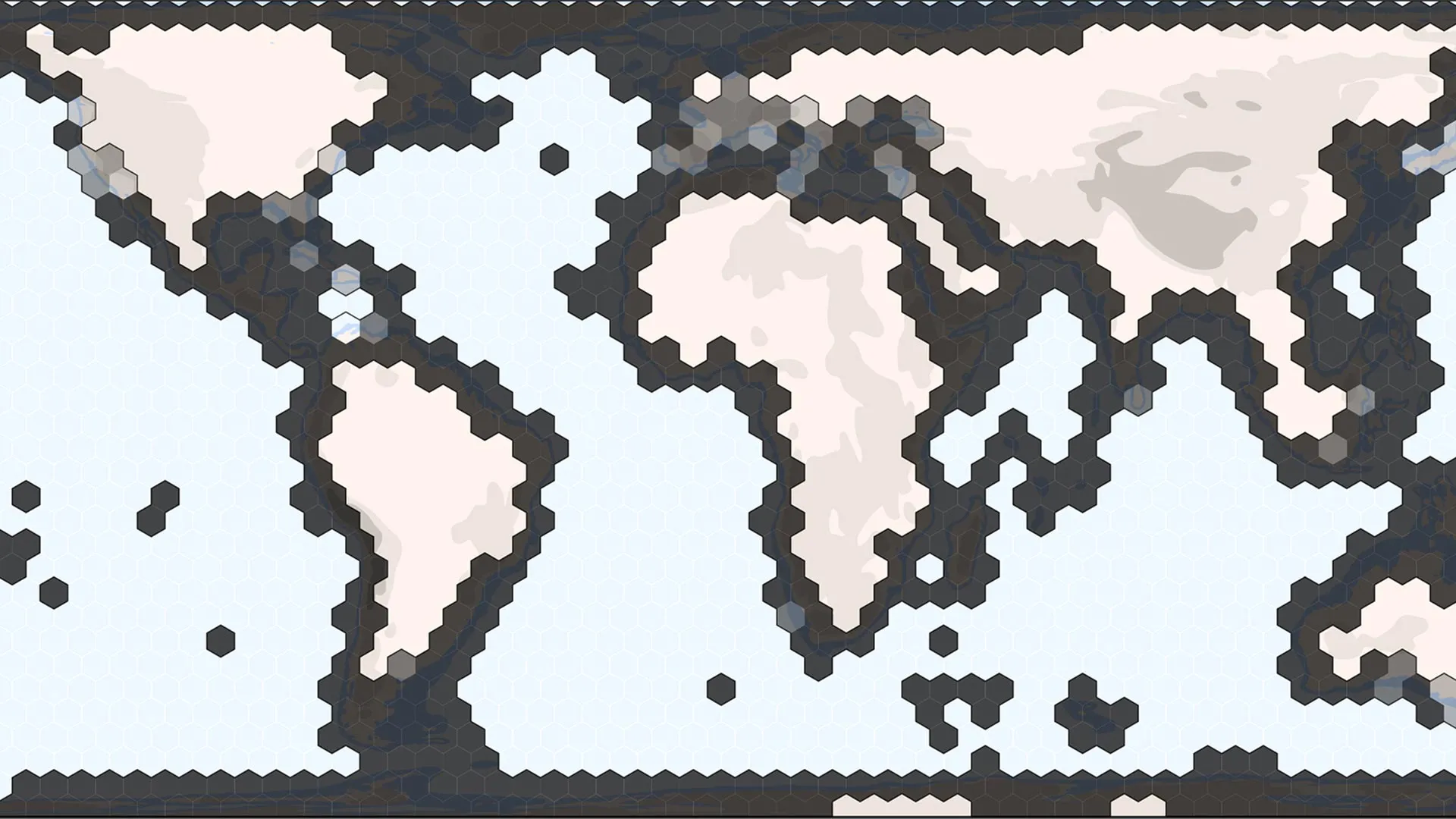
A research team led by Thomas A. Neubauer of the Bavarian State Collections of Natural History and Mathias Harzhauser of the Natural History Museum in Vienna has developed a new analytical tool to guide fossil research efforts. The paleontologists analyzed geographic patterns of fossil discoveries and identified regions where important fossil information remains missing, potentially directing future excavation campaigns toward more productive locations.
The researchers examined records from the Paleobiology Database, the world’s primary open-access repository of fossil data, and mapped where fossils from shallow marine environments have been documented over the past 540 million years. They cross-referenced this information with the Macrostat geological database to determine not only where fossils have already been found, but also where suitable rock formations exist that could yield new discoveries. This methodology allowed the team to assess both the current state of paleontological knowledge and the actual geological potential for finding new specimens.
The analysis revealed significant disparities in fossil research coverage. The Early Mesozoic and Paleozoic periods have been studied extensively, and further discoveries from these time intervals are unlikely to substantially advance scientific understanding. However, the Cenozoic Era, which began approximately 66 million years ago, presents substantial untapped potential despite already having produced considerable fossil evidence. The team identified specific global locations where shallow marine deposits remain largely unexplored and where previously unknown fossil species are especially likely to be discovered.
According to Neubauer, the new approach could help paleontologists allocate limited research resources more strategically. Rather than continuing investigations in already heavily explored regions, scientists can now prioritize locations with the greatest likelihood of revealing new information about prehistoric ecosystems. The work also applies to existing museum collections that await detailed scientific analysis, allowing researchers worldwide to focus their efforts on areas most likely to advance knowledge of Earth’s ancient life.
Article Attribution | Read More at Article Source
Article summary produced by Claude AI