

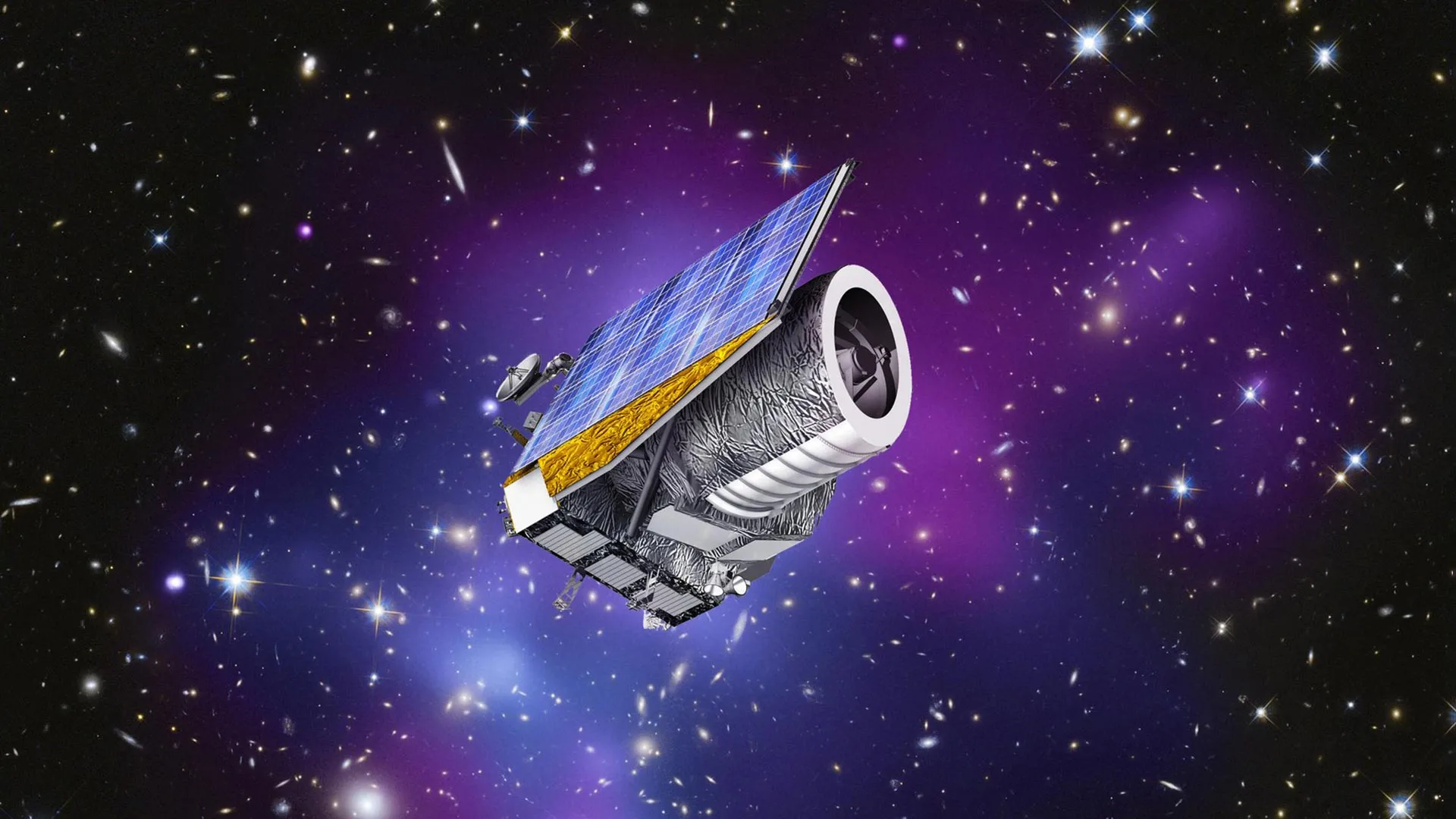
The European Space Agency’s Euclid space telescope has identified a previously undiscovered comet while conducting observations aimed at studying the distant universe. Images collected between September 16 and 24, 2026, revealed the new object, marking the first comet discovery by the mission. The finding is noteworthy because Euclid was engineered specifically to capture detailed imagery of far-away galaxies rather than track nearby, fast-moving celestial bodies.
Mikko Pöntinen, a doctoral researcher at the University of Helsinki, made the discovery using specialized software developed to identify small solar system objects within Euclid’s data. The software detected a streak across multiple images produced by a rapidly moving object. Upon closer examination, Pöntinen observed a fuzzy cloud surrounding the object, a characteristic feature of an active comet releasing dust and gas. The object was captured across five separate observational fields spanning 16 total exposures. After confirming the object did not match any known asteroids or comets in existing catalogs, Pöntinen submitted findings to the International Astronomical Union’s Minor Planet Center. Ground-based astronomers subsequently conducted additional observations, and the discovery received official confirmation on October 8. The comet has been designated C/2026 S1 (Euclid).
The newly identified comet is situated approximately 1.3 billion kilometers from Earth, a distance comparable to a point between the orbits of Jupiter and Saturn. Notably, the comet travels well outside the orbital plane where planets reside, following a path that will require thousands of years to complete. As additional observational data becomes available, astronomers will refine calculations regarding the object’s orbital characteristics.
Euclid’s design and observing methodology typically make solar system discoveries unlikely. The telescope intentionally avoids regions near the ecliptic plane where asteroids and comets concentrate, as dust in these areas could interfere with observations of distant galaxies. Additionally, Euclid employs a single-exposure strategy for most sky regions, limiting opportunities for follow-up observations of newly detected objects. Despite these constraints, the discovery provides valuable experience for coordination with ESA’s forthcoming Comet Interceptor mission, demonstrating how the two programs could collaborate to identify potential targets for future investigation.
Article Attribution | Read More at Article Source
Article summary produced by Claude AI