

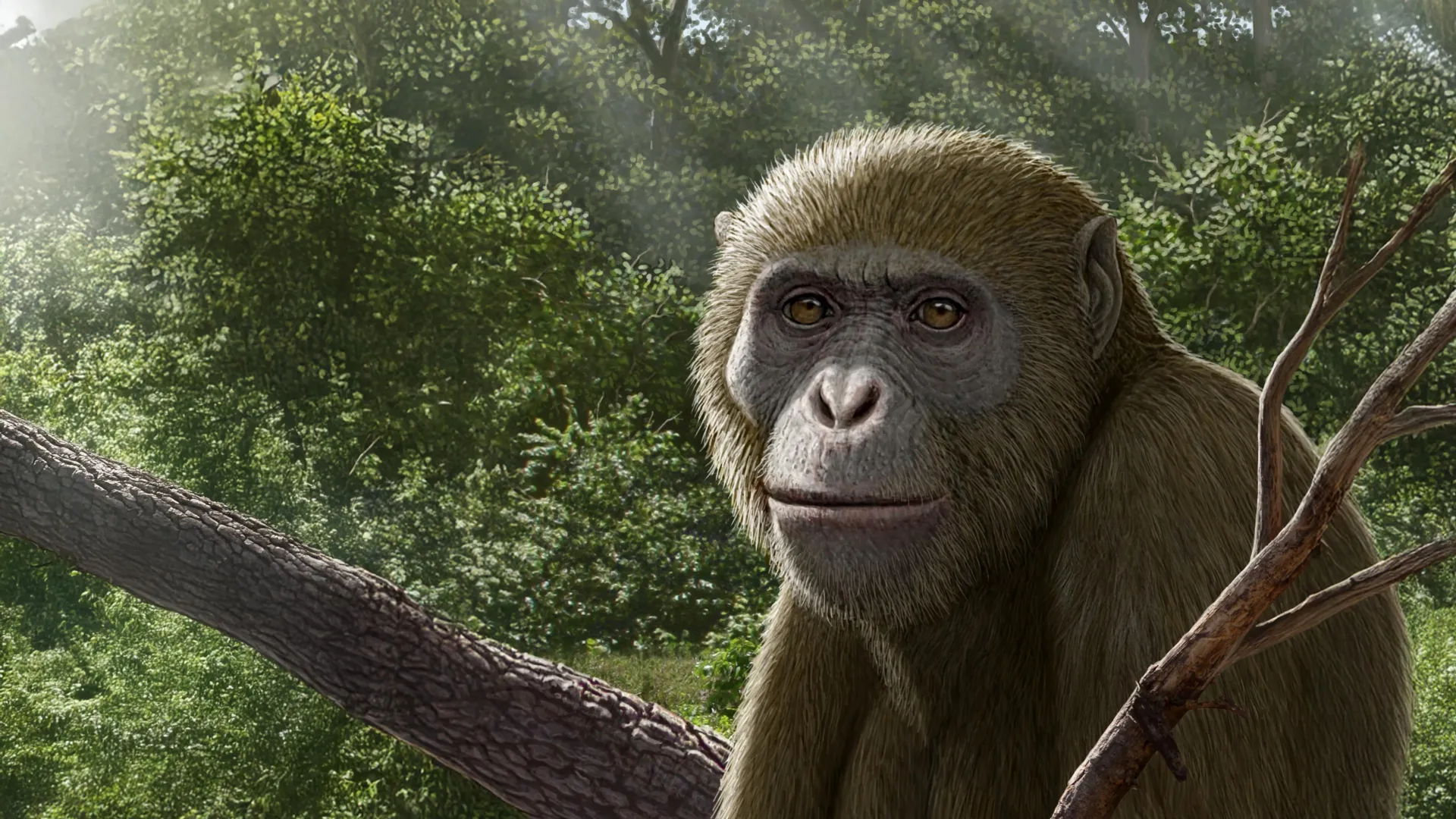
An international research team has identified a previously unknown ape species from approximately 17 to 18 million years ago, based on fossilized remains recovered from Wadi Moghra in northern Egypt. The specimen, designated Masripithecus moghraensis, represents the first definitive fossil ape ever found in North Africa. The discovery, published in March 2026, suggests that the evolutionary history of modern apes and humans unfolded farther north than scientists had previously theorized.
For decades, the scientific consensus held that early apes and related species were concentrated primarily in more southern African regions. While fossil sites in North Africa had yielded remains of ancient monkeys from the same period, evidence of apes remained absent, leaving a significant gap in the fossil record. The newly discovered Egyptian specimen may address this missing piece of the evolutionary puzzle. Researchers from Mansoura University and the University of Southern California spent five years searching for fossil ape remains in North Africa, driven by analytical inconsistencies in the early ape family tree.
The fossil material consists of lower jaw fragments containing distinctive anatomical features. The jaw exhibits exceptional robustness alongside unusually large canine and premolar teeth, with molars displaying rounded chewing surfaces marked by pronounced textures. These characteristics indicate that Masripithecus consumed primarily fruit but possessed the dental capacity to process harder foods such as nuts and seeds when necessary. This dietary flexibility likely provided survival advantages during periods of environmental change and increased seasonality in northern Africa and Arabia.
When researchers analyzed the specimen’s position within the ape evolutionary tree using advanced statistical methods, they obtained unexpected results. The analysis indicates that Masripithecus was more closely related to living apes than any known ape species from the Early Miocene of East Africa. Additional analysis of ancient animal distributions pointed toward northern Africa and the Middle East as the probable geographic origin of the common ancestor of all living apes. Geological movements during the Early Miocene, including shifting tectonic plates and fluctuating sea levels, may have positioned this region as a crucial corridor for animal movement and evolution between Africa and Eurasia.
Article Attribution | Read More at Article Source
Article summary produced by Claude AI