

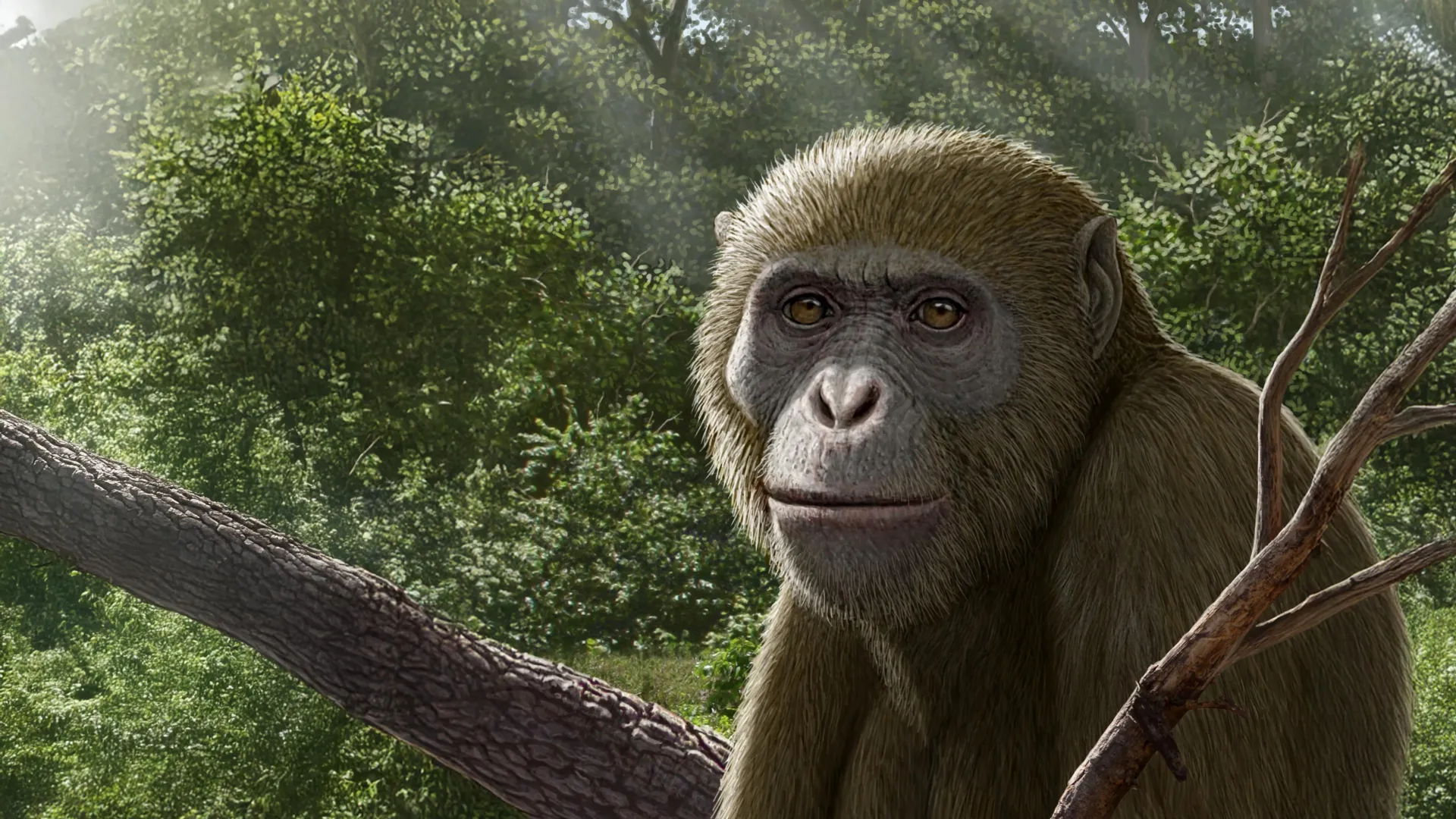
An international team of paleontologists has discovered fossilized remains of an ancient ape species in northern Egypt that may fundamentally alter understanding of primate evolution. The specimen, designated Masripithecus moghraensis, was recovered from Wadi Moghra during research expeditions and represents the first definitive fossil ape ever found in North Africa from the Early Miocene period. The findings were published March 26, 2026, in Science by researchers from Mansoura University Vertebrate Paleontology Center and the University of Southern California.
The fossil material consists of lower jaw bones exhibiting distinctive anatomical characteristics, including exceptionally sturdy structure, notably large canine and premolar teeth, and molars with rounded, textured chewing surfaces. These features indicate the animal possessed dietary flexibility, primarily consuming fruit while maintaining the capacity to process harder foods like nuts and seeds when needed. Such versatility likely provided survival advantages during periods of environmental change, as seasonality became more pronounced across northern Africa and the Arabian Peninsula during the Early Miocene.
When researchers conducted phylogenetic analysis using advanced statistical techniques and comparative anatomy, they determined that Masripithecus was more closely related to modern living apes than to known Early Miocene ape species from East Africa. This finding challenges the prevailing scientific consensus that the evolutionary origins of all living apes—including gibbons, orangutans, gorillas, chimpanzees, and humans—were concentrated in East Africa or other southern regions. The analysis suggests that northern Africa and the Middle East may have served as the geographic center where the common ancestor of crown Hominoidea emerged during the Early Miocene, approximately 23 to 16 million years ago.
Geological factors support this hypothesis regarding northern Africa’s evolutionary significance. During the Early Miocene, the movement of African and Arabian tectonic plates toward Asia created shifting land connections and fluctuating sea levels. These geographic changes periodically reduced water barriers separating Africa from Eurasia, potentially facilitating the movement and evolution of ancient mammal species, including early apes. The discovery of Masripithecus thus fills a long-recognized gap in the fossil record of early ape evolution and provides new perspective on where a crucial chapter of human origins may have occurred.
Article Attribution | Read More at Article Source
Article summary produced by Claude AI