

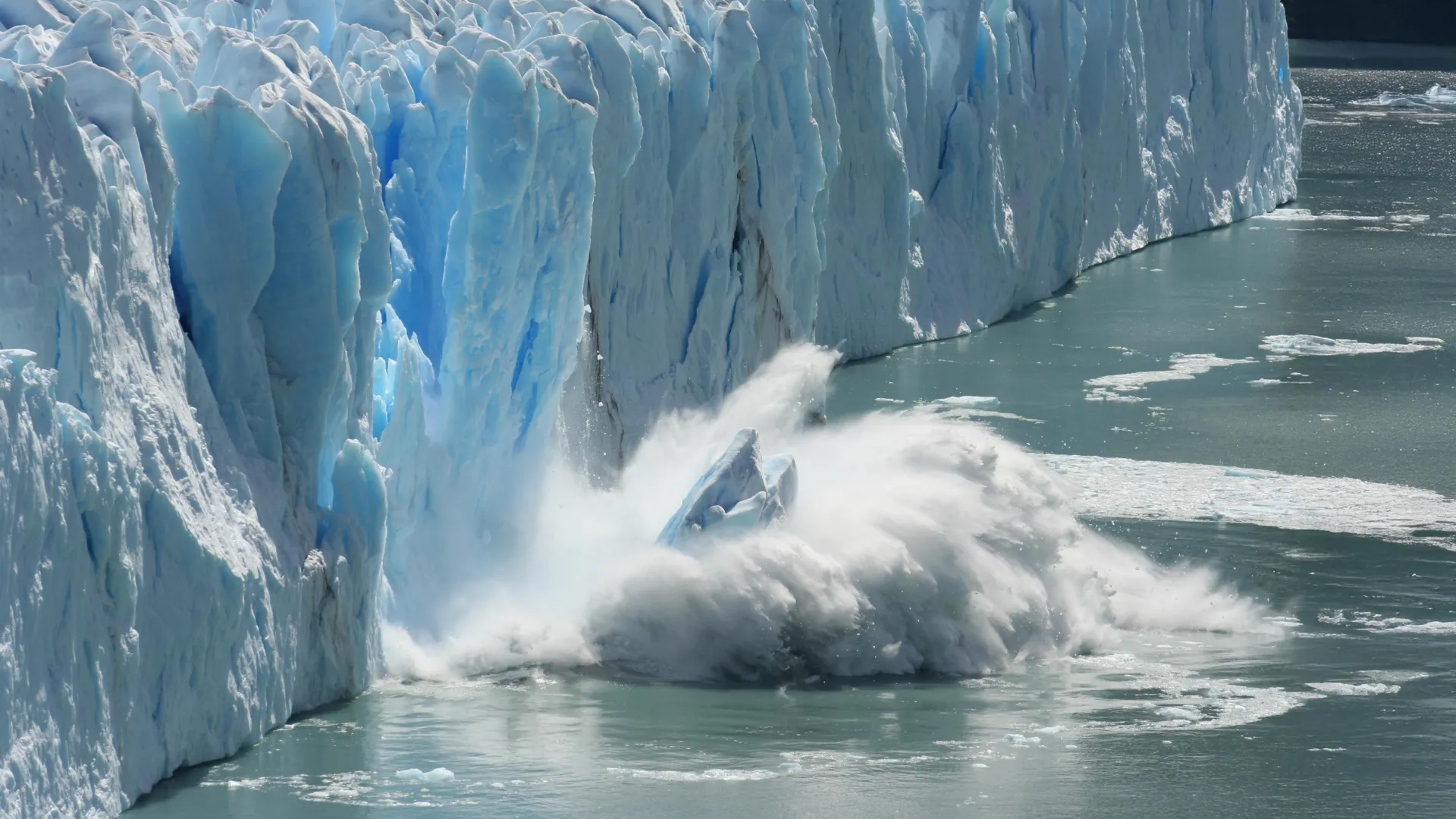
New research from MIT and Woods Hole Oceanographic Institution questions long-standing scientific models about Antarctic ice cliff instability. For decades, scientists have theorized that ice cliffs exceeding 100 meters in height become structurally unstable and collapse under their own weight, potentially triggering a catastrophic chain reaction called marine ice cliff instability (MICI). This collapse could expose even taller ice walls that would then repeat the process, causing rapid and irreversible retreat of the Antarctic ice sheet and significant sea level rise.
The study, published in Science, examined satellite observations of more than 15,000 Antarctic ice cliffs collected over four years using NASA’s ICESat-2 spacecraft. Researchers discovered that actual cliff behavior diverges substantially from existing models. Most cliffs measured approximately 30 meters tall, far below the theoretical instability threshold. Even more importantly, when tall cliffs exceeding 100 meters did collapse and retreat rapidly, the process stabilized rather than cascading into continuous disintegration.
The research identified additional factors beyond height that influence cliff stability. Mélange—accumulated debris consisting of sea ice fragments and broken icebergs—appears to provide support that helps stabilize ice walls. Deeper surrounding seawater also exerts pressure that can counteract destabilizing forces. These findings suggest that cliff height alone cannot predict stability, and that environmental conditions in surrounding waters play critical roles in determining whether cliffs collapse.
When researchers focused on four locations containing Antarctica’s tallest ice cliffs, reaching heights of up to 127 meters, they documented rapid retreat that exceeded model predictions. However, this retreat proved temporary. Rather than continuing to disintegrate in a runaway collapse, the glaciers stabilized and eventually advanced outward again. The pattern of rapid retreat followed by stabilization suggests that catastrophic ice sheet collapse scenarios may not materialize as previously feared.
Article Attribution | Read More at Article Source
Article summary produced by Claude AI