

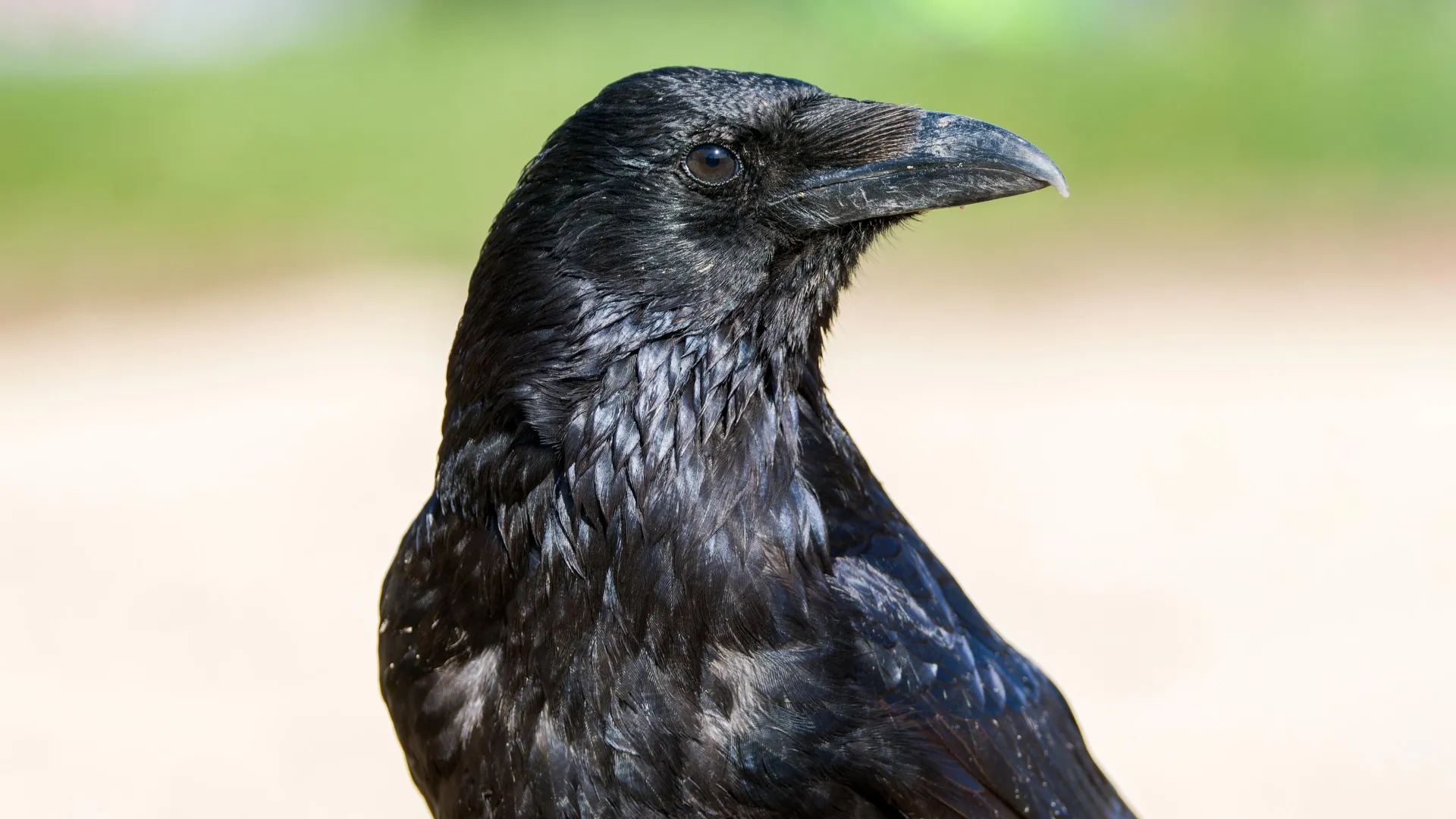
Scientists at the University of Tübingen have documented that crows possess significantly faster visual decision-making capabilities compared to humans and other primates. In a study involving two carrion crows, researchers found the birds required only 235 milliseconds on average to process visual information and make decisions about which direction a moving dot pattern was traveling. The findings, published in the journal Science, suggest that bird brains can accomplish complex decision-making tasks with remarkable speed while maintaining accuracy rates approaching 100 percent under clear conditions.
To conduct their research, Philipp Schmidbauer and Professor Andreas Nieder developed experiments where crows viewed moving dots on a touchscreen and indicated their directional assessment by pecking targets. The birds demonstrated consistent accuracy even when the visual patterns were ambiguous or difficult to interpret. Researchers then examined neural activity in the nidopallium caudolaterale, a region of the crow brain involved in information processing and decision-making comparable to the human prefrontal cortex.
Neural recordings revealed that crow brain cells began distinguishing between response options within just 70 milliseconds of stimulus presentation. Activity in these neurons steadily increased until reaching a threshold associated with decision commitment, with the neural patterns reflecting both the clarity of visual signals and the birds’ ultimate choices. This neural activity preceded the birds’ physical responses, indicating the speed of internal processing rather than reaction time alone.
One significant discovery is that crows appear to use similar fundamental neural principles for decision-making as humans and primates, despite their brains having radically different anatomical structures. Unlike mammals, birds lack a layered cerebral cortex, yet their brains follow comparable decision-making models. Researchers suggest this speed advantage likely evolved from birds’ ecological demands, particularly the need for rapid visual processing and precise movement control during flight and foraging. The specific biological mechanisms enabling this enhanced speed remain unknown and warrant further investigation.
Article Attribution | Read More at Article Source
Article summary produced by Claude AI