

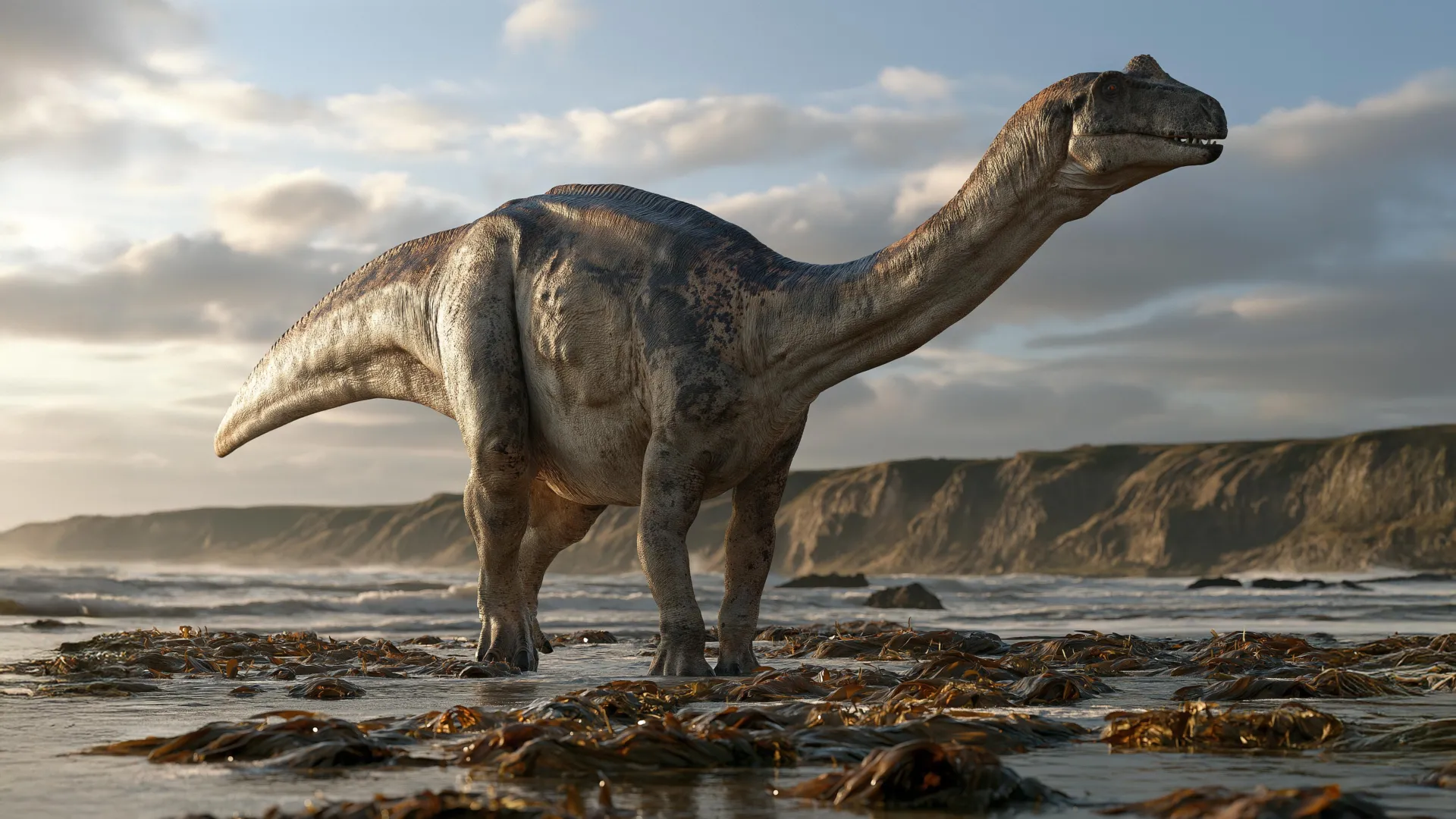
A study published in Frontiers in Ecology and Evolution presents evidence that dinosaurs and other prehistoric organisms living in coastal environments obtained nutrients from marine sources, a process known as marine subsidization. Researchers from the University of Arkansas examined chemical signatures preserved in fossils from locations that once bordered ancient seaways, including the Western Interior Seaway and the Gulf of Mexico coastline.
The investigation focused on analyzing carbon isotope ratios in tooth enamel from various dinosaurs, crocodiles, turtles, and fish. Scientists had long observed unusually high carbon-13 values in dinosaur teeth that could not be fully explained by terrestrial plant consumption alone. By comparing fossils from coastal regions with those from inland locations, researchers identified a clear pattern: organisms from coastal environments showed significantly higher carbon isotope signatures than their inland counterparts. These elevated readings remained consistent across different geographic locations and time periods examined.
The fossil deposits analyzed came from two periods within the Cretaceous: the early Albian (approximately 113-107 million years ago) and the early Cenomanian (around 100-96 million years ago). The researchers determined that the elevated carbon signatures most likely resulted from consumption of seaweed and other marine macroalgae. This marine food source would have needed to be abundant along coastlines, unavailable inland, and integrated into food chains at a basic level to explain its presence in such diverse animal groups ranging from fish to large herbivorous dinosaurs.
However, not all dinosaurs relied equally on marine resources. Notably, the large herbivore Tenontosaurus tilletti displayed carbon signatures consistent with purely terrestrial plant diets, indicating dietary preferences varied among species. This variation between organisms strengthens the interpretation that the chemical signatures reflect genuine dietary differences rather than post-fossilization alterations. The findings establish the first direct evidence of marine subsidization operating in prehistoric coastal ecosystems millions of years ago, demonstrating an ancient ecological connection between ocean and land environments.
Article Attribution | Read More at Article Source
Article summary produced by Claude AI