

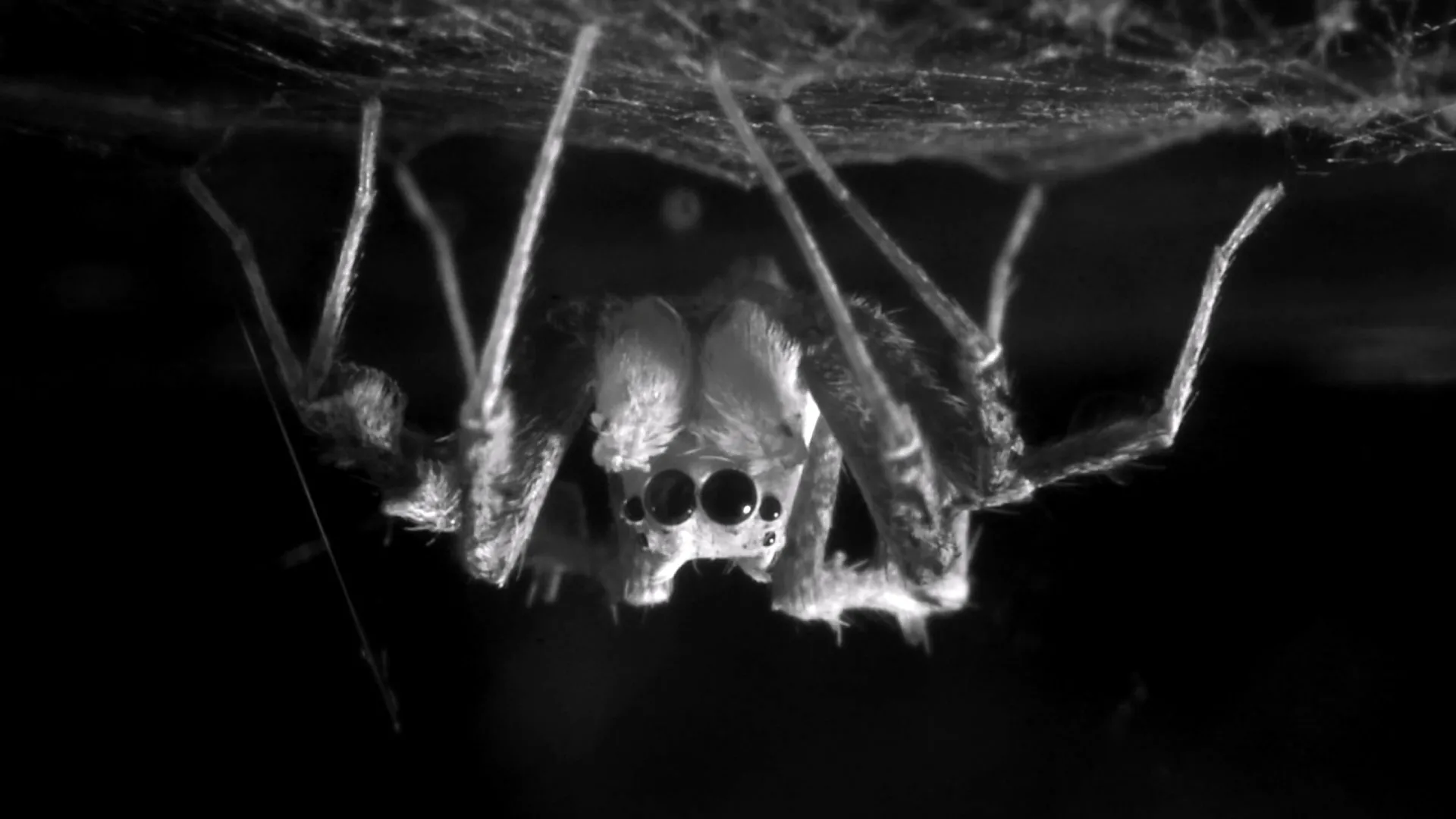
Researchers at the University of Bonn’s Institute of Organismic Biology have documented that Australian jumping spiders experience regulated sleep with distinct stages, including a phase resembling REM (rapid eye movement) sleep in humans. During this REM-like stage, the spiders display characteristic eye movements and muscle twitches similar to those observed in human sleep. The findings mark the first comprehensive experimental confirmation that spiders undergo genuine sleep rather than simply entering periods of inactivity.
The study focused on Portia fimbriata, a small jumping spider species known for its sophisticated hunting abilities and cognitive complexity. To investigate spider sleep, researchers placed individual spiders in controlled laboratory environments and monitored them continuously using infrared cameras, allowing observation throughout the night. The team documented sleeping positions, rest periods, and episodes of REM-like movement, then conducted additional experiments to distinguish sleep from ordinary inactivity. Tests involving sound stimuli measured the spiders’ response times, while sleep deprivation studies examined whether the animals displayed compensatory sleep patterns following interruption.
The research presented notable methodological challenges, as determining whether a spider is genuinely asleep requires different approaches than observing humans. Researchers could not measure brain activity directly and instead relied on detailed behavioral analysis conducted over extended periods. Despite these limitations, the combination of behavioral monitoring, response testing, and sleep disruption experiments provided substantial evidence for regulated sleep in the species.
The discovery carries broader implications for understanding how sleep evolved across different organisms. Most sleep research has focused on vertebrates, particularly mammals and birds. Finding comparable sleep features in animals with radically different nervous systems may help scientists identify which sleep mechanisms are shared across species and which evolved independently. The researchers plan to expand their investigation across multiple spider species, compare laboratory and natural environment sleeping patterns, and examine relationships between sleep and cognitive abilities in these animals.
Article Attribution | Read More at Article Source
Article summary produced by Claude AI