

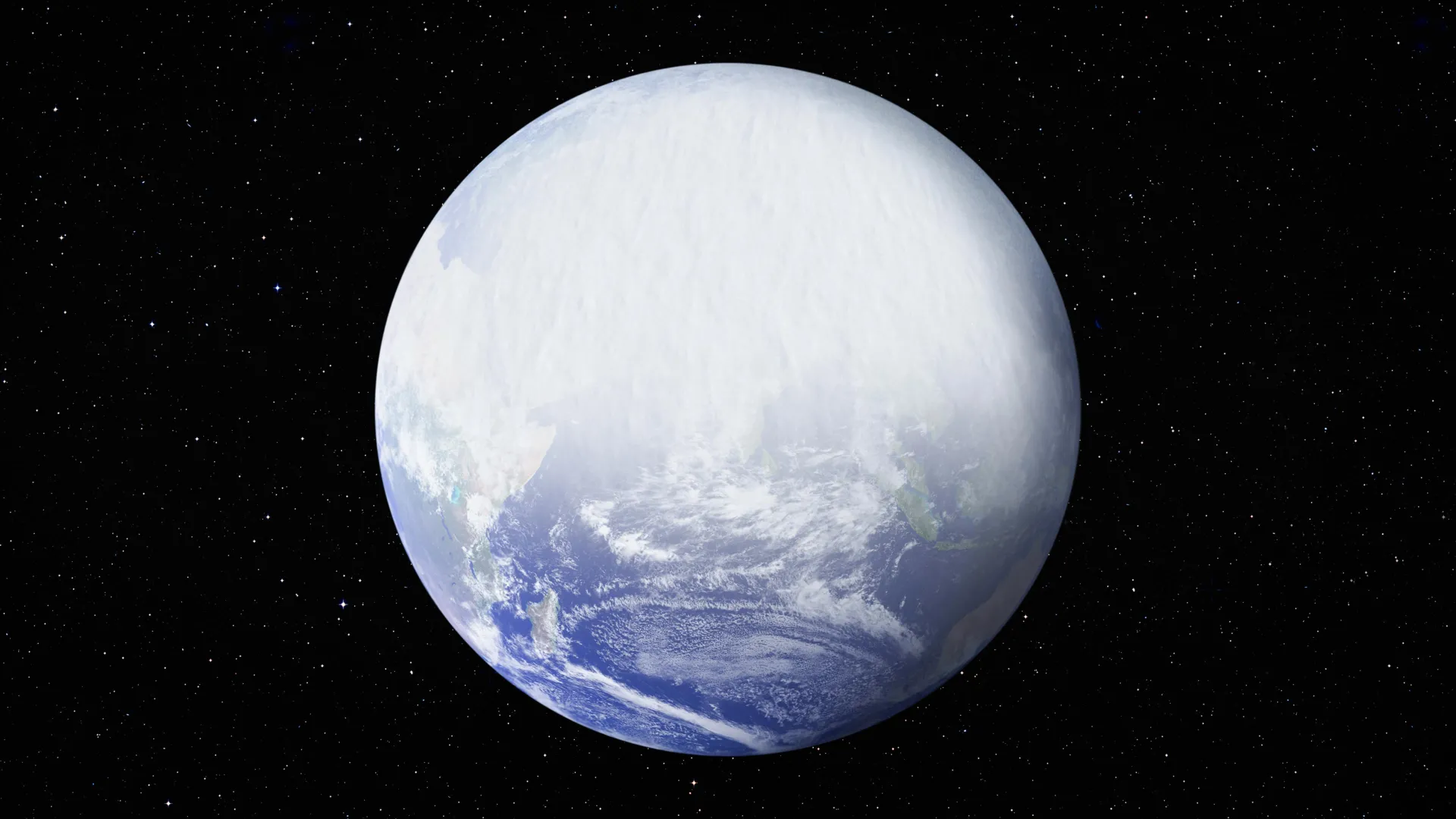
Scientists analyzing ancient vegetation preserved beneath the Barnes Ice Cap on Baffin Island have concluded that Earth’s next glacial period may have already commenced around 2,000 years ago. The research, published in Science by geochemists from Columbia Climate School’s Lamont-Doherty Earth Observatory, examined plant remains exposed as the ice cap retreated to reconstruct thousands of years of glacial history. The findings indicate that the Laurentide Ice Sheet, the massive ice formation that once covered much of Canada and the northern United States, reached its smallest extent approximately 3,000 years ago before beginning to expand anew.
The research team determined that this renewed growth around 2,000 years ago should be recognized as the beginning of a new glacial period, a conclusion that differs from previous climate models suggesting the next glaciation would not commence for thousands or tens of thousands of years. The disagreement stems partly from how scientists define the start of a glacial period—the researchers propose that sustained expansion of existing ice sheets marks the beginning rather than waiting for massive continental-scale growth. This interpretation gains support from climate debates in the 1970s when some researchers predicted an approaching ice age, a theory that lacked sufficient evidence at the time but now appears partially validated.
However, the natural progression toward an ice age was interrupted by rising temperatures beginning in the 1960s. By that decade, the Barnes Ice Cap was losing more ice during summer months than could be replenished through winter snowfall, causing it to retreat rather than advance. Scientists note that even under normal conditions, it would have required approximately 30,000 years for the Laurentide Ice Sheet to reach its former continental dimensions, meaning the interruption occurred very early in what would have been a gradual process. The research demonstrates how human-caused global warming has fundamentally altered a natural climate cycle that has shaped Earth for millions of years.
Article Attribution | Read More at Article Source
Article summary produced by Claude AI