

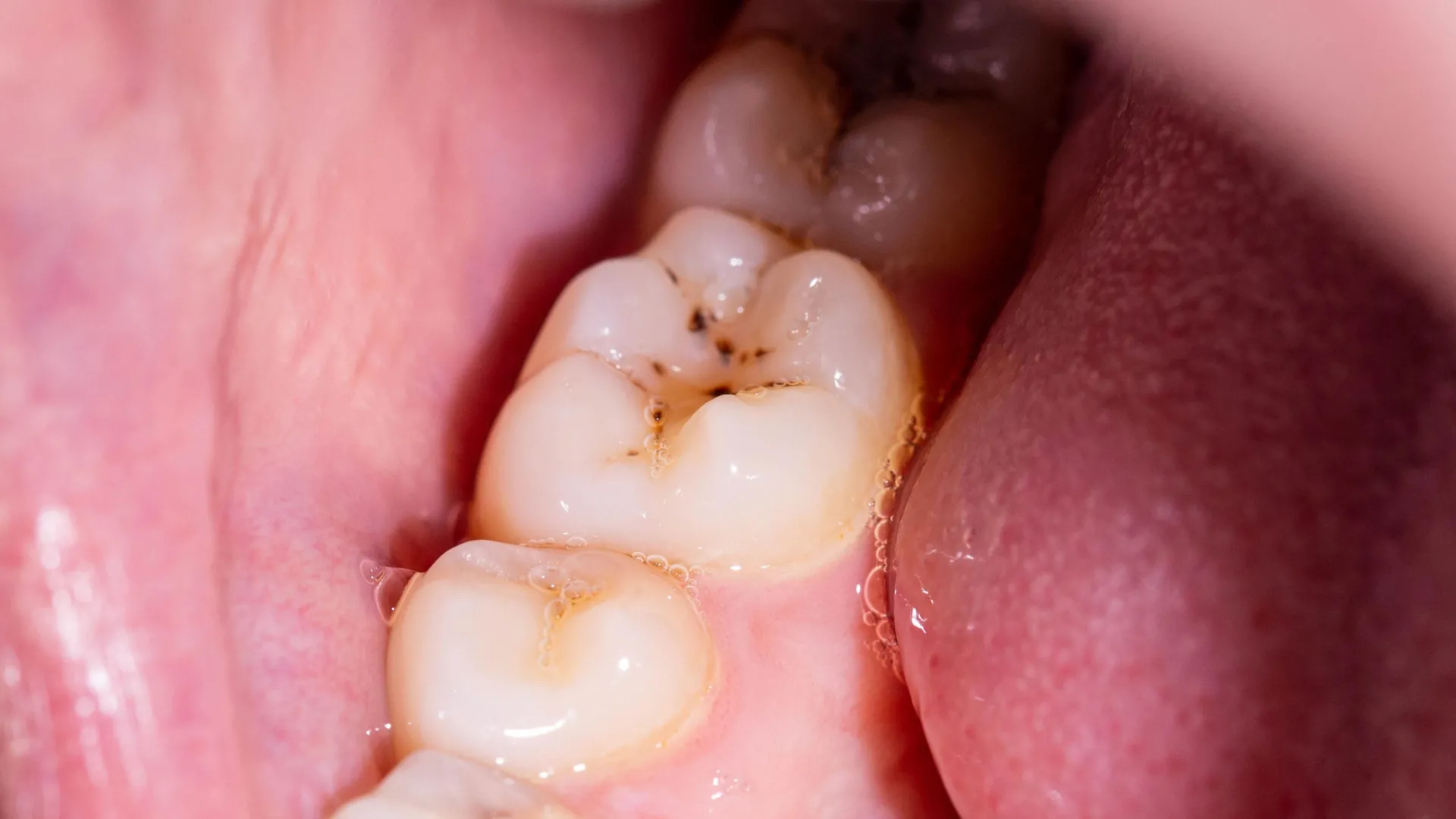
Researchers at the University of Nottingham’s School of Pharmacy and Department of Chemical and Environmental Engineering have created a gel designed to rebuild damaged tooth enamel, addressing a significant challenge in dental treatment. The discovery, published in Nature Communications, represents a breakthrough because tooth enamel cannot naturally regenerate once lost, unlike bones and many other body tissues. The new material was inspired by the biological processes that form enamel during childhood development.
The gel works through a straightforward application process that resembles existing fluoride treatments, allowing dentists to apply it directly to teeth during routine care. Rather than containing fluoride, the gel uses protein-based materials that mimic natural proteins involved in enamel formation. When applied, it creates a durable coating that penetrates the tooth surface and fills microscopic cracks. The coating then facilitates a mineralization process called epitaxial growth, in which calcium and phosphate ions naturally present in saliva are organized into new mineral crystals that align with existing enamel structure. This precise crystal arrangement is crucial because it recreates the complex architecture that gives natural enamel its exceptional hardness and protective properties.
Testing revealed that the gel can also be applied to exposed dentin, the softer tooth tissue beneath enamel. By encouraging the formation of an enamel-like mineral layer over exposed dentin, the treatment could reduce tooth sensitivity while improving how dental restorations attach to teeth. This application addresses a widespread problem, as enamel deterioration contributes to dental issues affecting approximately half the world’s population.
Laboratory testing examined the regenerated material’s performance under conditions simulating everyday use, including brushing, chewing, and contact with acidic foods. Results indicated that the regenerated enamel displayed mechanical properties comparable to healthy natural enamel. However, researchers noted that while laboratory findings are promising, extended clinical testing in patients remains necessary to establish long-term effectiveness. The technology was designed with practical dental applications in mind, emphasizing safety, ease of application, and scalability for manufacturing.
Article Attribution | Read More at Article Source
Article summary produced by Claude AI