

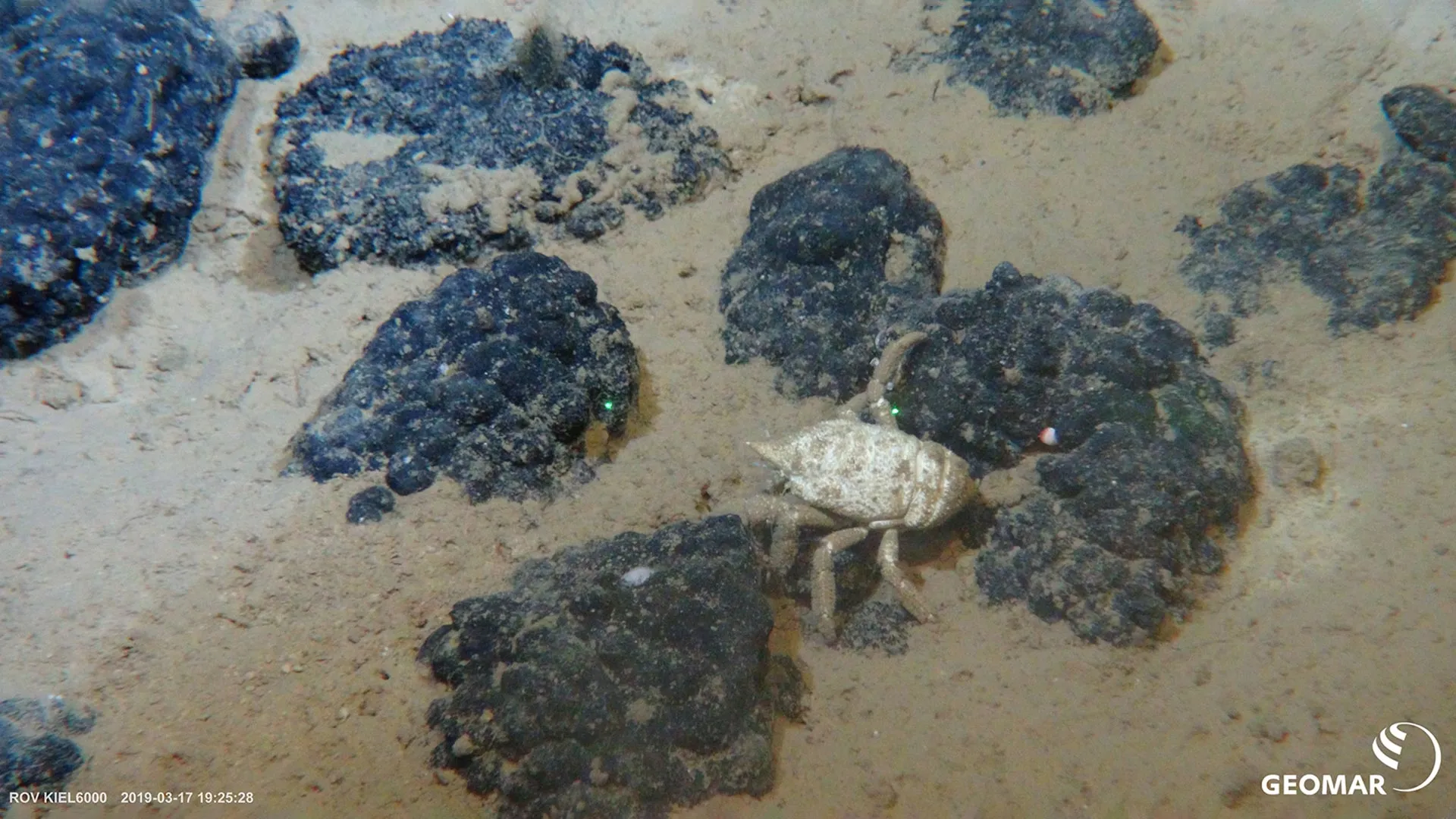
Researchers studying polymetallic nodules from the Clarion-Clipperton Zone in the central Pacific Ocean have identified a rich ecosystem of tiny organisms inhabiting the interior spaces of these metal-rich rock formations. The nodules, which grow at extremely slow rates over millions of years, contain miniature cracks and cavities that shelter animals smaller than a millimeter. Through laboratory analysis of 244 collected nodules, scientists extracted 4,139 individual animals, with one nodule containing as many as 245 specimens.
The study revealed that while nodules harbored fewer organisms than surrounding seafloor sediment, the communities within the rocks were notably distinct and specialized. Genetic analysis showed that animal populations inside nodules remained remarkably similar across locations separated by thousands of kilometers, yet differed significantly from organisms found in nearby mud. This suggests the nodules provide unique living conditions that certain species are particularly adapted to inhabit, with some organisms like a single-celled species called Thurammina sp. 1 appearing especially well-suited to these sheltered environments.
The findings carry significant implications for deep-sea mining operations, as polymetallic nodules contain economically valuable metals including nickel, cobalt, and copper. Removing these nodules for commercial purposes would eliminate the specialized habitats they support. Because polymetallic nodules require millions of years to form, any mining activity could destroy ecosystems that would take geological timescales to regenerate. Scientists emphasize that this loss could be irreversible, potentially threatening species that may exist nowhere else in the ocean if they are confined to nodule habitats.
Researchers continue investigating fundamental questions about the distribution and habitat requirements of nodule-dwelling organisms. Understanding whether certain species depend exclusively on these formations is critical for assessing potential extinction risks and identifying areas requiring protection from mining activities. An international research expedition is currently underway in the Clarion-Clipperton Zone to gather additional data on these deep-sea ecosystems before industrial harvesting potentially eliminates habitats formed over millions of years.
Article Attribution | Read More at Article Source
Article summary produced by Claude AI