

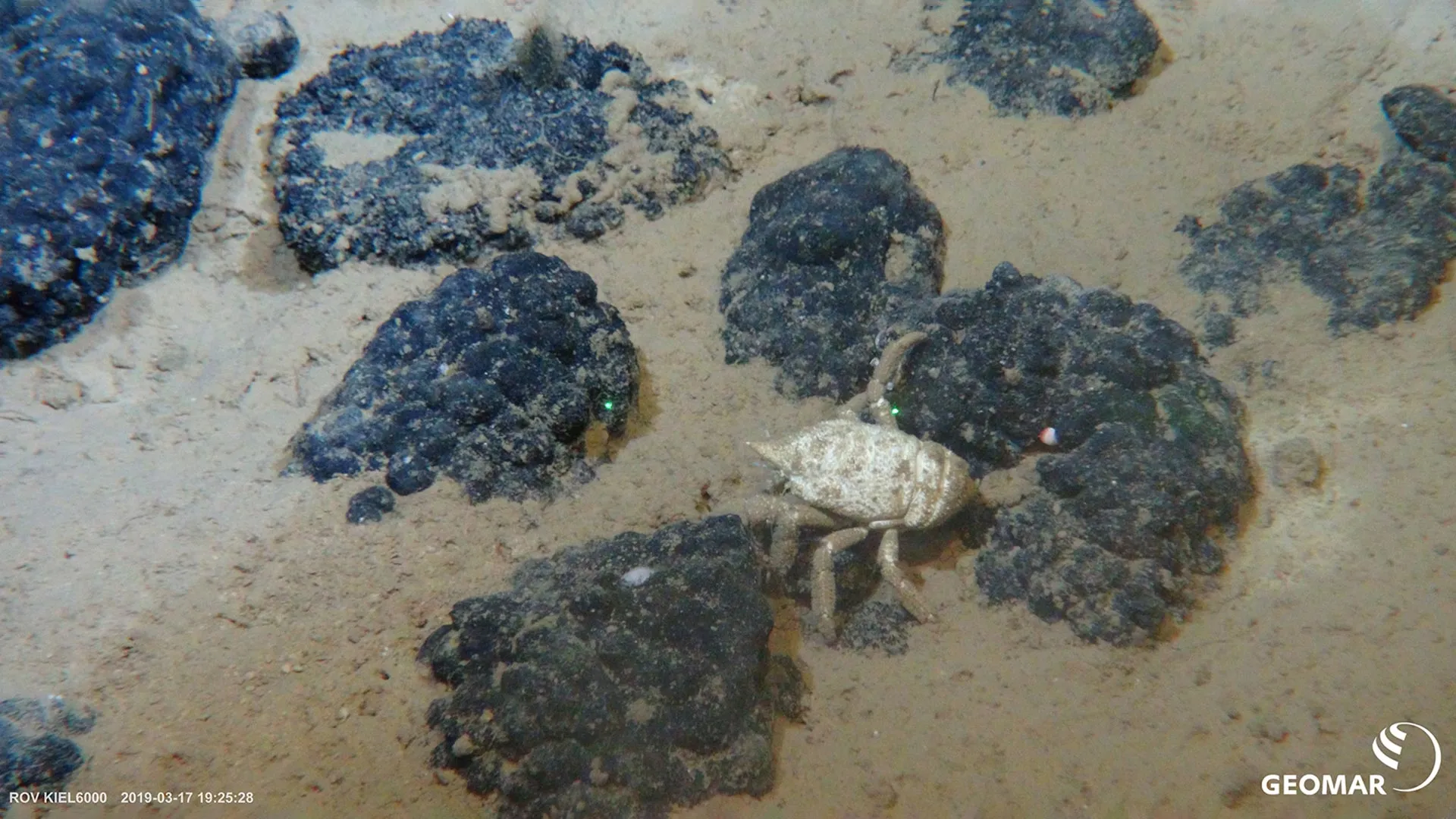
Researchers studying the Clarion-Clipperton Zone in the central Pacific Ocean have identified complex microbial communities living within polymetallic nodules, ancient metal-rich rock formations found on the seafloor at depths of 4,000 to 6,000 meters. These nodules, which grow at extremely slow rates of only a few millimeters per million years, contain intricate cracks and cavities that provide shelter for organisms smaller than a millimeter in size. The study examined 244 nodules and identified approximately 4,139 individual animals, with an average of 17 organisms per nodule and one specimen containing 245 individuals.
The research team, led by scientists including Dr. Tanja Stratmann and Dr. Coral Diaz-Recio Lorenzo, used specialized sampling equipment including box corers and remotely operated vehicles to collect and analyze the nodules in laboratory settings. The findings revealed that the communities within the nodules were significantly different from those found in the surrounding seafloor sediment, suggesting that these rocks support specialized habitats distinct from other deep-sea environments. Genetic analyses showed that nodule communities remained remarkably similar across locations separated by distances up to 1,000 kilometers, despite differing substantially from nearby sediment organisms.
The discovery raises concerns about proposed deep-sea mining operations that would extract polymetallic nodules to harvest economically valuable metals including nickel, cobalt, and copper. Removing these nodules would eliminate the miniature habitats they contain and the specialized organisms living within them. Because polymetallic nodules require millions of years to form, any destroyed ecosystems would take geological timescales to replace, potentially causing irreversible biodiversity loss.
Professor Sabine Gollner cautioned that commercial mining could eliminate undescribed and unique species dependent on these nodules, highlighting the need for such considerations in environmental management policies. Researchers are continuing investigations through international expeditions to determine whether organisms inhabiting the nodules exist elsewhere in the ocean or are restricted to these habitats, which would be essential for identifying areas requiring protection and assessing potential ecological damage from deep-sea mining operations.
Article Attribution | Read More at Article Source
Article summary produced by Claude AI