

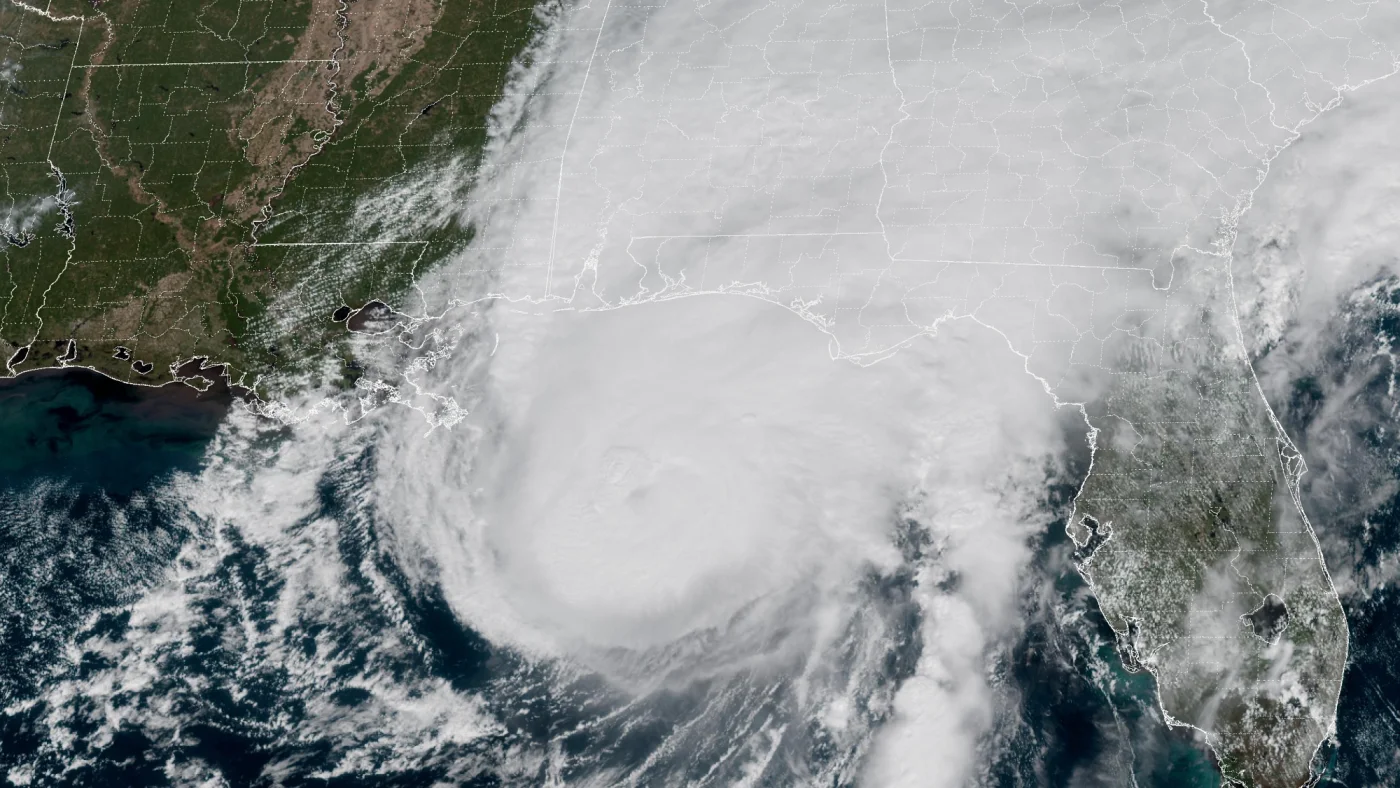
Hurricane forecasters are adopting artificial intelligence technologies to enhance storm prediction capabilities, with notable success demonstrated during the Atlantic hurricane season. When the first major hurricane of the season formed in early October, an AI model developed by Google DeepMind successfully predicted the storm’s landfall location near Destin, Florida, outperforming conventional physics-based forecasting models that had initially indicated the hurricane would travel further west toward Louisiana. The National Hurricane Center integrated the Google DeepMind model into its official forecasts in the prior year, and it has rapidly become one of the most accurate prediction tools available.
AI-based forecasting approaches differ fundamentally from traditional methods. While conventional models rely on real-time atmospheric measurements such as temperature, humidity, pressure, and wind shear gathered by satellites and aircraft, combined with complex mathematical equations, AI models function by identifying patterns within historical storm data and atmospheric information. Machine learning systems, particularly neural networks modeled on the human brain, process massive datasets to generate predictions without explicitly encoding atmospheric physics.
Despite their impressive performance, AI models present challenges for meteorologists accustomed to understanding the reasoning behind forecasts. The systems operate somewhat as “black boxes,” where forecasters cannot always explain why predictions succeed or fail. Most AI model developers are software engineers rather than meteorologists, further distancing the technology from traditional domain expertise.
Not all AI weather forecasting models have proven reliable; the most successful competitors to date are Google DeepMind’s system and the model from the U.K.-based European Centre for Medium-Range Weather Forecasts. National Hurricane Center officials employ a consensus approach, blending predictions from multiple proven models—both AI and traditional—while human forecasters interpret results and provide continuity in public messaging. While the Google DeepMind model excelled at tracking Hurricane Isaias’s path, it performed less effectively at predicting storm intensity, an area where continued refinement is needed.
The pace of AI improvement distinguishes it from conventional forecasting advancement. AI systems can be updated within weeks or months, enabling skill improvements that would historically require a decade or longer through traditional model development. These rapid iterations represent a significant shift in how meteorologists approach prediction technology.
Article Attribution | Read More at Article Source
Article summary produced by Claude AI