

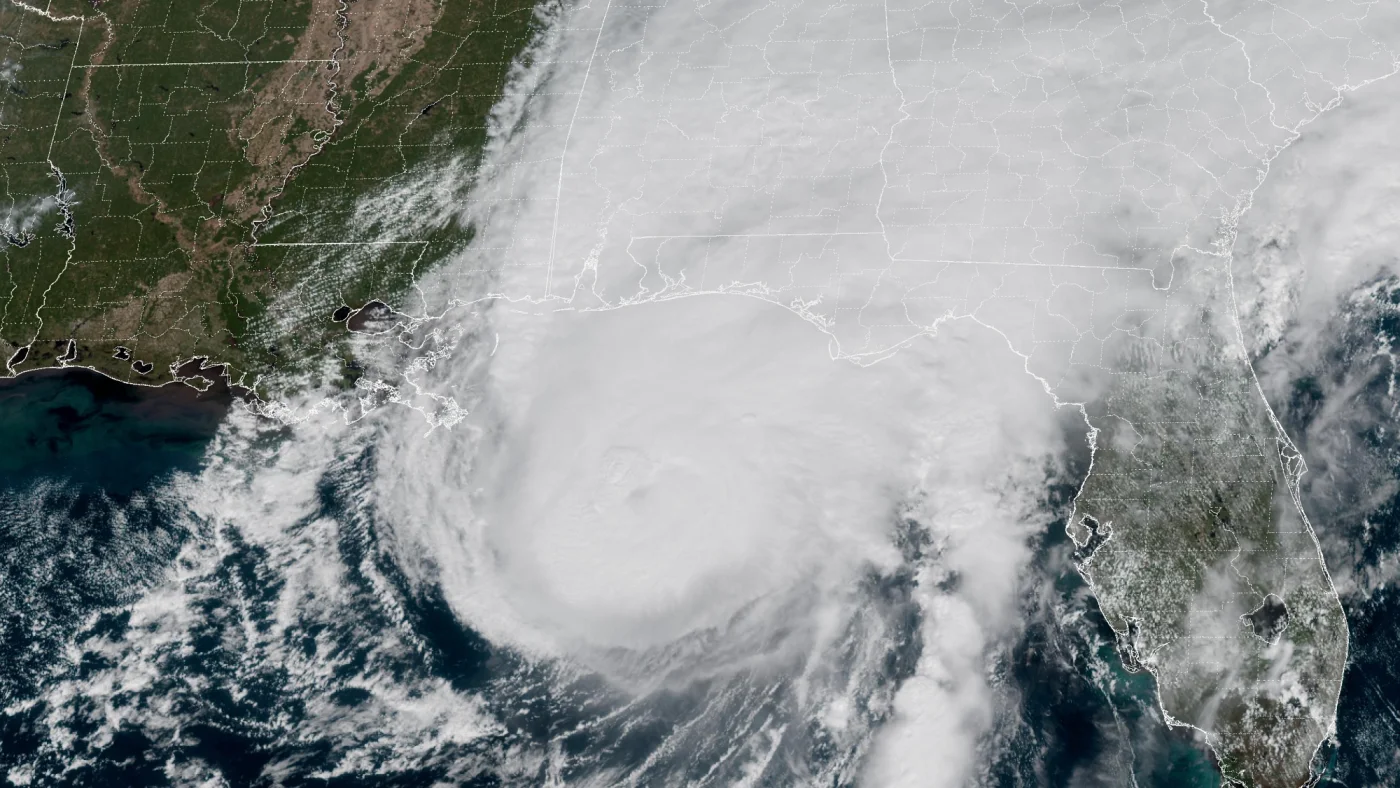
Hurricane forecasters are increasingly incorporating artificial intelligence into their prediction systems, with results showing rapid improvement in forecast accuracy. When the first hurricane of the Atlantic season formed this month, an AI model developed by Google DeepMind demonstrated superior performance compared to traditional forecasting approaches. The model correctly predicted that Hurricane Isaias would make landfall near Destin, Florida, as a Category 2 storm in early October, while conventional physics-based models initially forecasted a path further west toward southeastern Louisiana.
The National Hurricane Center integrated the Google DeepMind model into its official forecasts last year, and by the conclusion of the 2025 Atlantic hurricane season, it had already established itself as one of the most accurate prediction tools available. Hurricane researchers and meteorologists note that the speed at which this new AI model has achieved top-tier performance is unusual, as new forecasting tools typically require years of refinement before becoming operationally useful. The model operates fundamentally differently from traditional approaches, relying on pattern recognition from historical storm data rather than physics-based equations that describe atmospheric behavior.
AI-based forecasting presents both advantages and challenges for the meteorological community. These neural network systems can be updated and improved rapidly, with meaningful advancements occurring over weeks or months rather than the annual update cycles of traditional models. However, the models function as “black boxes” in many respects, making it difficult for meteorologists to understand the reasoning behind specific predictions. Most developers of these systems are software engineers rather than meteorologists, adding to the sense of uncertainty among weather professionals who traditionally relied on understanding the underlying physics of their forecasts.
Despite the promise of AI technology, the National Hurricane Center continues to employ a consensus approach that blends predictions from multiple proven models, both AI-based and traditional. While the Google DeepMind system excelled at tracking Hurricane Isaias’s path, it performed less effectively at predicting the storm’s intensity compared to the NHC’s combined forecasts. Human forecasters remain essential to the process, providing continuity and translating shifting model predictions into actionable guidance for the public. Officials note that improvements in hurricane forecasting have historically resulted from multiple technological advances rather than any single innovation, and AI represents the latest evolution in a long history of forecast enhancement.
Article Attribution | Read More at Article Source
Article summary produced by Claude AI