

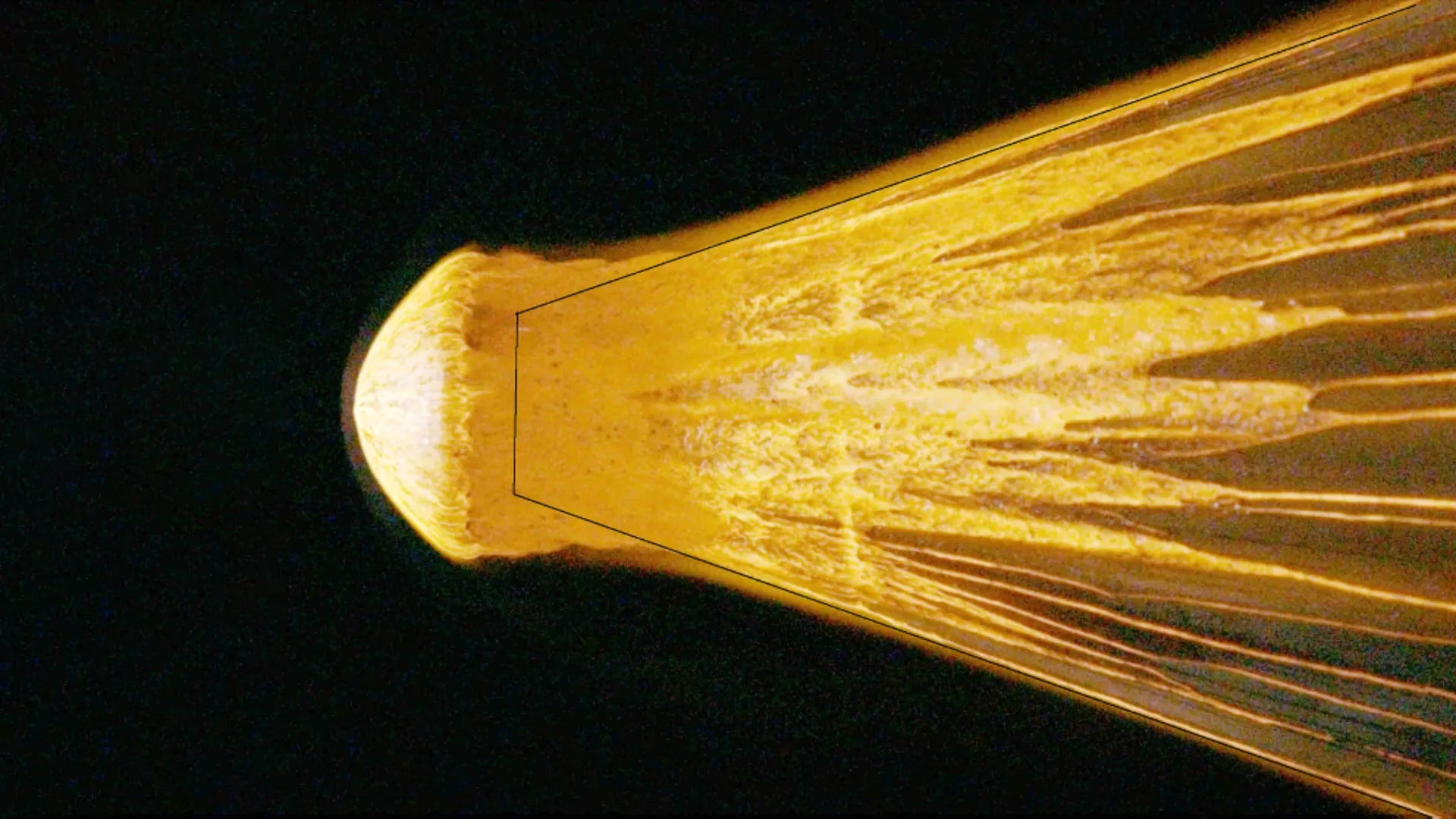
Researchers have developed a comprehensive model describing how meteoroids transform during atmospheric entry by analyzing video recordings and photographs from 75 documented meteorite falls. The study, published in Meteoritics & Planetary Science, identifies seven distinct phases that space rocks undergo as they journey through the atmosphere, with each phase characterized by different physical processes.
The research challenges previous assumptions about how meteoroids lose material. Rather than evaporating from intense heat and light generated during atmospheric collision, the findings indicate that melting followed by fragmentation plays the dominant role in mass loss and deceleration. In laboratory conditions, scientists cannot replicate the radiation levels that occur during natural atmospheric entry at extreme speeds, making observation of actual meteorite falls essential for understanding these processes.
The seven-phase model begins high above Earth, where atmospheric density becomes sufficient to generate a shock wave ahead of the incoming rock. As the rock collides with air molecules, both its surface and surrounding gas heat up and glow, creating the visible meteor or shooting star. As the meteoroid descends into increasingly dense air, it brightens significantly and develops into a fireball. During this phase, melting becomes the primary mechanism for material removal, with molten material stripped from the surface forming droplets that continue to evaporate after separation.
At approximately 60 kilometers altitude, melting reaches a relatively stable balance, marking a transition phase where the fireball’s brightness remains constant or increases steadily. Researchers determined that melting alone can remove up to 40 percent of the original rock’s mass. As the fireball descends further into denser atmospheric layers, air pressure begins fracturing the rock. The study found that fragmentation begins at surprisingly low pressures, potentially due to heating during entry and pre-existing cracks from previous collisions in space.
The final major disruption occurs when the rear portion of the main rock breaks apart, producing a bright flare and scattering fragments at higher relative speeds. The pieces that eventually reach Earth’s surface undergo continued melting and fragmentation during their final descent. Once their velocity decreases sufficiently to stop producing visible light, atmospheric winds may alter their trajectories before they land, leaving behind meteorites with distinctive darkened fusion crusts on their surfaces. The researchers examined multiple types of space rock to determine the altitudes at which different materials enter each phase of this transformation process.
Article Attribution | Read More at Article Source
Article summary produced by Claude AI