

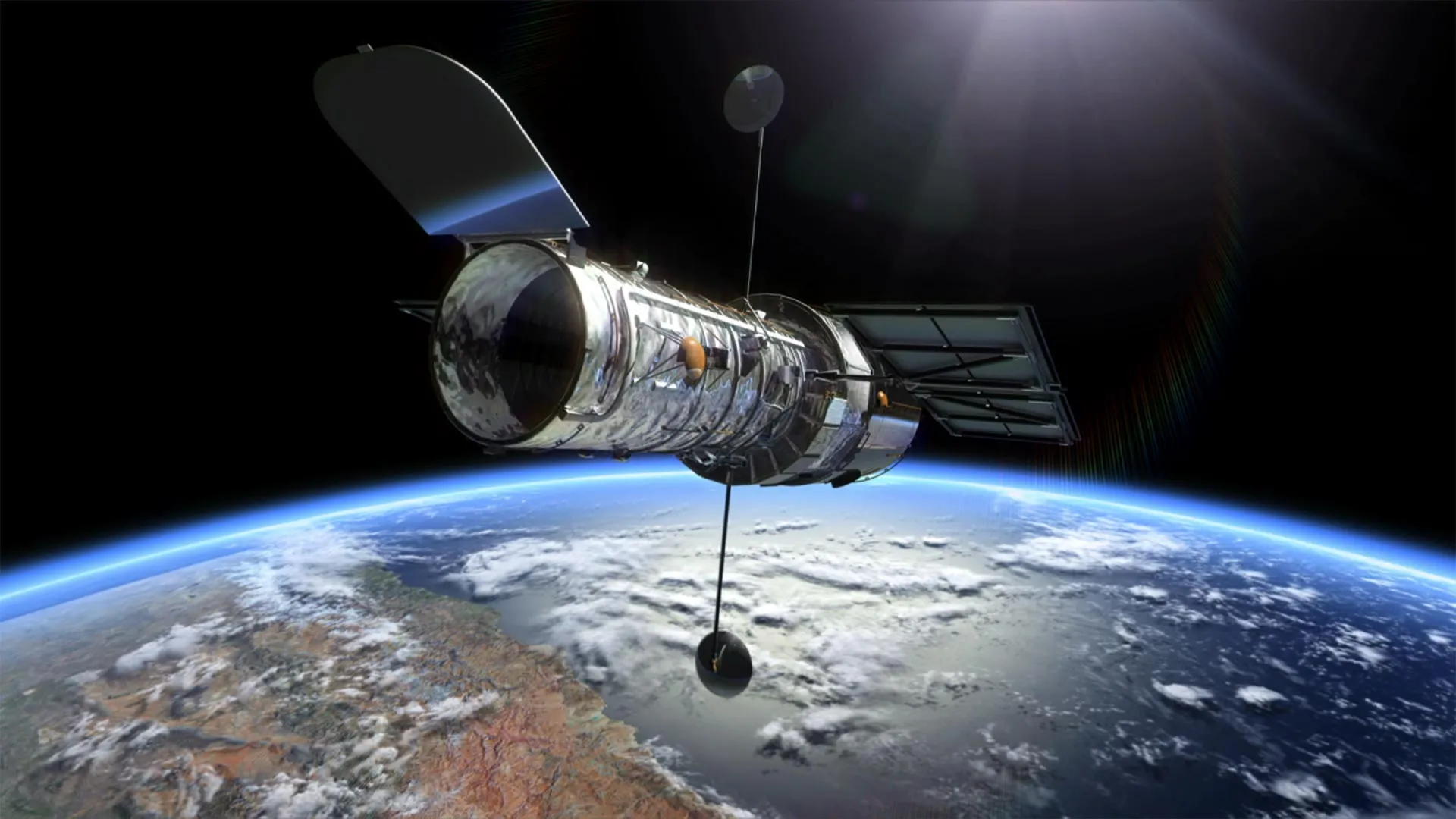
NASA has issued a Request for Information to commercial space companies regarding potential technologies for servicing the Hubble Space Telescope while maintaining its current orbital position. The agency is evaluating whether private sector capabilities could help extend the observatory’s operational life, enhance its scientific performance, or facilitate a controlled retirement when appropriate.
The telescope, which has operated for more than 35 years, faces a gradual loss of altitude due to atmospheric drag in low Earth orbit. Unlike crewed spacecraft equipped with propulsion systems, Hubble lacks the engines necessary to maintain its altitude independently. NASA’s projections indicate the telescope would reenter Earth’s atmosphere sometime between 2033 and 2034 without intervention. To successfully raise the observatory to a higher orbit, any mission would need to be completed by 2032, establishing a narrow timeframe for development and execution.
Potential solutions under consideration include launching a spacecraft capable of boosting Hubble into a higher orbit, conducting servicing missions to improve its capabilities, or managing a controlled deorbit when its scientific mission concludes. NASA is accepting responses to its Request for Information through 3 p.m. EST on November 30. The agency emphasized that exploration of these options reflects advances in commercial space technology that were unavailable when Hubble was originally designed.
The Hubble Space Telescope represents a collaborative effort involving NASA, the European Space Agency, NASA’s Goddard Space Flight Center, Lockheed Martin Space, and the Space Telescope Science Institute. Since its launch, the observatory has made foundational contributions to astronomical research and continues to generate significant scientific discoveries.
Article Attribution | Read More at Article Source
Article summary produced by Claude AI